Most B2B founders know one thing for sure:
Cold outreach works — but only when it feels personal.
The problem?
Personalization does not scale easily.
At LiReach, we work with founder-led B2B companies every day. Many of them sell high-ticket services or complex solutions. They don’t need thousands of leads.
They need conversations with the right decision-makers.
But the moment they try to scale outreach, something breaks.
- Emails start sounding generic
- LinkedIn messages look templated
- Reply rates drop
- Sales pipelines become unpredictable
This problem is extremely common among founder-led companies who rely on outbound to grow. :contentReference[oaicite:1]{index=1}
So the question becomes:
What is the best way to personalize cold outreach at scale?
Over the last few years building LiReach, we discovered something important:
The answer is not better templates.
The answer is building a system that creates conversations.
Why Most Cold Outreach Personalization Fails
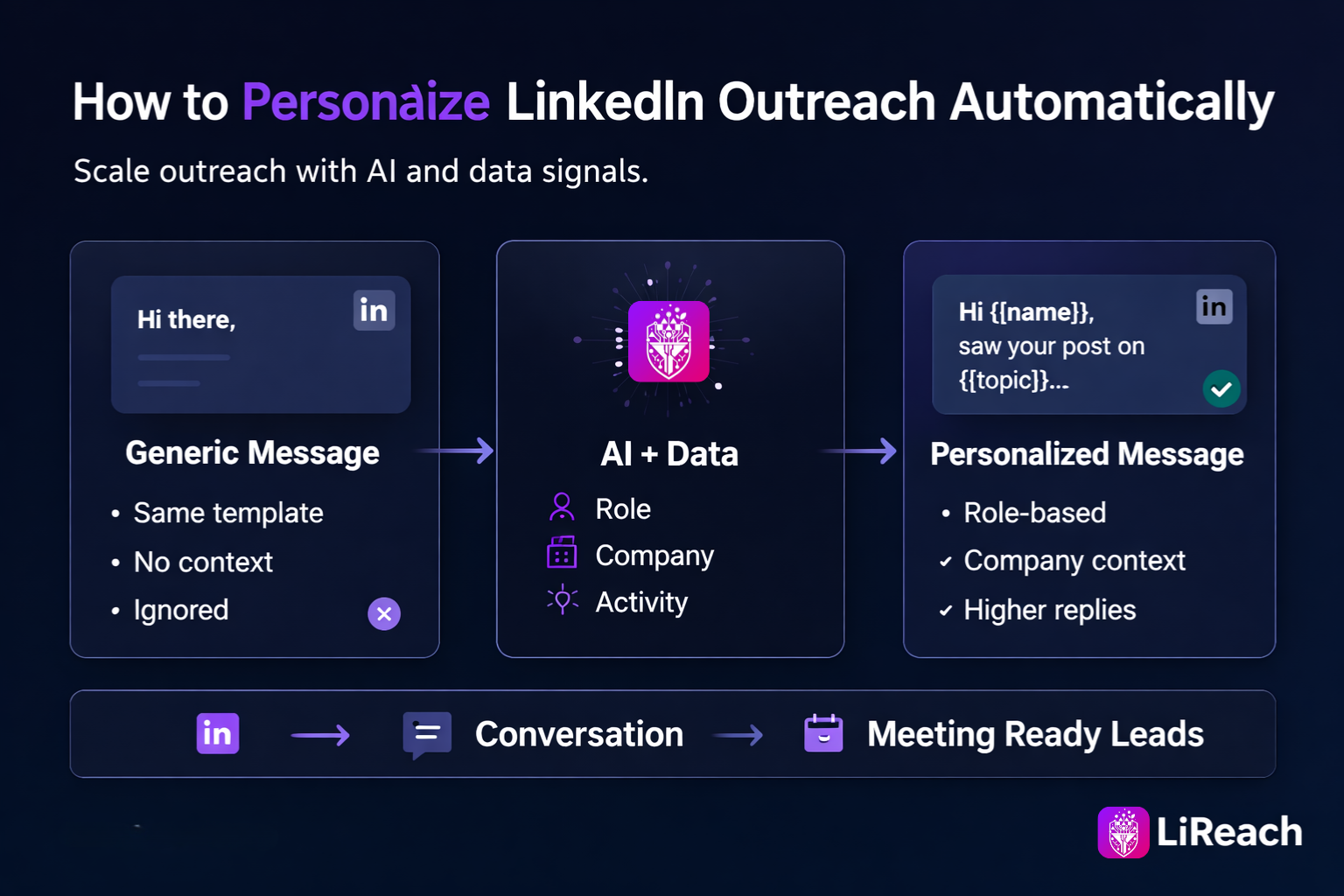
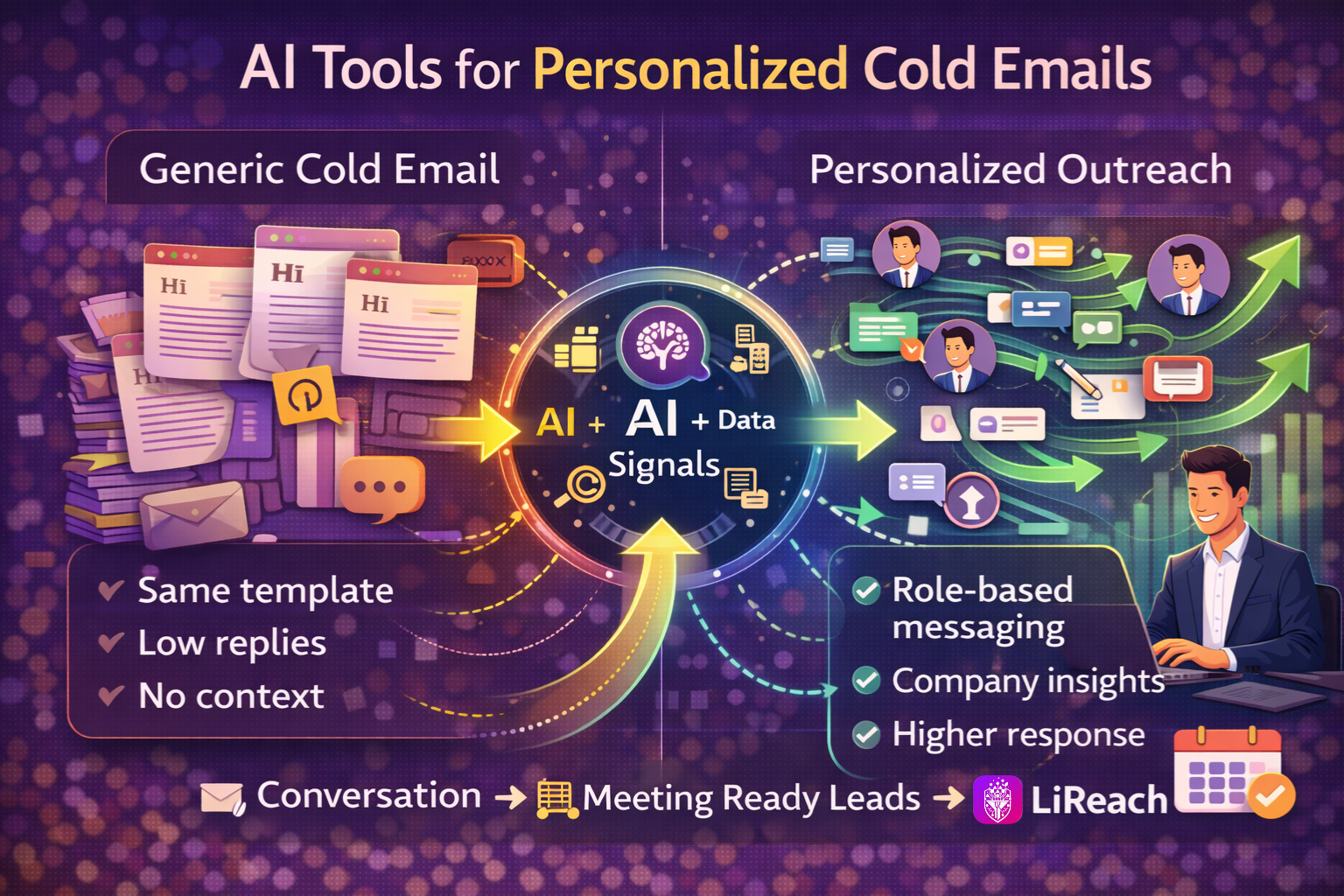
Most outreach tools claim they help you “personalize emails”.
But what they actually mean is:
- {FirstName}
- {Company}
- {Industry}
This is not personalization.
This is mail merge.
Real personalization answers one simple question:
Why should this message matter to this specific founder today?
If your message cannot answer that question within the first two sentences, the prospect will ignore it.
The Real Problem Founders Face
Let’s look at a real scenario we see often.
Example: A Software Development Company
A founder running a software development company wants to reach startup founders.
He creates a list of 500 startup CEOs and sends this message:
""Hey John, we help startups build scalable software products. Would love to connect.""
Sounds polite.
But the response rate is terrible.
Why?
Because the message is about the sender, not the prospect.
It shows no context.
No insight.
No relevance.
What High-Performing Outbound Teams Do Differently
The best outbound teams follow a completely different philosophy.
They don't try to send more messages.
They focus on starting better conversations.
At LiReach, our entire system is designed around one core idea:
Conversation-first outreach.
Instead of blasting thousands of prospects, we focus on:
- the right decision-makers
- relevant context
- natural conversation starters
This approach consistently generates what we call:
Meeting-ready leads.
The LiReach Personalization Framework
Through working with founder-led B2B companies, we developed a simple framework for scalable outreach personalization.
Step 1 — Identify the Right Decision Makers
Most outbound campaigns fail before the first message is even sent.
Because they target the wrong people.
Instead of broad prospect lists, LiReach focuses on highly targeted decision-makers within specific companies. :contentReference[oaicite:2]{index=2}
Examples:
- SaaS founders actively hiring engineers
- B2B companies expanding their sales teams
- Startups that recently raised funding
When targeting is correct, personalization becomes dramatically easier.
Step 2 — Add Context Before Writing Messages
This is where most outreach tools fail.
They try to personalize messages after writing templates.
We do the opposite.
LiReach builds context first.
Things like:
- company growth stage
- recent hiring signals
- industry challenges
- expansion patterns
This allows outreach to reference something meaningful.
For example:
Instead of saying:
""Hey Alex, I saw you're the founder of X company.""
The message becomes:
""Noticed your team has been hiring backend engineers recently — usually a sign product demand is growing fast.""
This immediately feels more relevant.
Step 3 — Start Conversations, Not Pitches
One of the biggest mistakes founders make is pitching too early.
Cold outreach should never feel like a sales presentation.
Instead it should feel like the beginning of a conversation.
For example:
""Curious — are you currently handling product scaling internally or working with external teams?""
That single question often performs better than long sales messages.
Case Study: Turning Cold Outreach Into Meetings
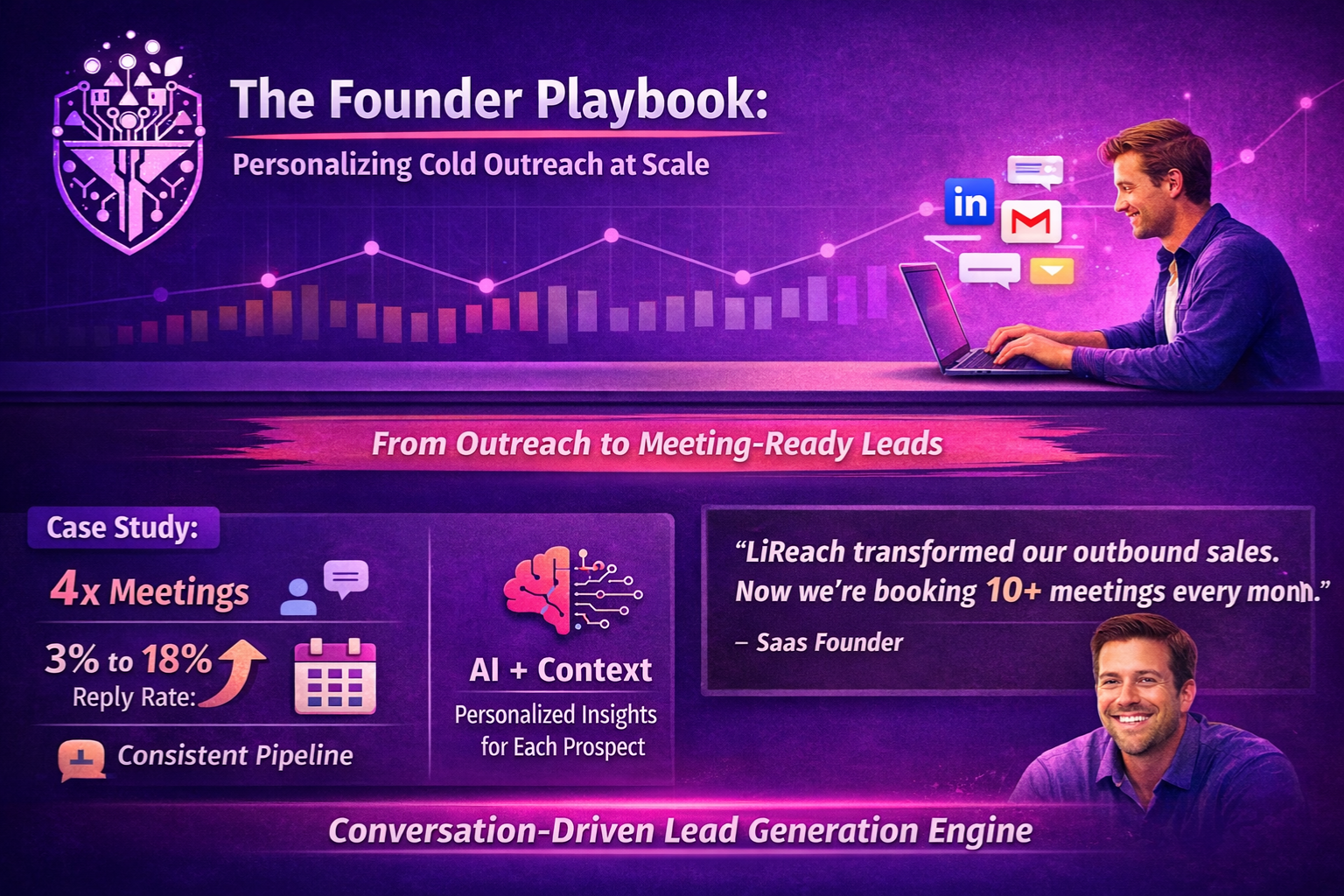
One of our early LiReach users was a founder running a niche B2B consulting firm.
Before implementing LiReach, his outreach looked like this:
- Manual LinkedIn messages
- Cold emails written individually
- Inconsistent follow-ups
Results:
- Reply rate: 3%
- Meetings per month: 2–3
After implementing a structured LiReach workflow:
- Targeted decision-maker lists
- Context-driven personalization
- structured LinkedIn + email follow-ups
Results changed dramatically:
- Reply rate increased to 18%
- Conversations increased 4x
- Meetings became predictable
This is the difference between random outreach and a system.
The Technology Behind LiReach
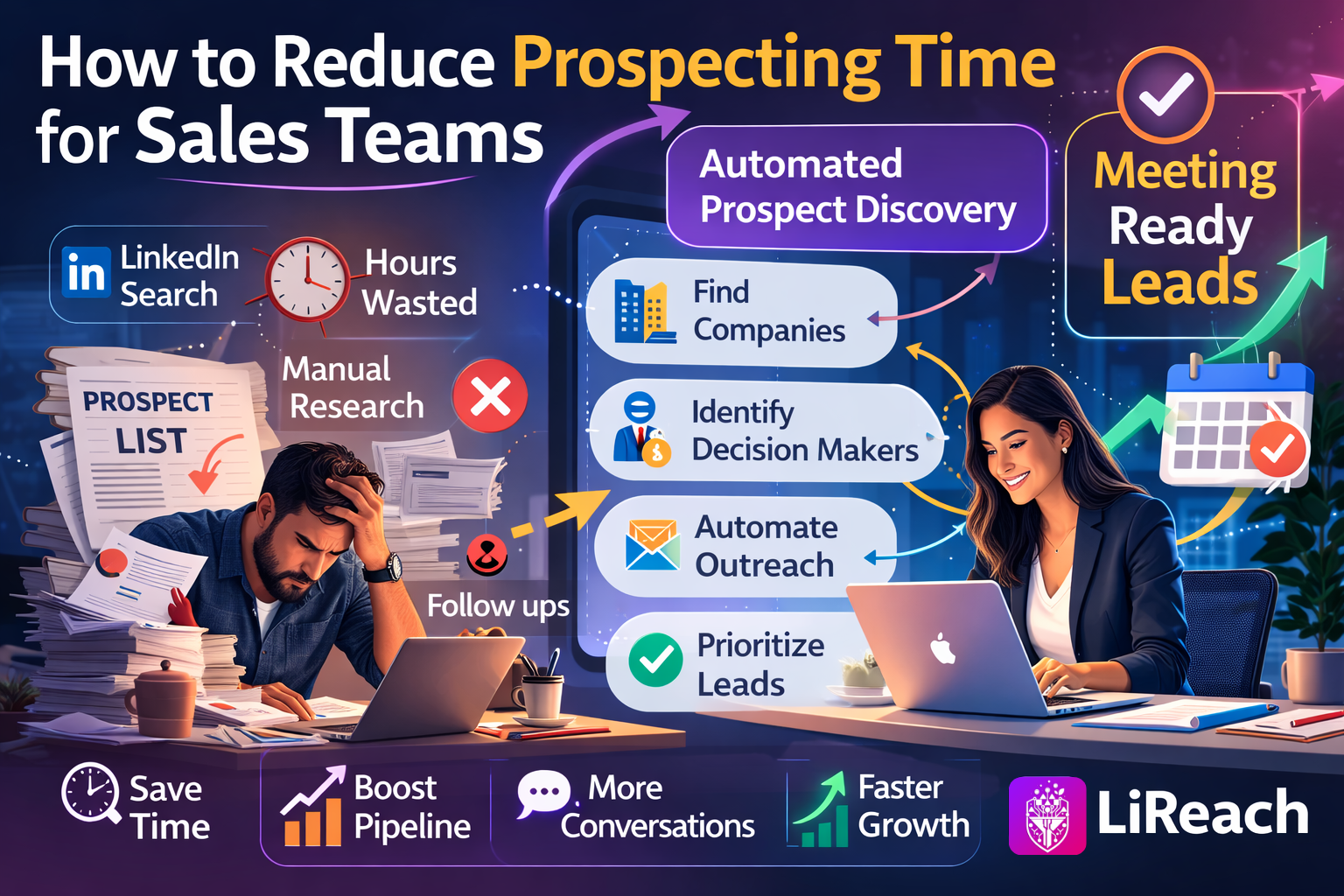
LiReach uses AI to automate the most time-consuming parts of outbound. :contentReference[oaicite:3]{index=3}
- prospect identification
- context extraction
- personalization suggestions
- follow-up automation
This allows founder-led companies to run their outbound engine almost on autopilot while still keeping messages highly relevant.
From Outreach to Predictable Pipeline
Many companies rely heavily on referrals.
Referrals are great.
But they are unpredictable.
Outbound solves this problem when done correctly.
With the right system, companies can consistently generate conversations with decision-makers.
And those conversations turn into meetings.
Final Thoughts
Cold outreach is evolving quickly.
Buyers today ignore generic messages.
But they respond to relevance.
The future of outbound is not mass messaging.
It is intelligent conversation-driven outreach.
That is exactly the problem LiReach was built to solve.
Join 2,000+ Sales Leaders
Get advanced LinkedIn strategies, automation tips, and templates delivered to your inbox weekly. No spam, just value.