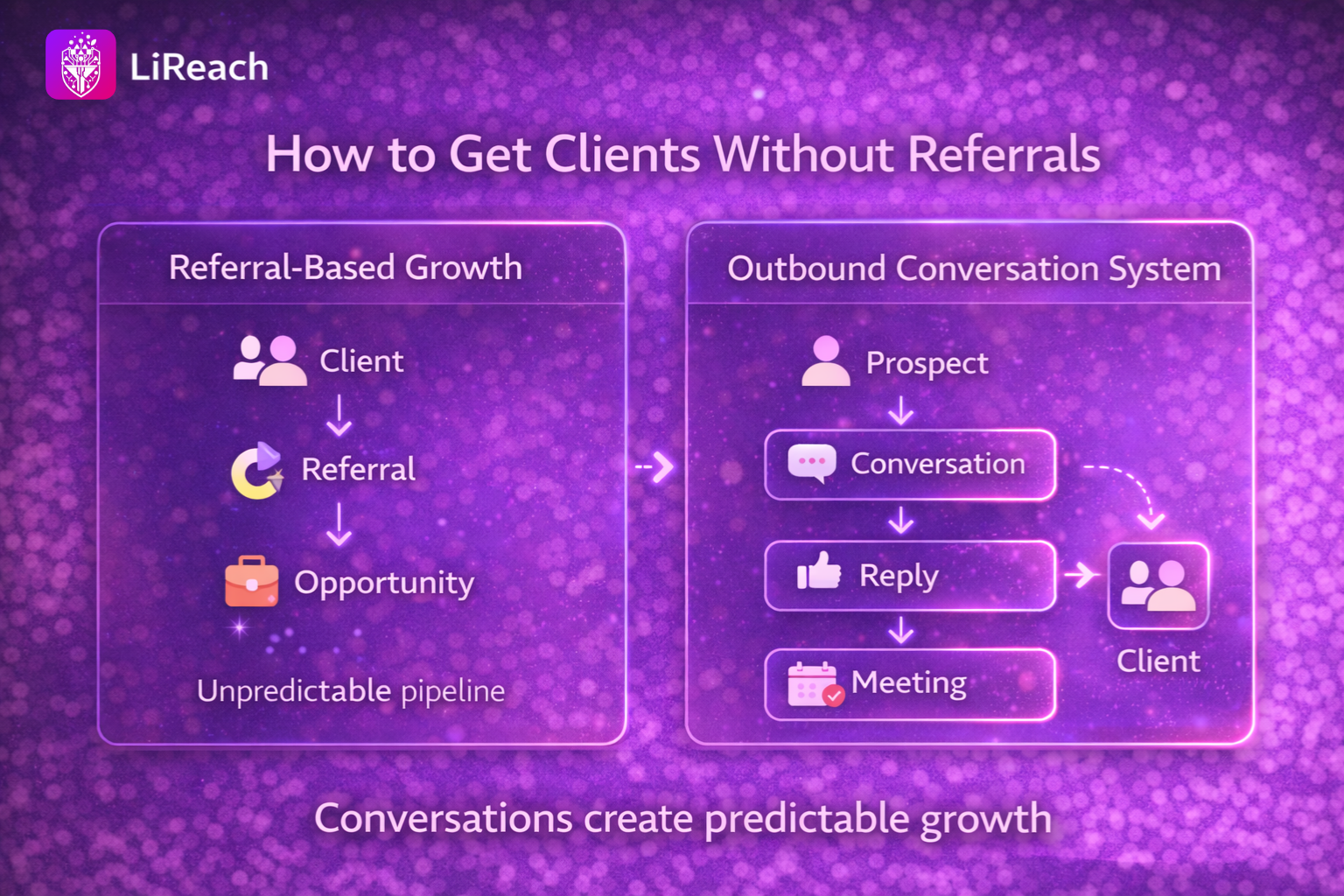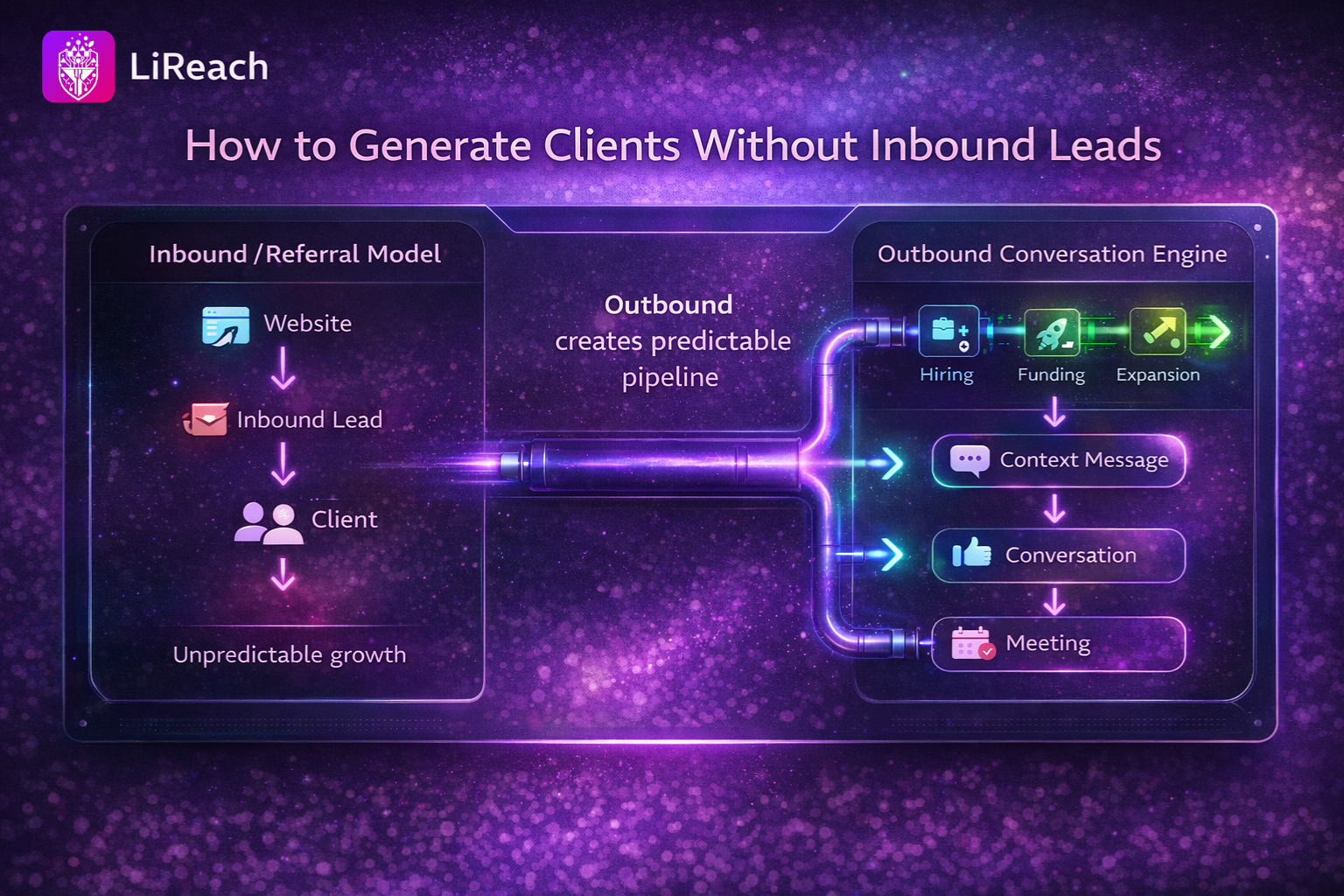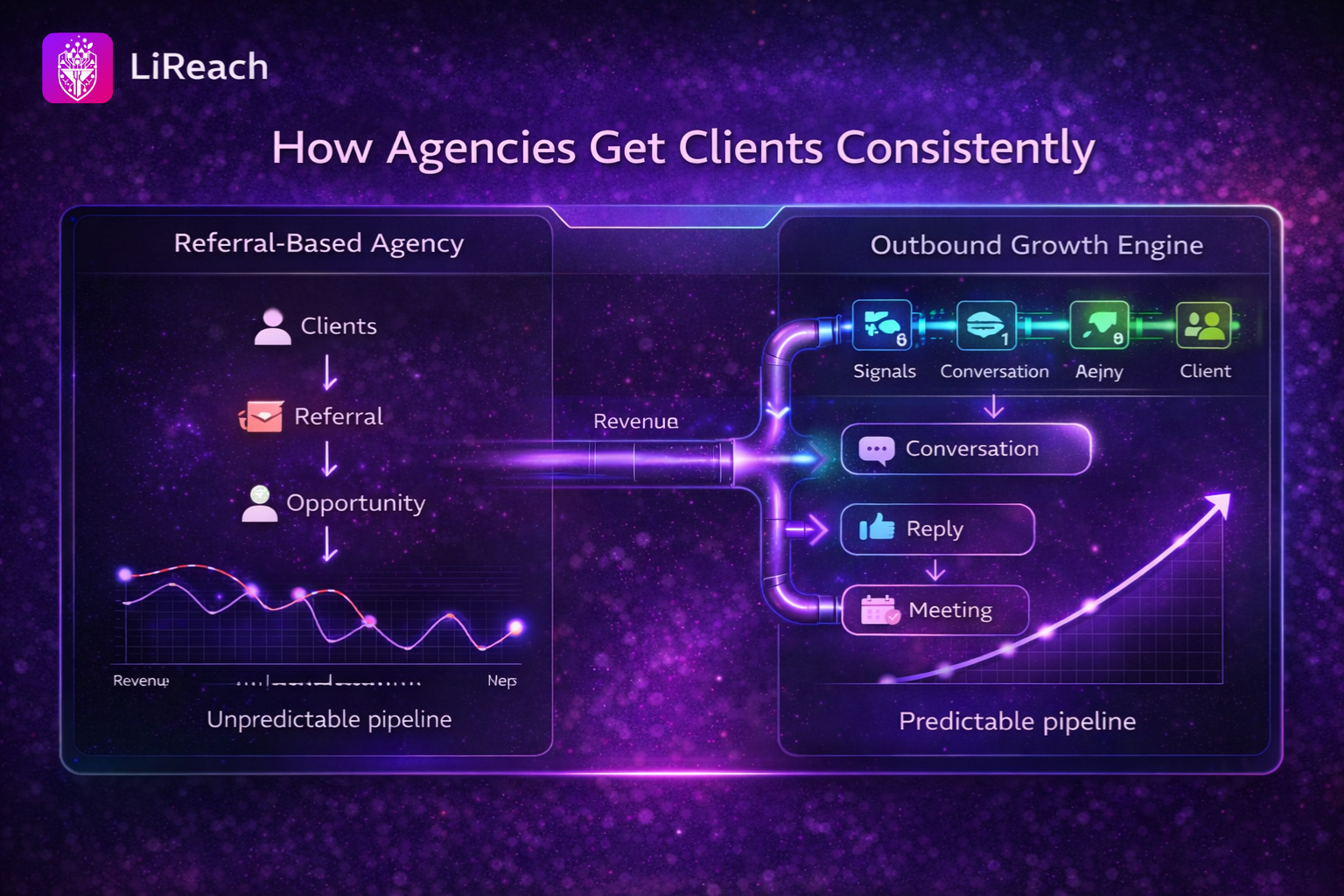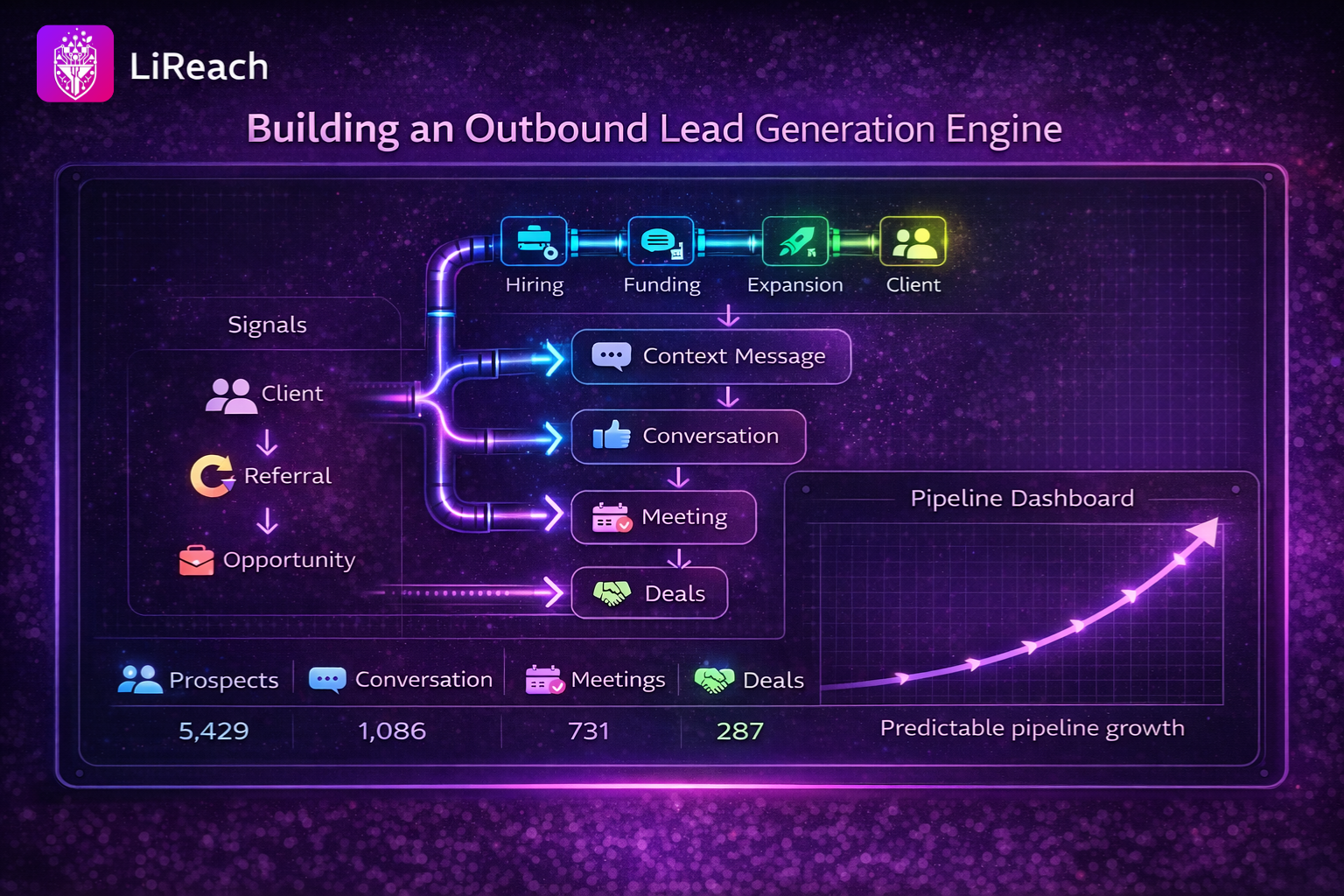
Many B2B founders begin their journey relying on inbound leads and referrals.
Someone reads a blog post.
A past client introduces you to another company.
A message appears asking about your service.
At first this feels like the ideal growth model.
But eventually every founder encounters the same challenge.
The pipeline becomes unpredictable.
Some months you receive several opportunities.
Other months bring none.
When growth depends entirely on inbound or referrals, founders lose control of their sales pipeline.
This is why many successful B2B companies build structured outbound lead generation systems.
The Difference Between Outreach and an Outbound System
Many teams believe outbound simply means sending cold emails.
But real outbound growth is not random outreach.
It is a system designed to consistently start conversations with high-fit prospects.
The goal is not mass messaging.
The goal is creating a predictable pipeline of conversations.
The Outbound Lead Generation Framework
At LiReach we often describe outbound growth using a simple structure:
Signals → Context → Conversation → Meeting → Opportunity
Each stage plays an important role in creating pipeline consistency.
Step 1: Define Your Ideal Customer Profile
The first step in building outbound is identifying the right companies.
This typically includes:
- industry
- company size
- growth stage
- decision maker roles
Outbound becomes far more effective when targeting companies similar to your best existing clients.
Step 2: Identify Buying Signals
Signals indicate that a company may need your solution.
Examples include:
- new hiring activity
- funding announcements
- product launches
- market expansion
Signals provide context for outreach messages.
This dramatically improves response rates.
Step 3: Write Context-Based Outreach
Generic outreach rarely works today.
Modern outreach references something specific about the prospect.
Example message:
“Noticed your team recently expanded your SDR team — curious if outbound pipeline generation is becoming a bigger focus.”
This message does not push a sales pitch.
It simply starts a conversation.
Step 4: Implement a Follow-Up System
Most prospects will not respond to the first message.
Follow-ups keep the conversation alive.
Effective follow-ups usually include:
- reminders
- insights
- questions
This approach significantly increases reply rates.
Step 5: Convert Conversations Into Meetings
Once a prospect replies, the meeting becomes the natural next step.
Instead of pushing a demo immediately, the focus is understanding the prospect’s challenges.
This leads to higher-quality sales calls.
Why Founders Struggle With Outbound
Building outbound manually can be complex.
Teams often struggle with:
- finding the right prospects
- personalizing outreach at scale
- managing follow-ups
- tracking conversations
Without the right system, outbound quickly becomes overwhelming.
How LiReach Helps Build Outbound Lead Engines
LiReach was built to help founders run structured outbound systems.
Instead of manually managing every step, the platform helps teams:
- identify high-fit prospects
- detect buying signals
- generate personalized outreach
- automate follow-ups
The goal is not just sending messages.
The goal is starting real conversations with the right companies.
And conversations eventually turn into meetings.
Meetings turn into opportunities.
And opportunities turn into revenue.
Final Thoughts
Inbound leads and referrals will always remain valuable.
But founders who want predictable growth cannot rely on them alone.
Outbound allows companies to proactively create opportunities with the businesses they want to work with.
When outreach focuses on signals, context, and conversations, lead generation becomes far more predictable.
And predictable conversations create predictable growth.
Join 2,000+ Sales Leaders
Get advanced LinkedIn strategies, automation tips, and templates delivered to your inbox weekly. No spam, just value.