Low response rates are one of the most common frustrations in outbound sales.
You send emails.
You send LinkedIn messages.
You follow up.
But very few prospects respond.
This often makes founders believe outbound sales simply does not work.
But the reality is very different.
Outbound works extremely well when it is built around the right strategy.
At LiReach, after analyzing thousands of outreach conversations across agencies, SaaS companies, and B2B service firms, we discovered something important.
Low response rates are rarely caused by outreach itself.
They are usually caused by mistakes in targeting, messaging, or positioning.
Fixing these issues is how companies turn outbound into a reliable source of meeting ready leads.
Why Most Outbound Campaigns Get Ignored
Before improving response rates, it is important to understand why prospects ignore outreach messages.
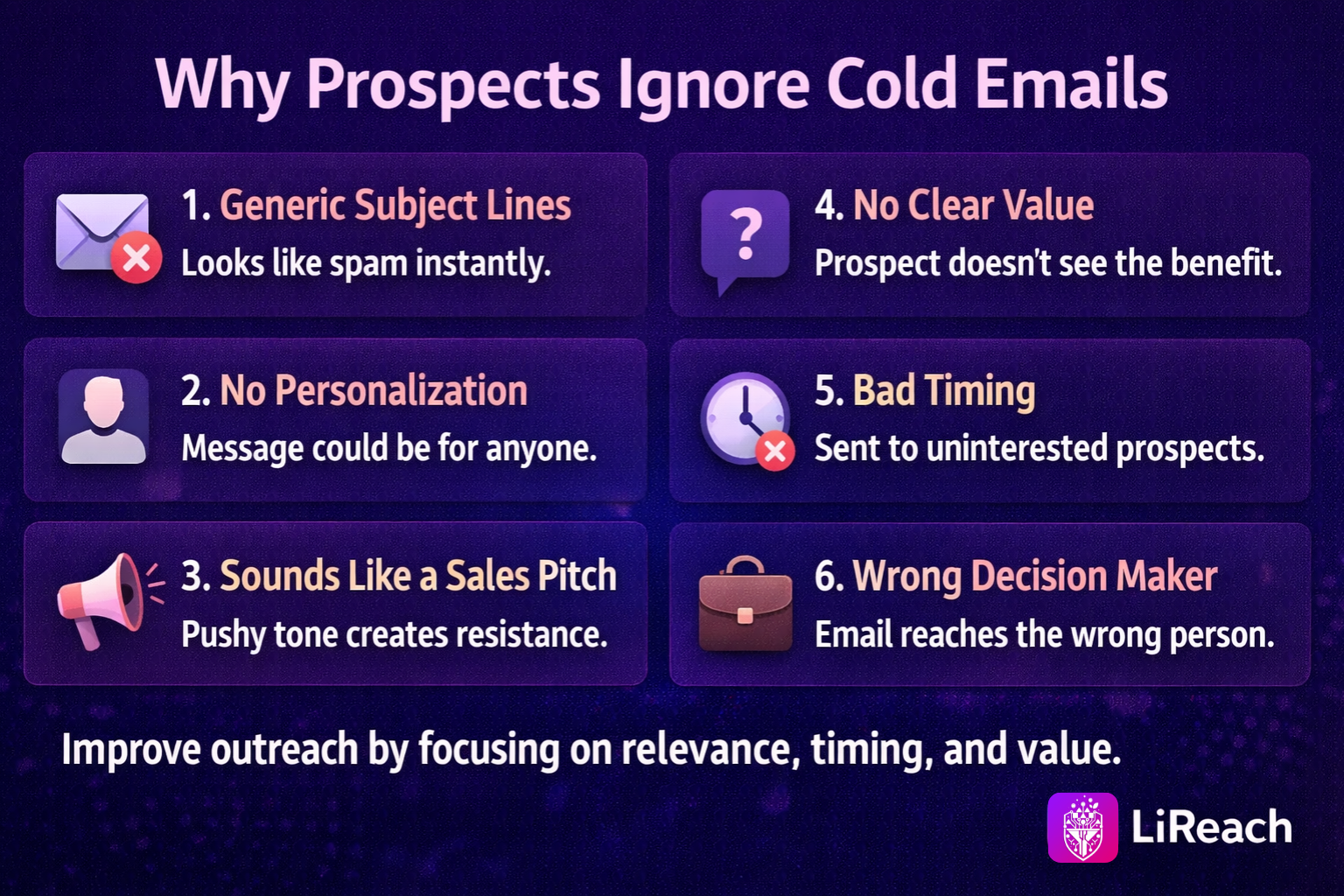
The most common reasons include:
- Messages look automated
- The offer feels irrelevant
- The outreach sounds too salesy
- The prospect is not the right decision maker
When these problems exist, even large outreach volumes will produce very few responses.
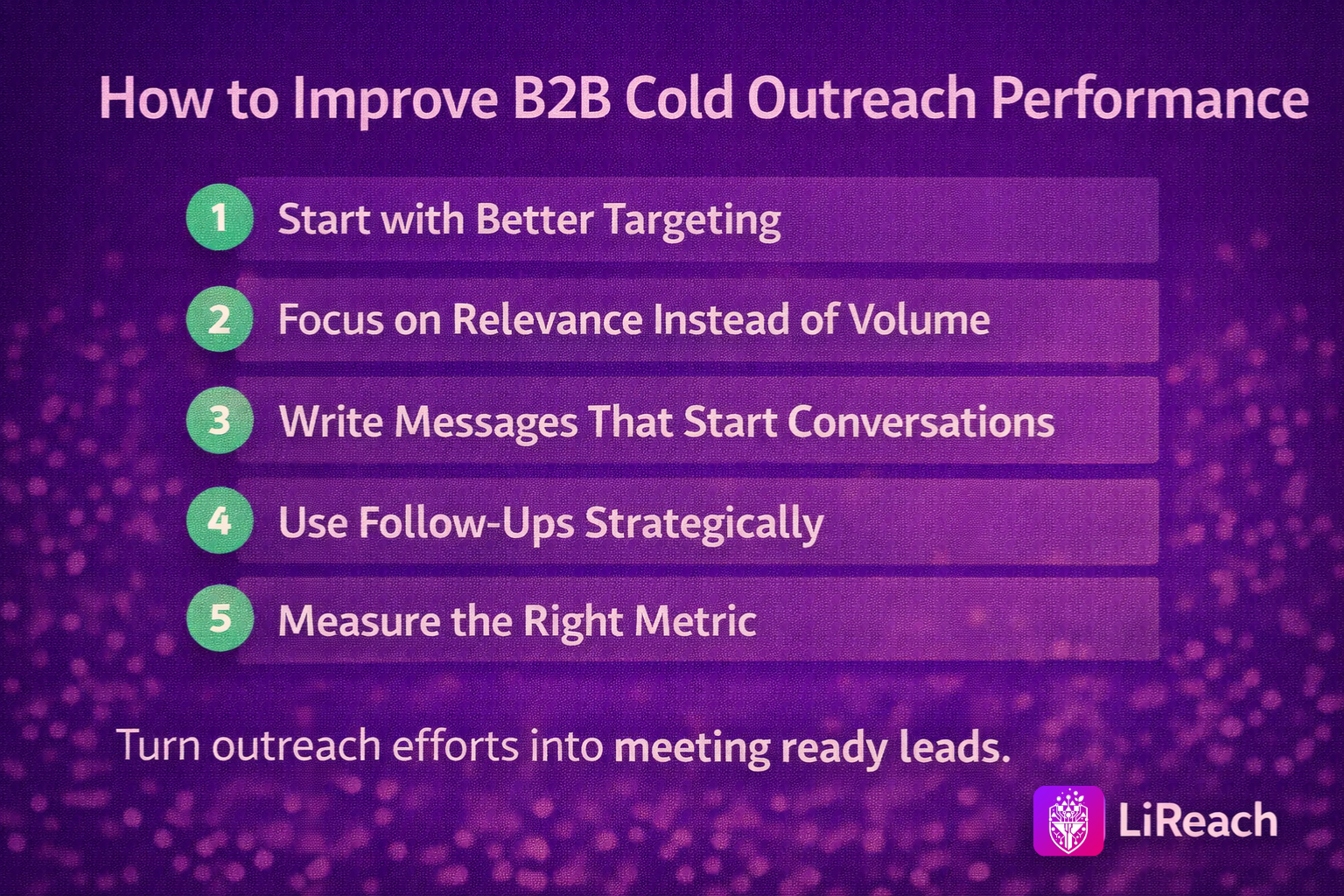
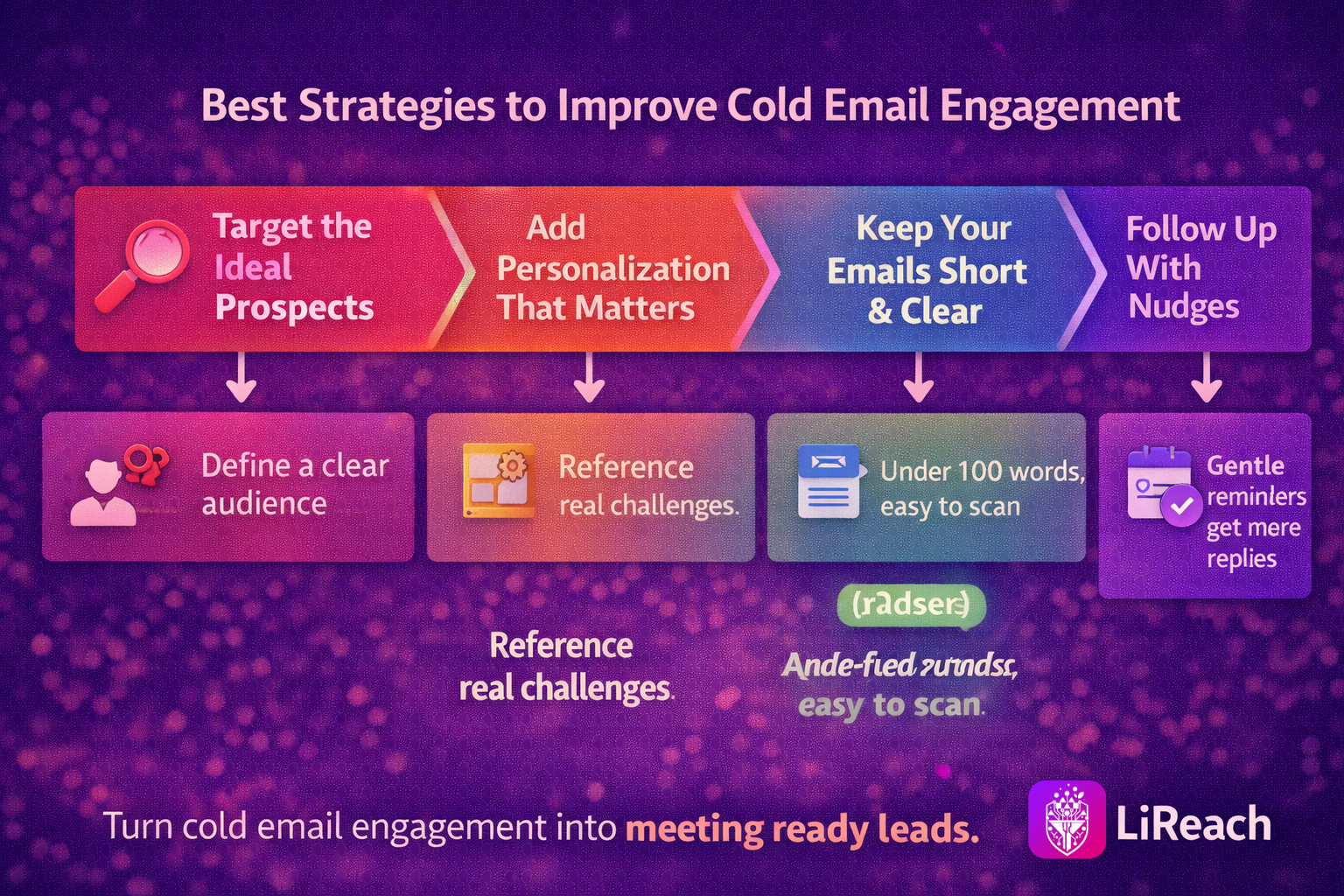
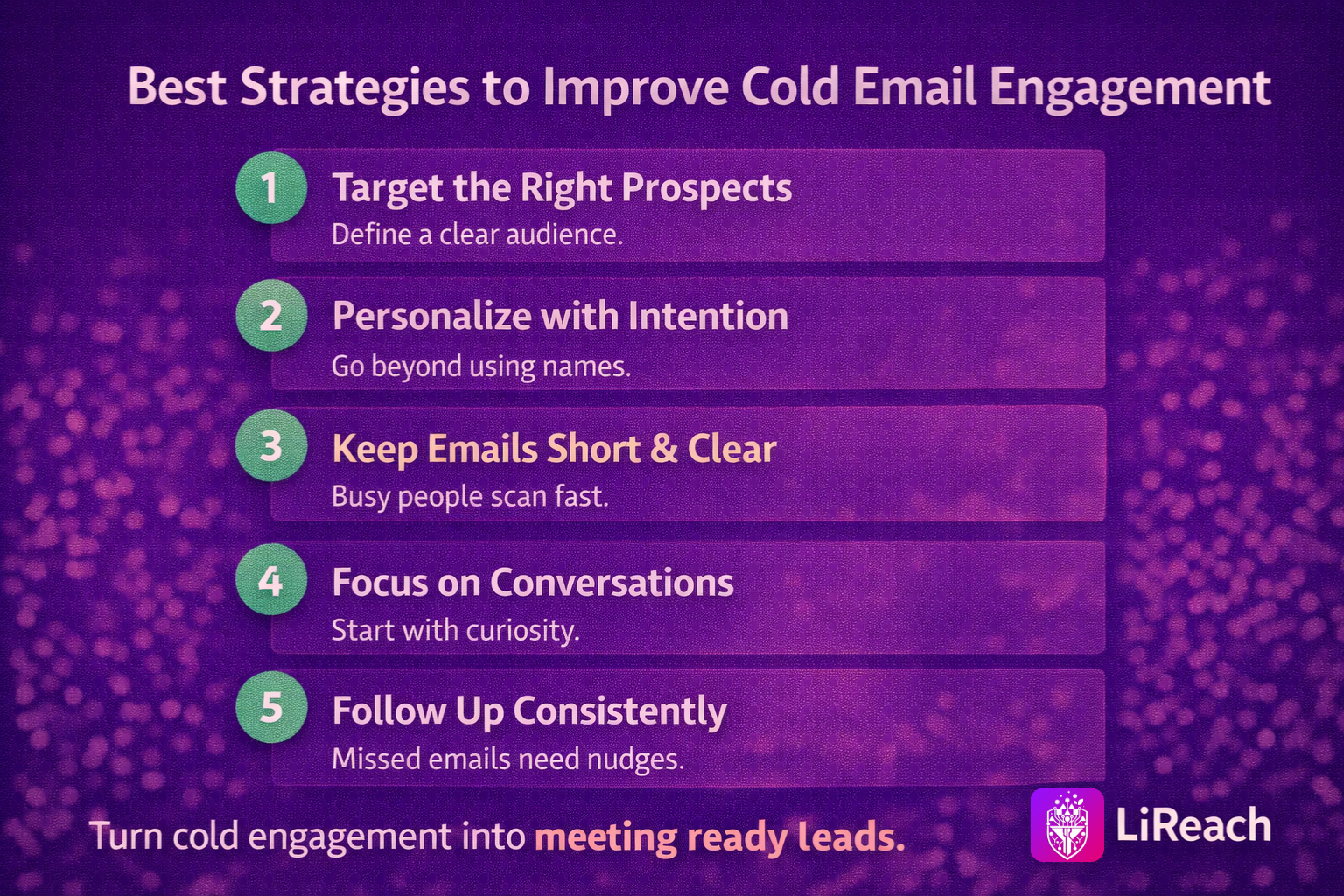
Step 1: Improve Your Targeting
The most important factor in outbound success is targeting.
If the prospect does not have the problem you solve, they will ignore the message.
High-performing outbound teams define a clear ideal customer profile.
This usually includes:
- Industry
- Company size
- Growth stage
- Decision-maker role
When outreach focuses on the right audience, response rates improve naturally.
Step 2: Write Messages That Start Conversations
Most outreach messages fail because they immediately try to sell.
Prospects rarely respond to direct sales pitches from strangers.
The outreach that gets replies usually starts with curiosity.
It references a relevant problem or observation about the prospect’s business.
This approach feels more like a conversation than a pitch.
Step 3: Keep Messages Short
Long outreach messages rarely perform well.
Busy professionals scan messages quickly.
The most effective outbound messages are clear, short, and easy to respond to.
In many cases, the best-performing outreach messages are under 100 words.
Step 4: Use Follow-Ups Strategically
Many teams stop after the first outreach message.
However, a significant number of replies come from follow-ups.
Busy professionals often miss the first message.
A thoughtful follow-up can dramatically increase response rates.
Step 5: Focus on Conversations, Not Just Replies
Many outbound campaigns focus only on reply rates.
But not every reply creates a business opportunity.
The real objective of outbound sales is generating meeting ready leads.
These are prospects who:
- Fit your ideal customer profile
- Recognize the problem you solve
- Are willing to have a discovery conversation
When outreach is designed around conversations instead of volume, these leads appear more consistently.
The LiReach Approach to Outbound
At LiReach, we believe outbound should feel like a natural business conversation.
Instead of sending thousands of generic messages, successful teams focus on meaningful outreach to the right prospects.
This approach combines:
- Precise prospect targeting
- Personalized messaging
- Conversation-driven outreach
- Systems designed to generate meeting ready leads
When outbound is built this way, pipelines become far more predictable.
Final Thought
Low response rates do not mean outbound sales is broken.
They simply mean the outreach strategy needs improvement.
The companies that succeed with outbound understand one simple truth.
Sales pipelines begin with conversations.
And conversations begin with the first reply.
Join 2,000+ Sales Leaders
Get advanced LinkedIn strategies, automation tips, and templates delivered to your inbox weekly. No spam, just value.