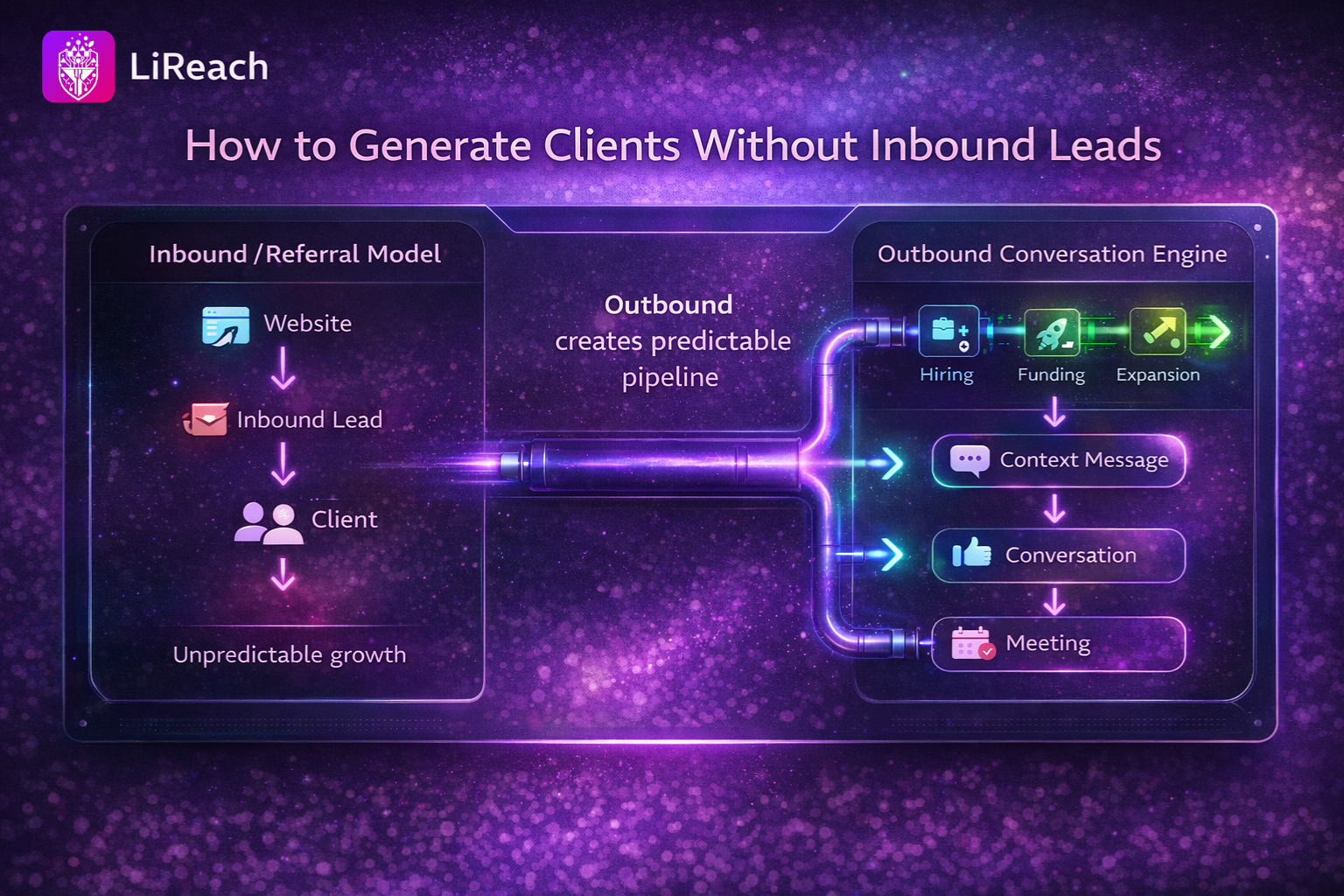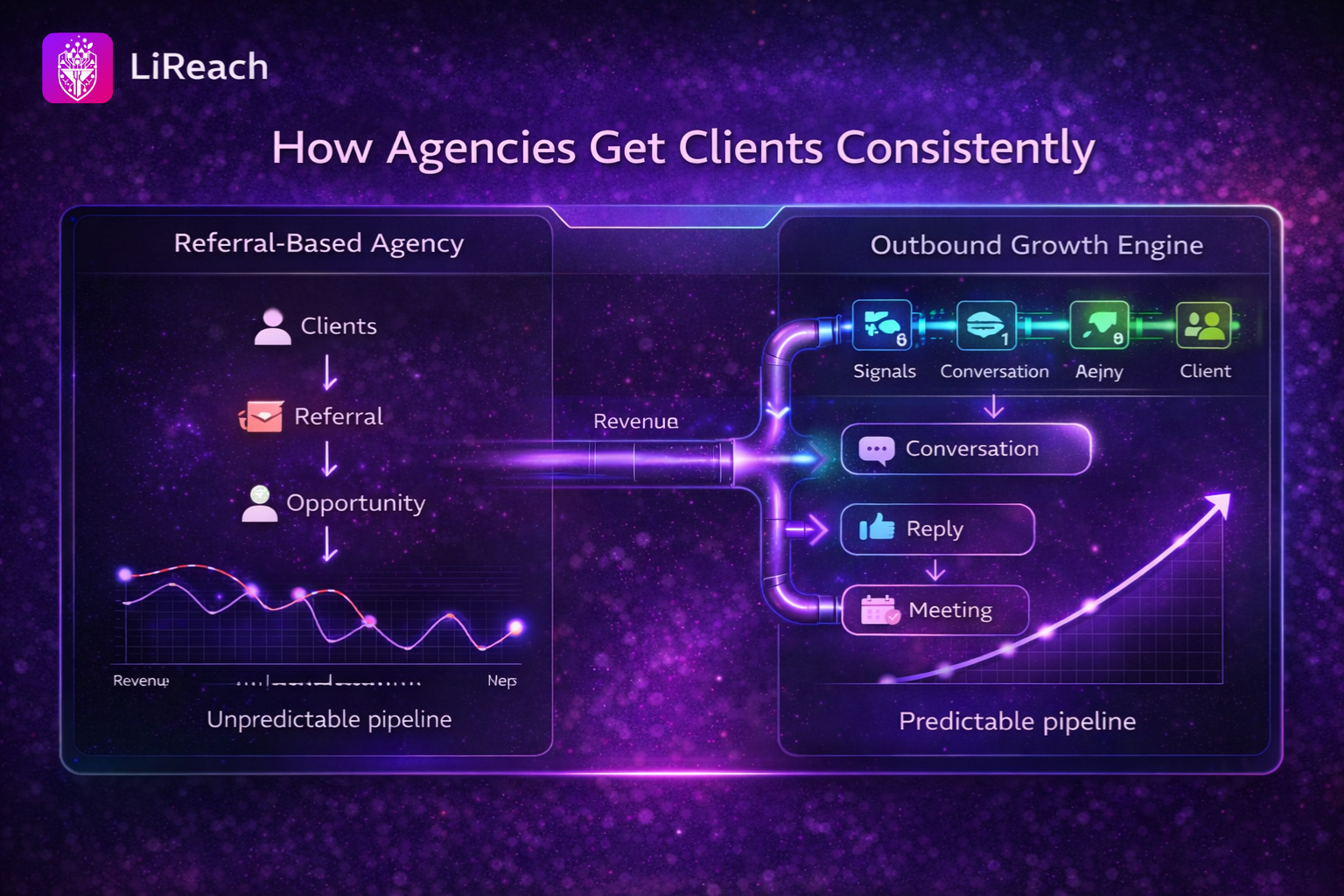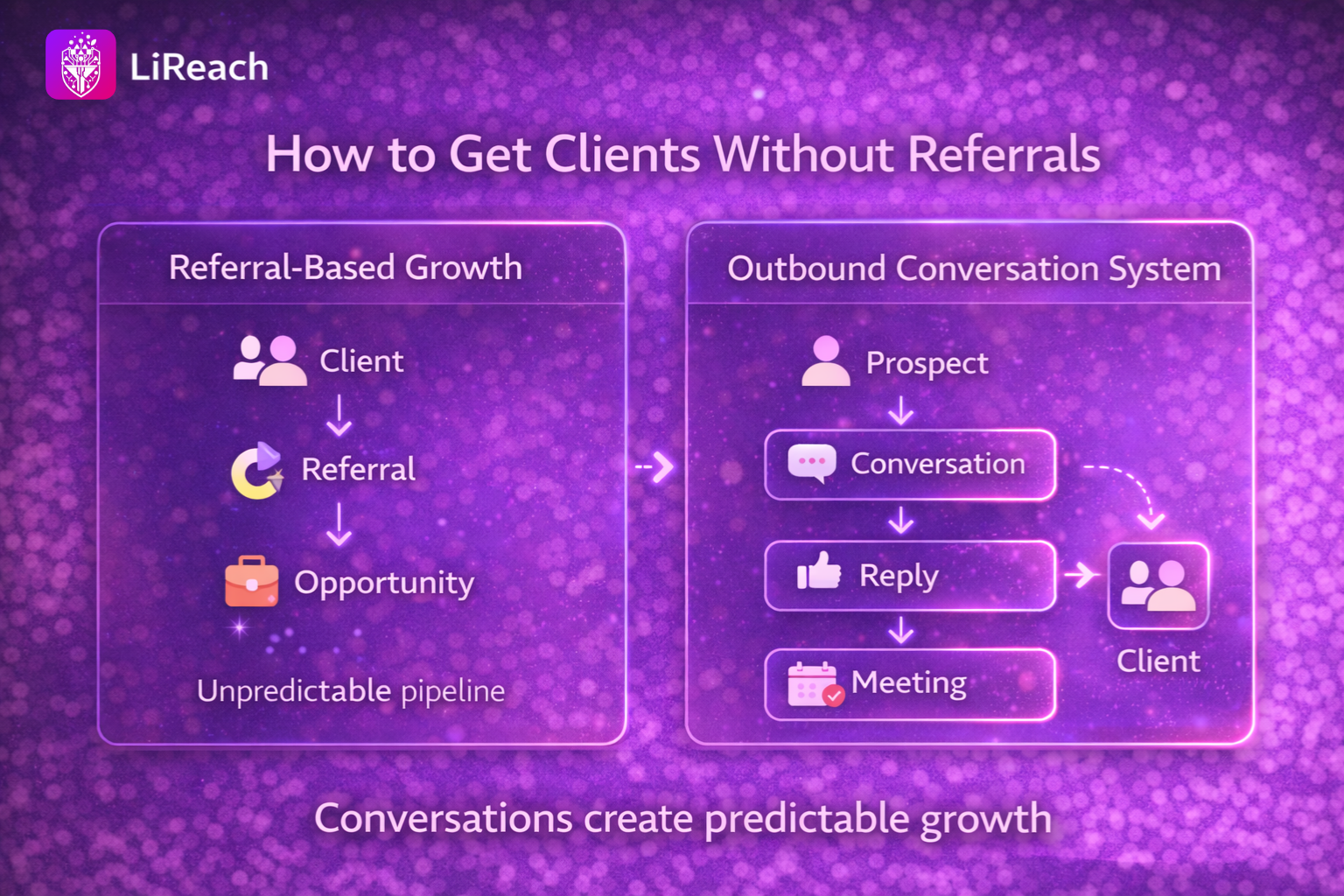
Most founders start their business with referrals.
A happy client introduces you to another company.
Someone hears about your work through a trusted connection.
An opportunity appears.
In the early stages this feels ideal.
Clients arrive without needing structured sales efforts.
But eventually founders encounter the same challenge.
The pipeline becomes unpredictable.
Some months bring multiple opportunities.
Other months bring none.
When businesses depend entirely on referrals or inbound leads, consistent growth becomes difficult.
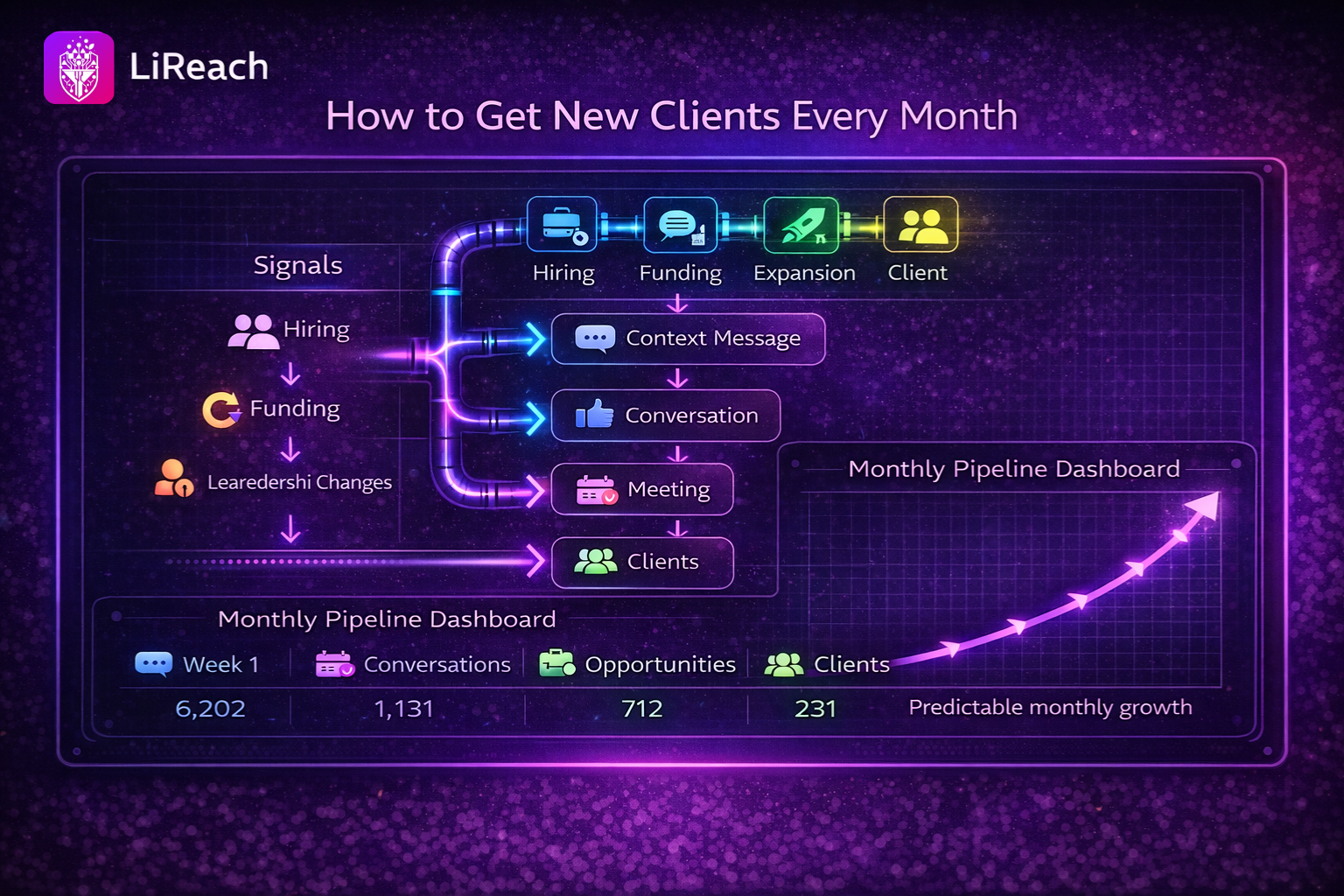
To generate new clients every month, companies need a predictable client acquisition system.
The Difference Between Random Leads and a Predictable Pipeline
Many founders believe lead generation is about sending more outreach messages.
But successful companies focus on building systems instead of relying on random opportunities.
A predictable pipeline means:
- new conversations start every week
- meetings are booked consistently
- sales opportunities appear regularly
The goal is not just more leads.
The goal is consistent conversations with high-fit prospects.
The Monthly Client Generation Framework
At LiReach we describe outbound growth using a simple structure:
Signals → Context → Conversation → Meeting → Client
Each step helps create a steady flow of new opportunities.
Step 1: Identify the Right Prospects
The first step in predictable client acquisition is defining your Ideal Client Profile (ICP).
This typically includes:
- industry
- company size
- growth stage
- decision makers
Targeting companies similar to your best clients dramatically improves response rates.
Step 2: Use Business Signals
Signals indicate when companies may need your solution.
Examples include:
- new hiring activity
- funding announcements
- product launches
- market expansion
Signals provide context for outreach.
This makes the message feel relevant instead of cold.
Step 3: Start Context-Based Conversations
Most outreach fails because it tries to sell immediately.
Modern outreach focuses on starting conversations instead.
Example outreach:
“Noticed your team recently expanded your SDR team — curious if outbound pipeline generation is becoming a bigger focus.”
This message does not push a demo.
It simply opens a conversation.
Step 4: Follow Up Strategically
Most prospects do not respond to the first message.
Follow-ups keep the conversation alive.
Strong follow-ups often include:
- short reminders
- relevant insights
- simple questions
This dramatically improves reply rates.
Step 5: Convert Conversations Into Clients
Once a prospect replies, the meeting becomes the natural next step.
These meetings reveal whether there is a real opportunity to work together.
Over time, consistent conversations turn into consistent clients.
Why Most Founders Struggle With Consistent Client Acquisition
Building outbound manually is challenging.
Founders often struggle with:
- finding the right prospects
- writing personalized outreach
- managing follow-ups
- tracking conversations
Without a system, outreach becomes chaotic and inconsistent.
How LiReach Helps Founders Generate Clients Every Month
LiReach was built to help founders create predictable outbound pipelines.
The platform helps teams:
- identify high-fit prospects
- detect buying signals
- generate personalized outreach
- automate follow-ups
Instead of waiting for referrals, founders can consistently start new conversations with the right companies.
Those conversations turn into meetings.
And meetings turn into clients.
Final Thoughts
Referrals and inbound leads will always remain valuable.
But companies that rely on them exclusively often struggle with unpredictable growth.
Outbound systems allow founders to proactively create opportunities with companies they want to work with.
When outreach focuses on signals, context, and conversations, client acquisition becomes far more predictable.
And predictable conversations create predictable revenue.
Join 2,000+ Sales Leaders
Get advanced LinkedIn strategies, automation tips, and templates delivered to your inbox weekly. No spam, just value.