Cold email is one of the most powerful tools for B2B sales.
It allows founders and sales teams to reach decision makers directly without relying on ads, SEO, or inbound marketing.
But many companies run into the same frustrating problem.
They send hundreds of cold emails.
Some prospects even reply.
Yet very few conversations turn into real sales calls.
The inbox activity looks promising, but the calendar remains empty.
This happens because most cold email strategies focus on sending messages rather than starting meaningful conversations.
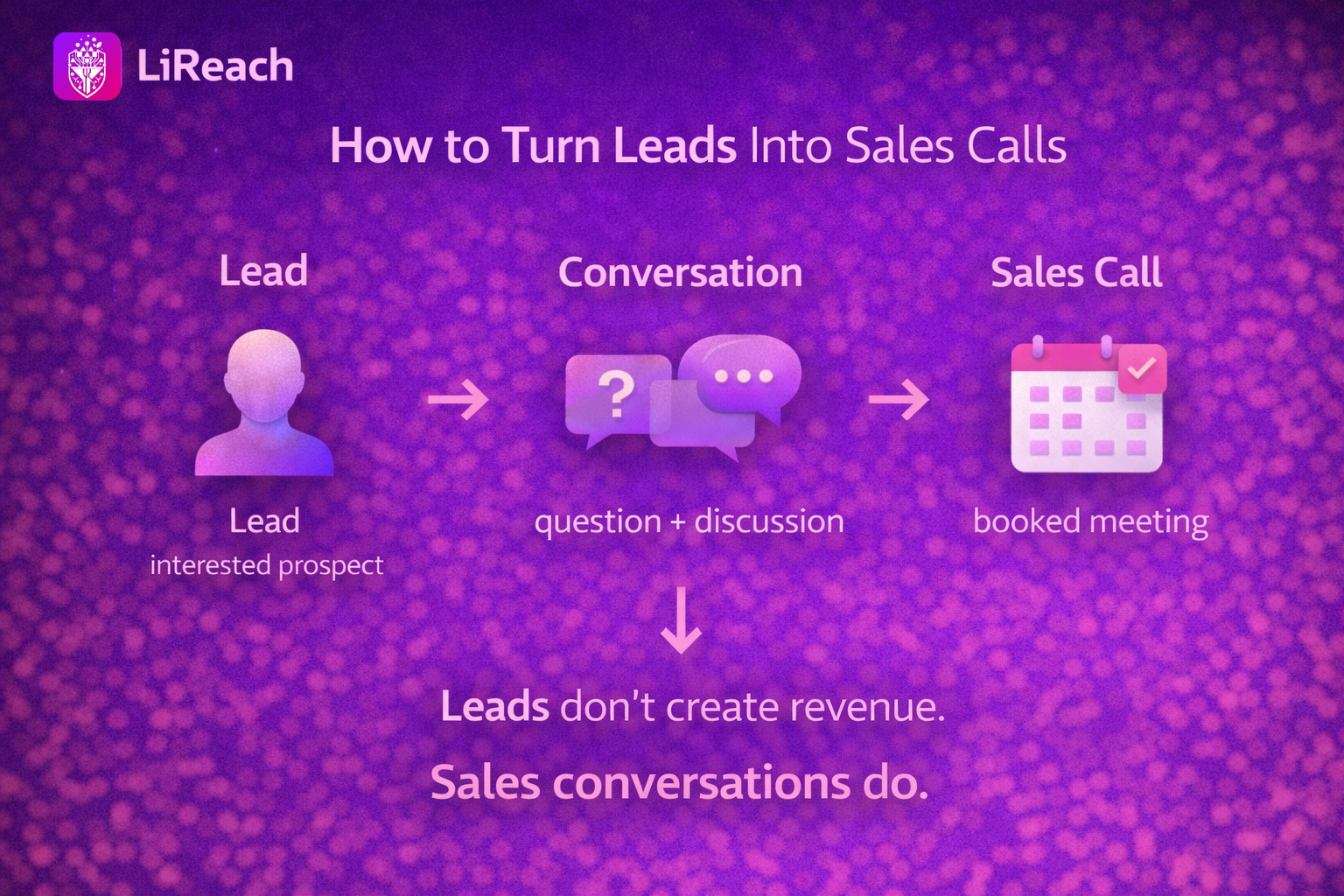
And sales calls only happen when a conversation feels valuable.
Why Cold Emails Don’t Turn Into Sales Calls
Before fixing the problem, it’s important to understand why cold email outreach often fails to produce meetings.
1. The Email Starts With a Pitch
Many cold emails immediately talk about the sender’s product or service.
Example:
“Hi Alex, we help companies generate more leads using our AI platform.”
This message explains the product, but it doesn’t create curiosity.
The prospect has no reason to respond or book a meeting.
Buyers receive dozens of similar emails every week.
Most of them are ignored.
2. The Email Feels Generic
Another common mistake is sending emails that clearly look automated.
Examples include:
- “Hey {FirstName}”
- “Saw you're the founder of {Company}”
- “We help companies like yours…”
Prospects immediately recognize these templates.
When outreach feels generic, they assume the sender has no real understanding of their business.
As a result, the conversation never begins.
3. Asking for a Meeting Too Early
Many cold emails jump directly to a meeting request.
Example:
“Would you be open to a quick demo this week?”
At this point the prospect has not yet seen the value of the conversation.
Scheduling a call requires time and attention.
Without clear value, the prospect simply ignores the request.
The Conversation-Driven Cold Email Framework
At LiReach we approach cold email differently.
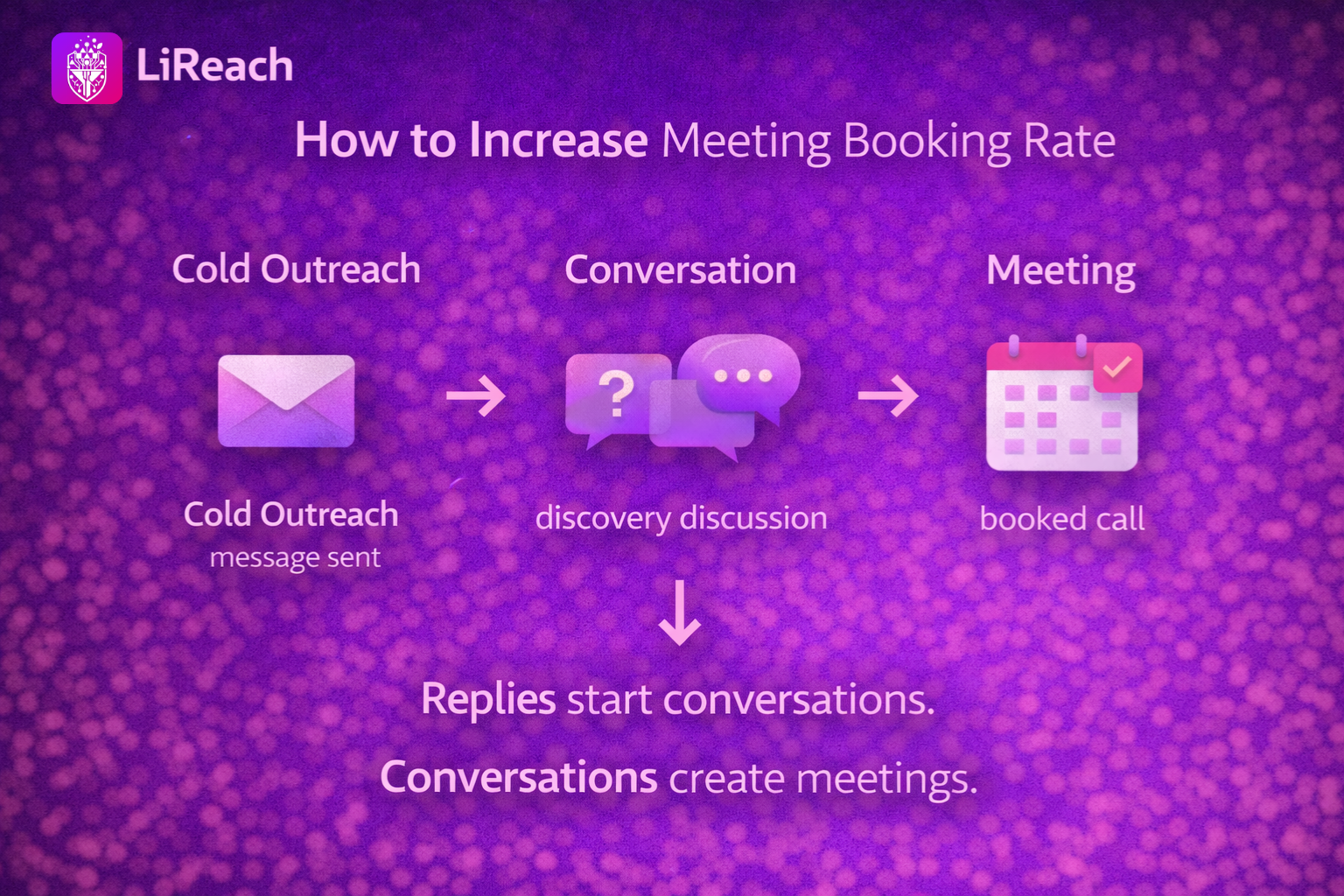
Instead of pushing meetings immediately, we design emails that start conversations.
Those conversations naturally lead to sales calls.
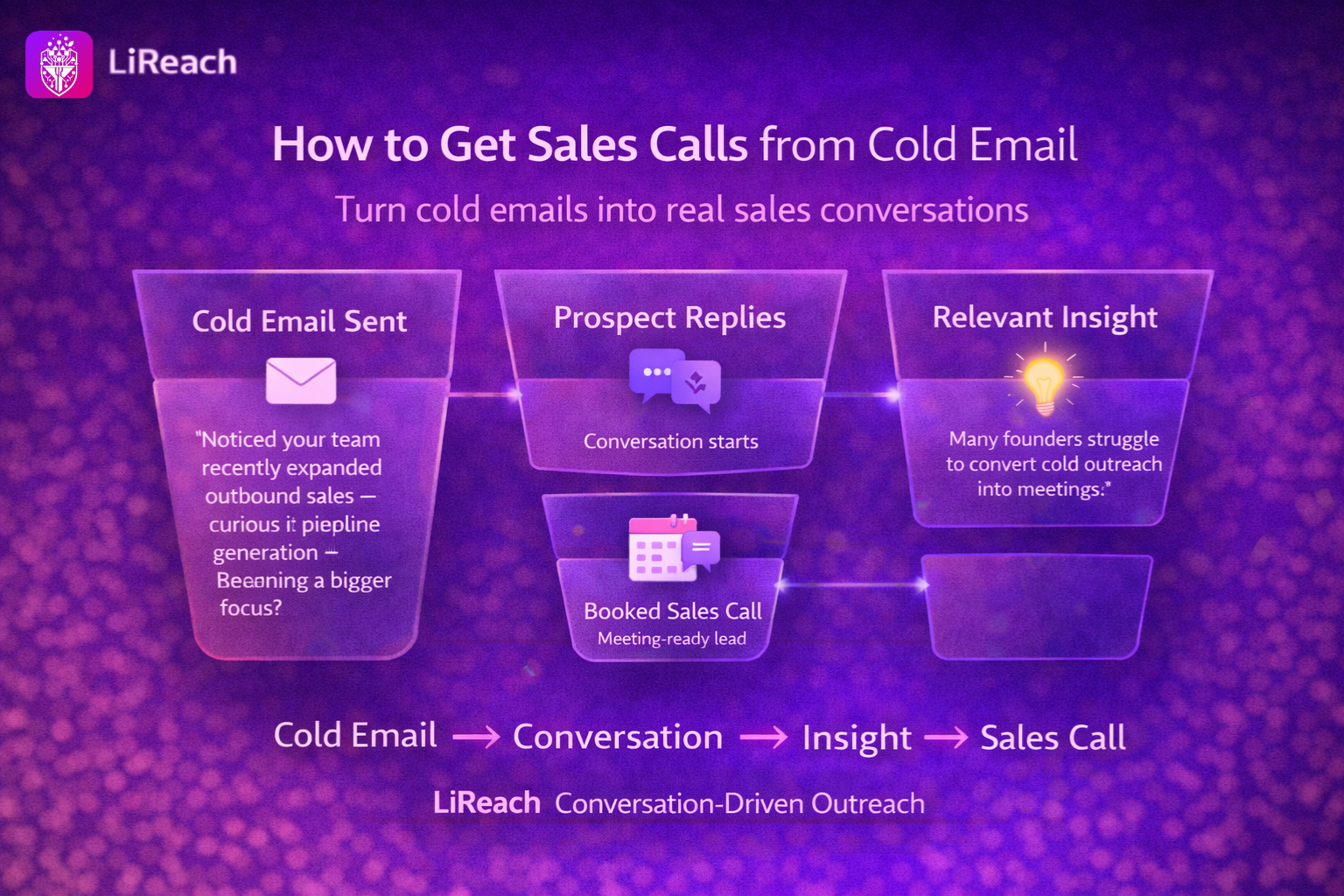
The framework includes four stages.
1. Start With Context
The most effective cold emails reference something relevant about the prospect’s company.
This could include:
- recent hiring activity
- funding announcements
- team expansion
- product launches
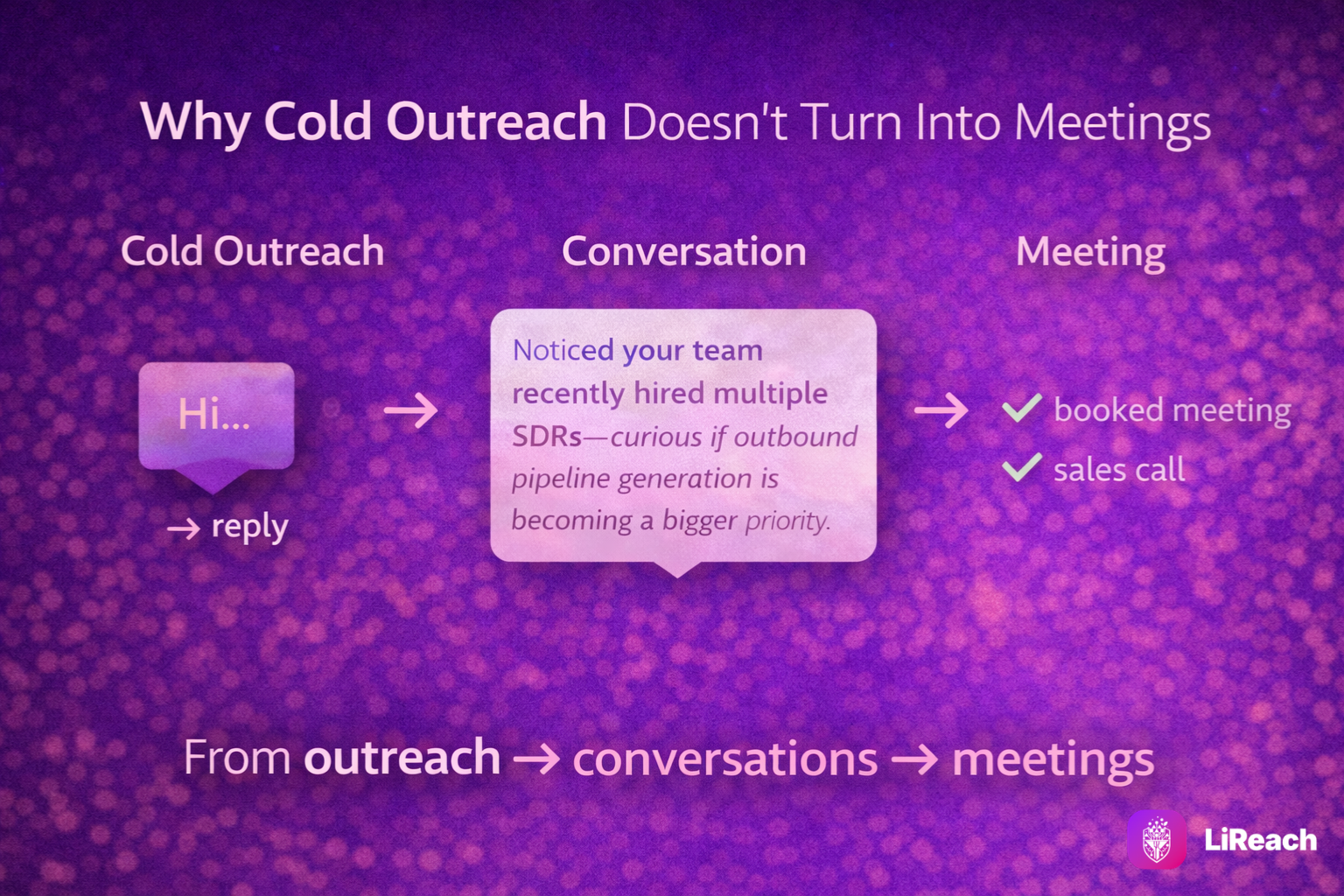
Example email opening:
“Noticed your team recently expanded your SDR team — curious if outbound pipeline generation is becoming a bigger priority.”
This message immediately connects with the prospect’s situation.
It feels personal rather than automated.
2. Create Curiosity
Instead of explaining your product, focus on asking a relevant question.
Questions encourage prospects to respond.
Example:
“Are most of your deals currently coming from inbound leads or outbound outreach?”
Now the prospect is more likely to share insights about their business.
3. Provide Insight
Once the prospect replies, share a short observation based on your experience.
Example:
“Many founders we speak with struggle to convert cold outreach into real meetings.”
This positions the conversation around a clear problem.
It also demonstrates that you understand their challenges.
4. Suggest a Short Discussion
Once the problem is clear, suggesting a meeting becomes natural.
Instead of pushing a demo immediately, offer a short discussion.
Example:
“Happy to share what we've seen working for other B2B founders if you're exploring outbound growth.”
This invitation feels helpful rather than sales-driven.
And that is what converts conversations into sales calls.
How LiReach Helps Turn Cold Emails Into Sales Calls
LiReach was built specifically to help founder-led B2B companies turn cold outreach into booked meetings.
The platform helps teams:
- identify high-fit decision makers
- detect relevant business signals
- generate personalized conversation starters
- automate follow-ups
Instead of sending thousands of generic messages, companies can run outreach that feels relevant and human.
This leads to more conversations.
And more conversations lead to more sales calls.
Example Results
One consulting company previously relied on generic cold email templates.
Their outreach produced replies, but very few meetings.
After shifting to conversation-driven emails:
- reply rates increased significantly
- meeting bookings increased 3×
- pipeline became predictable
The difference was not sending more emails.
It was starting better conversations.
Final Thoughts
Cold email success is not about sending thousands of messages.
It is about starting conversations that lead to meetings.
When outreach is relevant, curious, and insightful, prospects naturally want to continue the discussion.
And those discussions turn into sales calls.
That is the real goal of cold email.
Join 2,000+ Sales Leaders
Get advanced LinkedIn strategies, automation tips, and templates delivered to your inbox weekly. No spam, just value.