Many founders believe their outbound sales problem is simple: they need more leads.
So they increase outreach volume.
More emails. More LinkedIn messages. More prospect lists.
But after weeks of outreach, the same problem appears.
The leads are not good.
Replies come from people who are not decision makers.
Conversations go nowhere.
Meetings rarely happen.
This is why the real problem in outbound sales is not the number of leads.
The real problem is lead quality.
And the goal of outbound should not simply be generating leads — it should be generating meeting ready leads.
When outbound systems focus on quality instead of quantity, conversations become more relevant and sales pipelines become predictable.
Why Lead Quality Is Often Low in Outbound
Many outbound campaigns fail because they are designed for scale rather than relevance.
Teams focus on sending as many messages as possible, hoping that some prospects will respond.
This creates three major problems.
1. Targeting Is Too Broad
Most prospect lists are built using simple filters like:
- Industry
- Company size
- Job title
While these filters help identify potential buyers, they do not indicate whether a prospect actually needs your solution right now.
Without deeper targeting, many leads will never become meaningful opportunities.
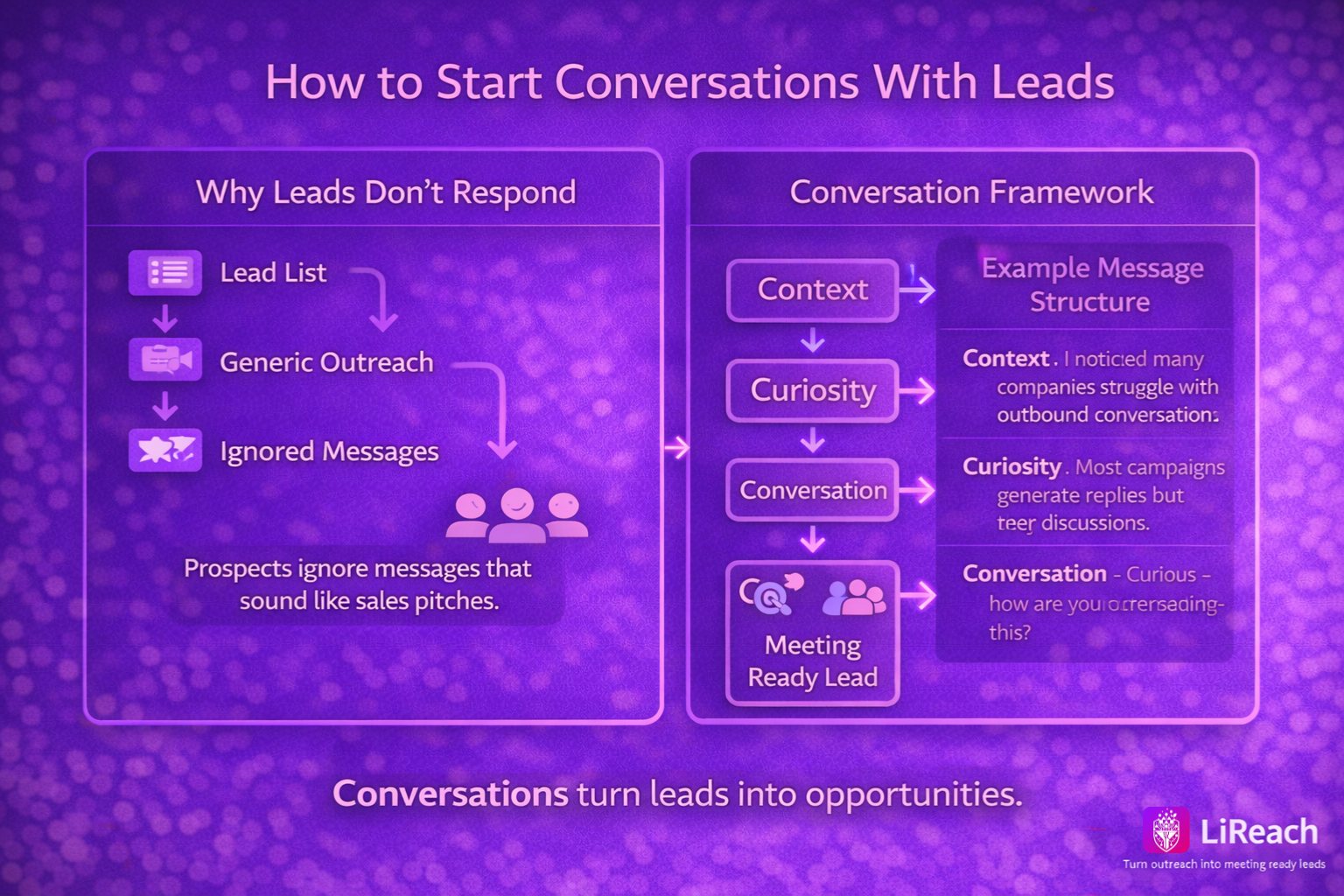
2. Outreach Lacks Context
Generic outreach messages are one of the biggest reasons lead quality feels low.
Prospects receive messages like:
""Hi, we help companies generate more leads.""
""We help businesses grow revenue.""
These messages could be sent to anyone.
Because they lack context, prospects ignore them.
When conversations do happen, they often attract the wrong audience.
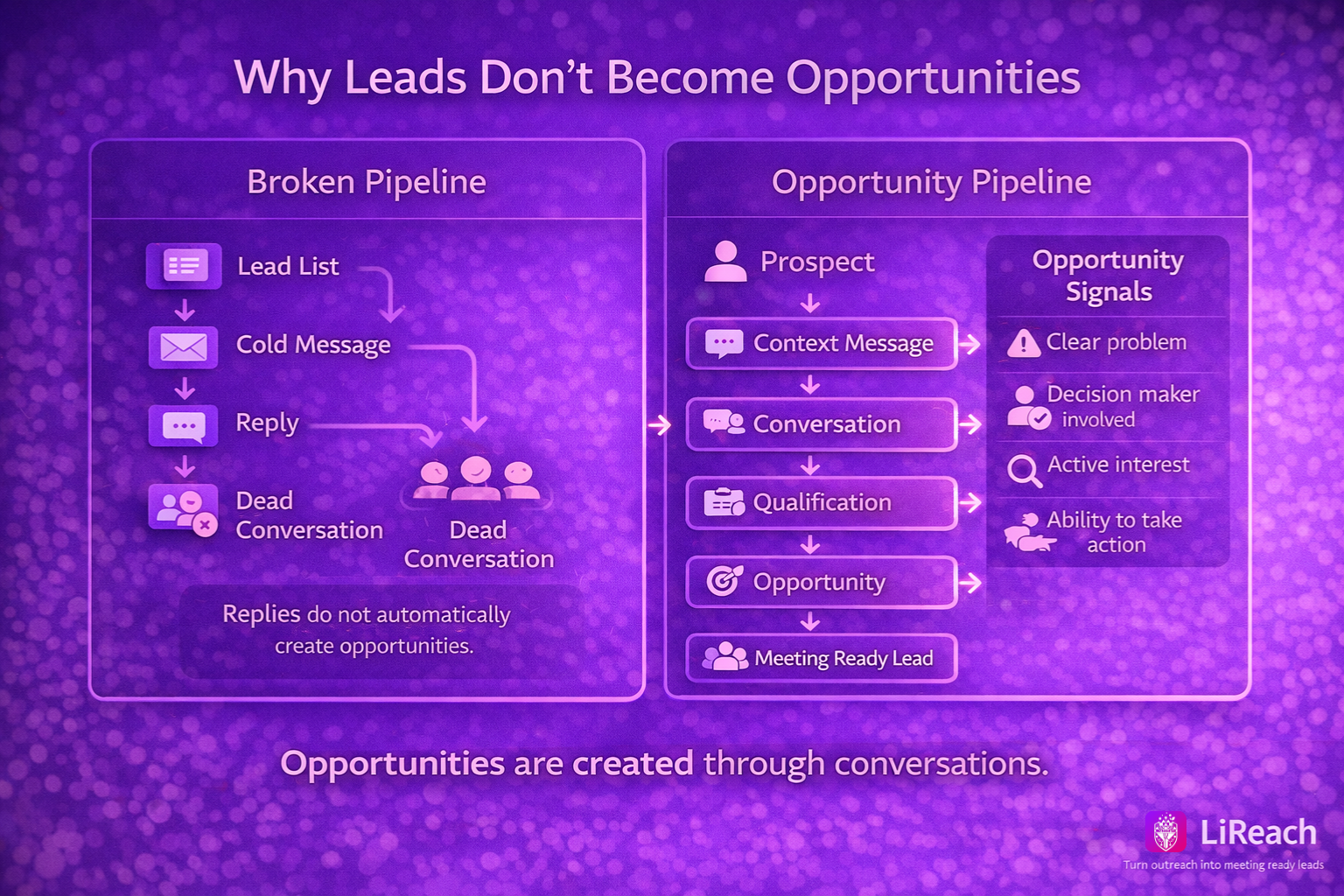
3. No Qualification Process
Another major mistake in outbound sales is qualifying leads too late.
Many companies follow this process:
Lead → Reply → Meeting → Qualification
This wastes time.
You spend 30 minutes on a call only to discover the prospect is not a good fit.
Successful outbound teams qualify leads earlier through conversations.
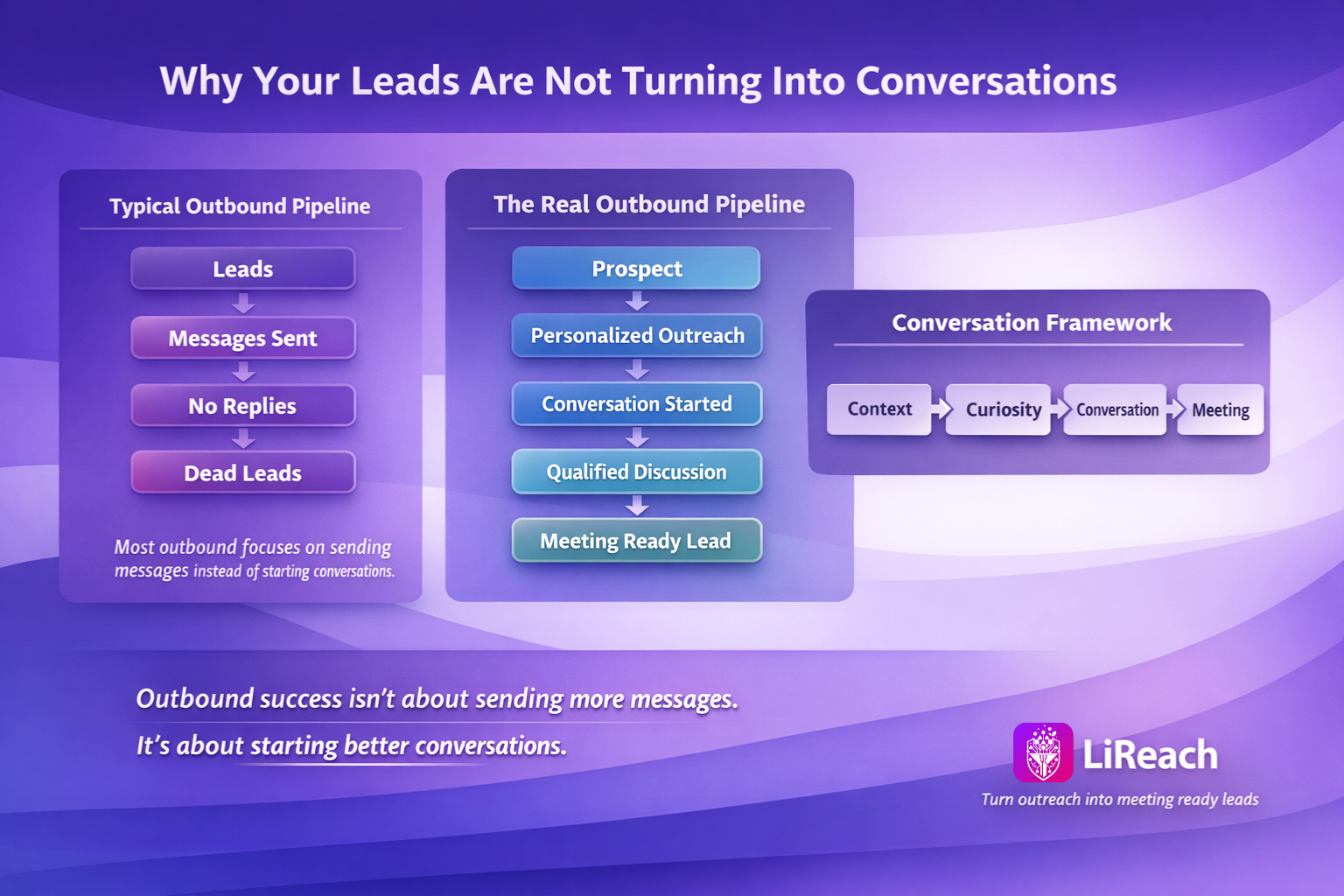
The Real Outbound Pipeline
Instead of jumping directly to meetings, effective outbound pipelines follow a conversation-driven structure:
Prospect → Context → Conversation → Qualification → Meeting
This approach ensures that meetings happen only with qualified prospects.
The result is a pipeline filled with meeting ready leads.
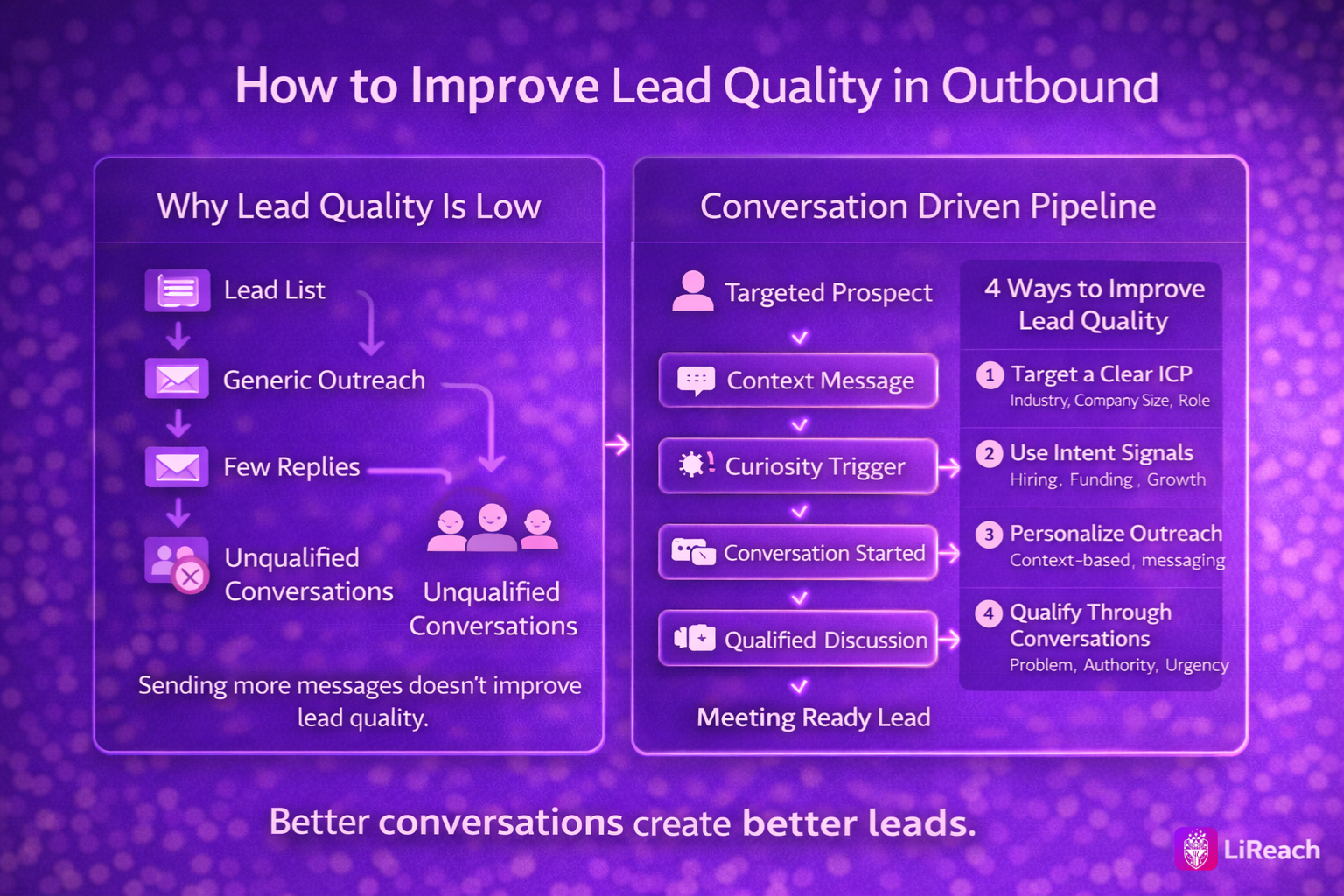
The Framework to Improve Lead Quality
Improving lead quality requires a structured approach to targeting, outreach, and conversation management.
A simple framework works well:
Signal → Personalized Outreach → Conversation → Qualification → Meeting
Step 1: Target the Right Prospects
Start by defining a clear Ideal Customer Profile (ICP).
This should include:
- Industry
- Company size
- Revenue stage
- Decision maker roles
- Growth signals
When targeting aligns with your ICP, outreach becomes more relevant.
Step 2: Look for Intent Signals
Intent signals reveal when a company may need your solution.
Examples include:
- Hiring for new sales roles
- Recent funding announcements
- Product launches
- Rapid team expansion
These signals indicate that a company may actively be facing a problem you can solve.
Timing dramatically increases the chances of starting meaningful conversations.
Step 3: Personalize Outreach
Instead of generic messages, outreach should reference something specific about the prospect.
Example:
""I noticed your team recently started expanding your outbound sales function. Many SaaS companies at this stage struggle to convert outbound leads into real conversations.""
This type of message shows relevance and increases reply rates.
Step 4: Start Conversations Instead of Pitching
Many outbound messages fail because they ask for meetings too quickly.
A better approach is to start a discussion.
Example:
""Curious — how are you currently managing outbound lead qualification?""
This invites a conversation rather than forcing a sales pitch.
And conversations are what reveal qualified prospects.
Step 5: Qualify Before Booking Meetings
Once the conversation begins, simple questions can help determine if the prospect is a good fit.
Examples include:
- Are they the decision maker?
- Do they have the problem you solve?
- Are they actively exploring solutions?
- Do they have the resources to implement a solution?
When these conditions align, the prospect becomes a meeting ready lead.
Why Conversation-Based Outbound Works
Conversation-driven outbound creates a much healthier pipeline.
Instead of focusing on message volume, it focuses on relevance and engagement.
This leads to:
- Higher reply rates
- More meaningful discussions
- Better qualified prospects
- Shorter sales cycles
Ultimately, it creates a consistent flow of meeting ready leads.
How LiReach Helps Improve Lead Quality
LiReach was built around one core idea:
Outbound should generate conversations, not just leads.
The platform helps companies:
- Run personalized outbound outreach
- Track prospect conversations
- Organize outreach pipelines
- Identify qualified prospects
- Convert discussions into meetings
By focusing on conversations rather than message volume, LiReach helps teams generate consistent meeting ready leads.
Conclusion
If your outbound leads feel low quality, the problem is rarely the number of prospects you contact.
The real issue is how outreach is structured.
When outbound campaigns focus on relevance, timing, and conversations, lead quality improves dramatically.
Instead of chasing more leads, focus on creating better conversations.
Because in outbound sales, conversations are what turn prospects into meeting ready leads.
Join 2,000+ Sales Leaders
Get advanced LinkedIn strategies, automation tips, and templates delivered to your inbox weekly. No spam, just value.