Outbound sales rarely fails because of a lack of leads.
More often, it fails because teams cannot manage the leads they already have.
A prospect replies on LinkedIn.
Another responds to a cold email.
Someone asks for pricing.
Another wants to schedule a call.
Suddenly you are managing dozens of conversations at the same time.
Without a system, leads become difficult to track.
Follow-ups get missed.
Opportunities disappear.
And conversations that could have become meeting ready leads are lost.
The Real Challenge of Managing Multiple Leads
Many founders initially manage leads using simple tools.
Common methods include:
- LinkedIn inbox
- Email threads
- Spreadsheets
- personal reminders
While these tools may work with a small number of leads, they quickly become inefficient as outreach scales.
Sales teams struggle with:
- lost conversation history
- missed follow-ups
- duplicate outreach
- unclear pipeline visibility
Without organization, conversations rarely convert into meeting ready leads.
The Lead Management Framework
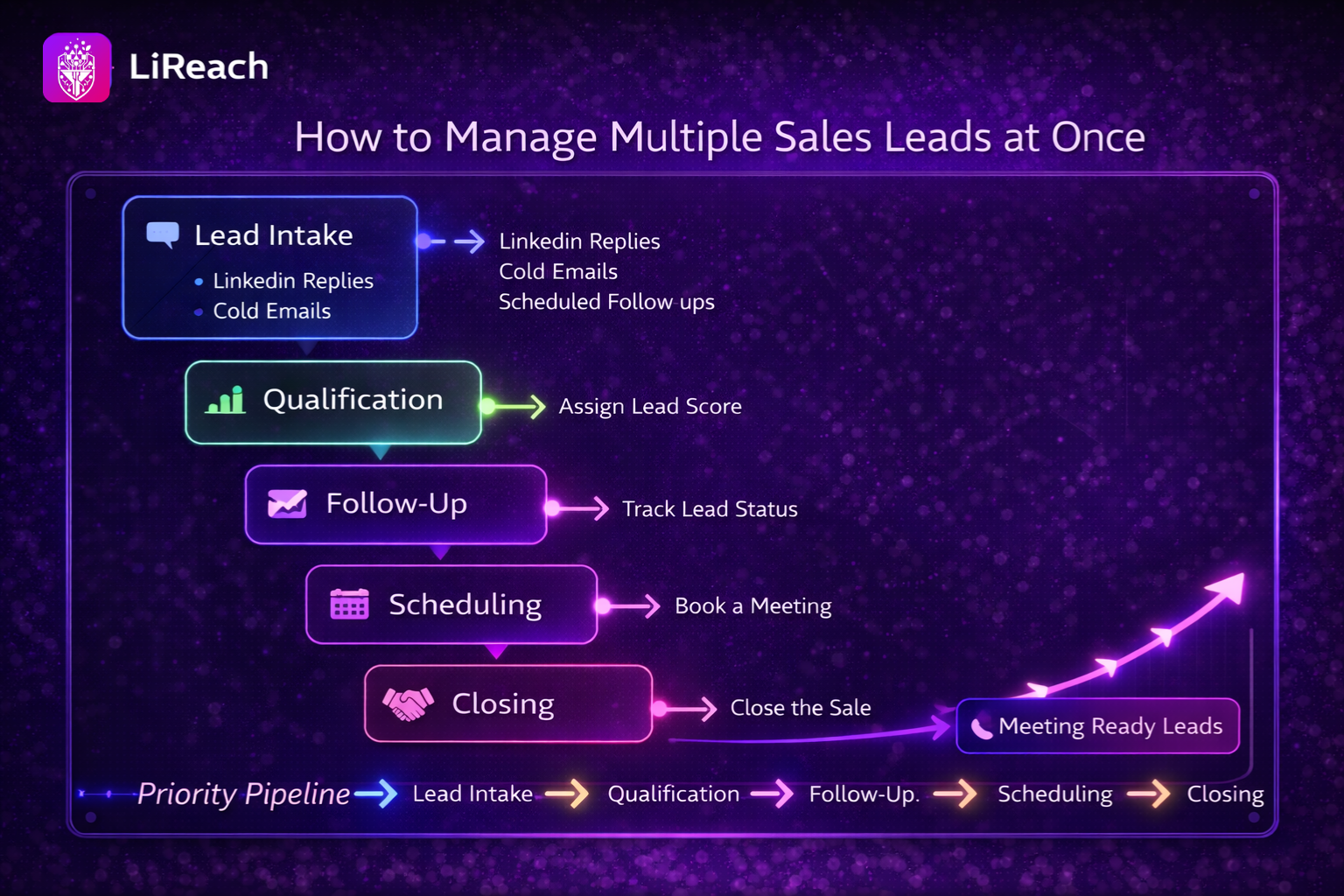
Successful outbound teams manage leads using a structured pipeline.
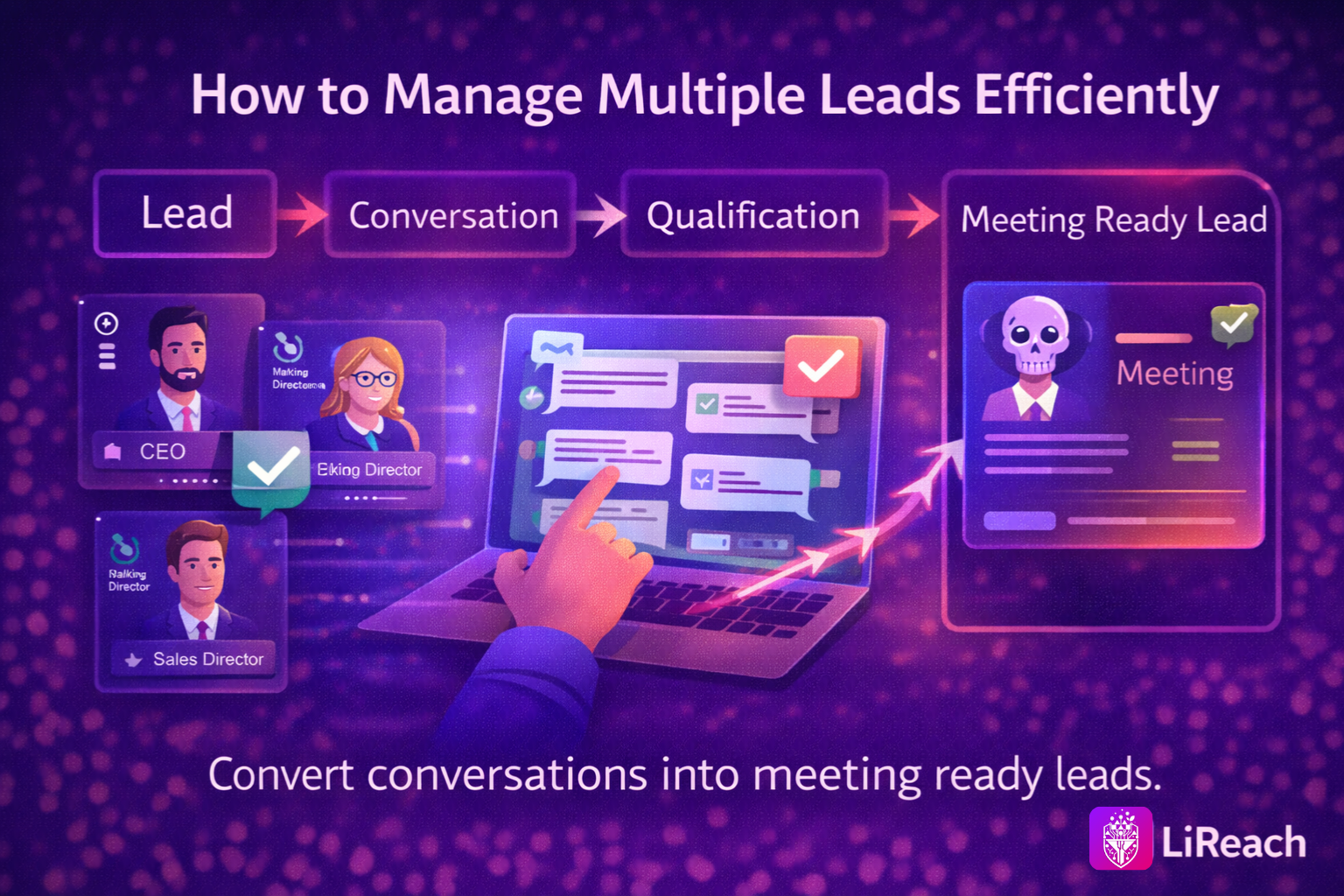
Lead → Conversation → Qualification → Meeting → Client
Each stage represents progress toward generating meeting ready leads.
Stage 1: Lead Capture
The first step is capturing leads in a centralized system.
Important information includes:
- company name
- decision maker
- industry
- business signals
Capturing this data ensures every prospect enters the pipeline correctly.
Stage 2: Conversation Management
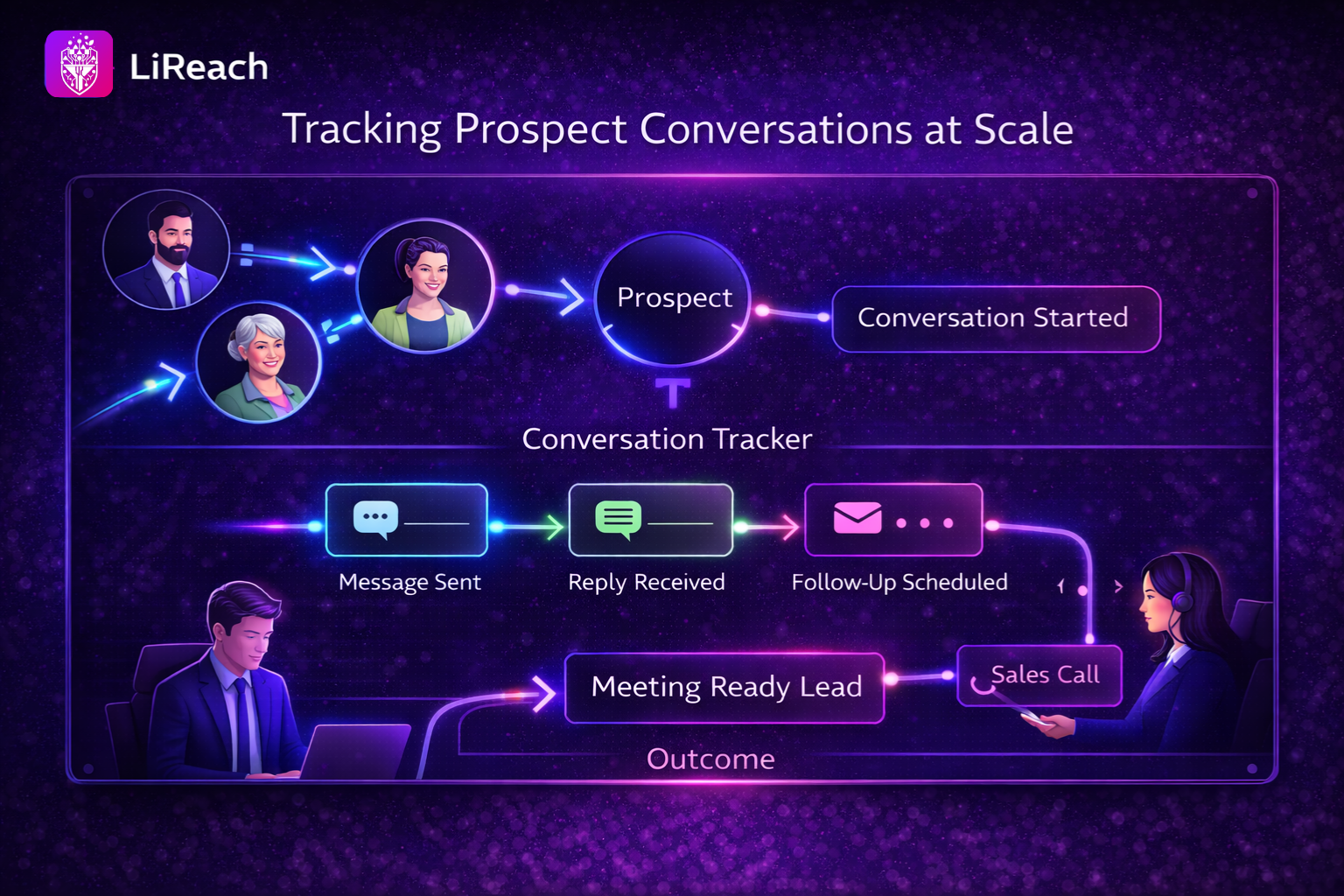
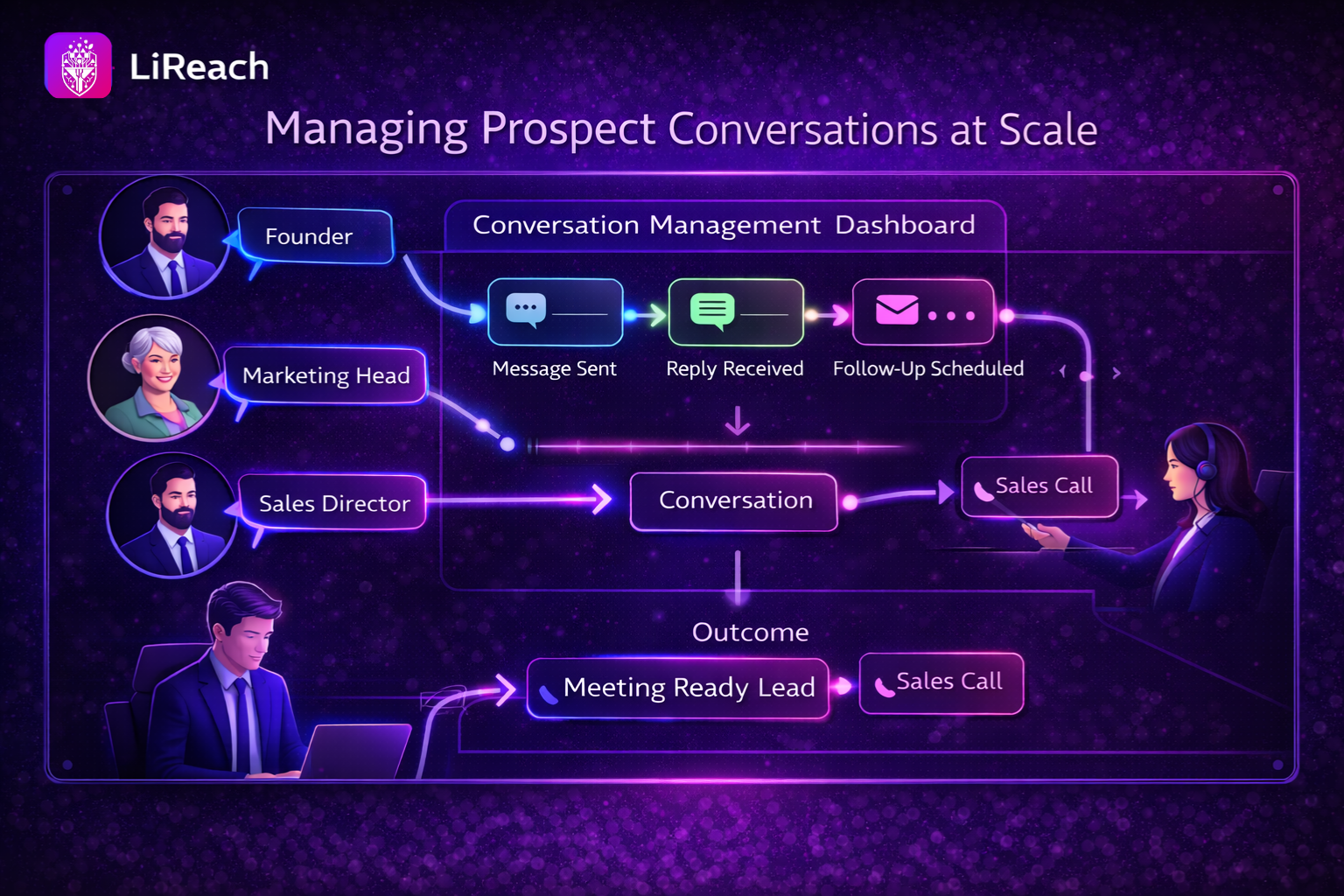
Once outreach begins, conversations must be tracked carefully.
Every interaction should be recorded:
- initial message
- prospect reply
- follow-up messages
Tracking conversations helps maintain context and move prospects toward becoming meeting ready leads.
Stage 3: Lead Prioritization
Not all leads have the same level of potential.
Efficient teams prioritize leads based on:
- company fit
- decision-maker access
- business urgency
High-quality leads should receive immediate attention.
These prospects are most likely to become meeting ready leads.
Stage 4: Follow-Up Scheduling
Many leads require multiple follow-ups before they convert.
A strong follow-up system tracks:
- last message sent
- next follow-up date
- prospect engagement level
Consistent follow-ups significantly increase meeting bookings.
Stage 5: Meeting Conversion
Once a prospect shows interest, the next step is scheduling a meeting.
These meetings represent the real output of outbound sales.
They are the meeting ready leads that drive revenue.
Why Many Founders Struggle to Manage Leads
Managing multiple leads manually quickly becomes overwhelming.
As outreach scales, conversations multiply across platforms:
- CRM notes
- calendar scheduling tools
Without a centralized system, it becomes impossible to track every interaction.
This leads to missed opportunities and inconsistent sales pipelines.
How LiReach Helps Manage Leads Efficiently
LiReach was designed to help founders manage outbound conversations at scale.
The platform acts as a centralized system for organizing sales pipelines.
It helps teams:
- track multiple prospect conversations
- manage outreach pipelines
- automate follow-ups
- convert conversations into meetings
Instead of scattered conversations across different tools, everything is managed in one place.
This allows teams to consistently generate meeting ready leads.
Final Thoughts
Generating leads is only the beginning of outbound sales.
The real challenge is managing those leads effectively.
Companies that organize their pipeline convert more conversations into meetings.
And more meetings mean more meeting ready leads.
With the right system, founders can turn scattered outreach into predictable revenue pipelines.
Join 2,000+ Sales Leaders
Get advanced LinkedIn strategies, automation tips, and templates delivered to your inbox weekly. No spam, just value.