Outbound sales starts with conversations.
A prospect replies to your LinkedIn message.
Another responds to a cold email.
Someone asks a question about pricing.
Another wants to schedule a call.
At first these conversations feel like progress.
But as outreach grows, managing those conversations becomes difficult.
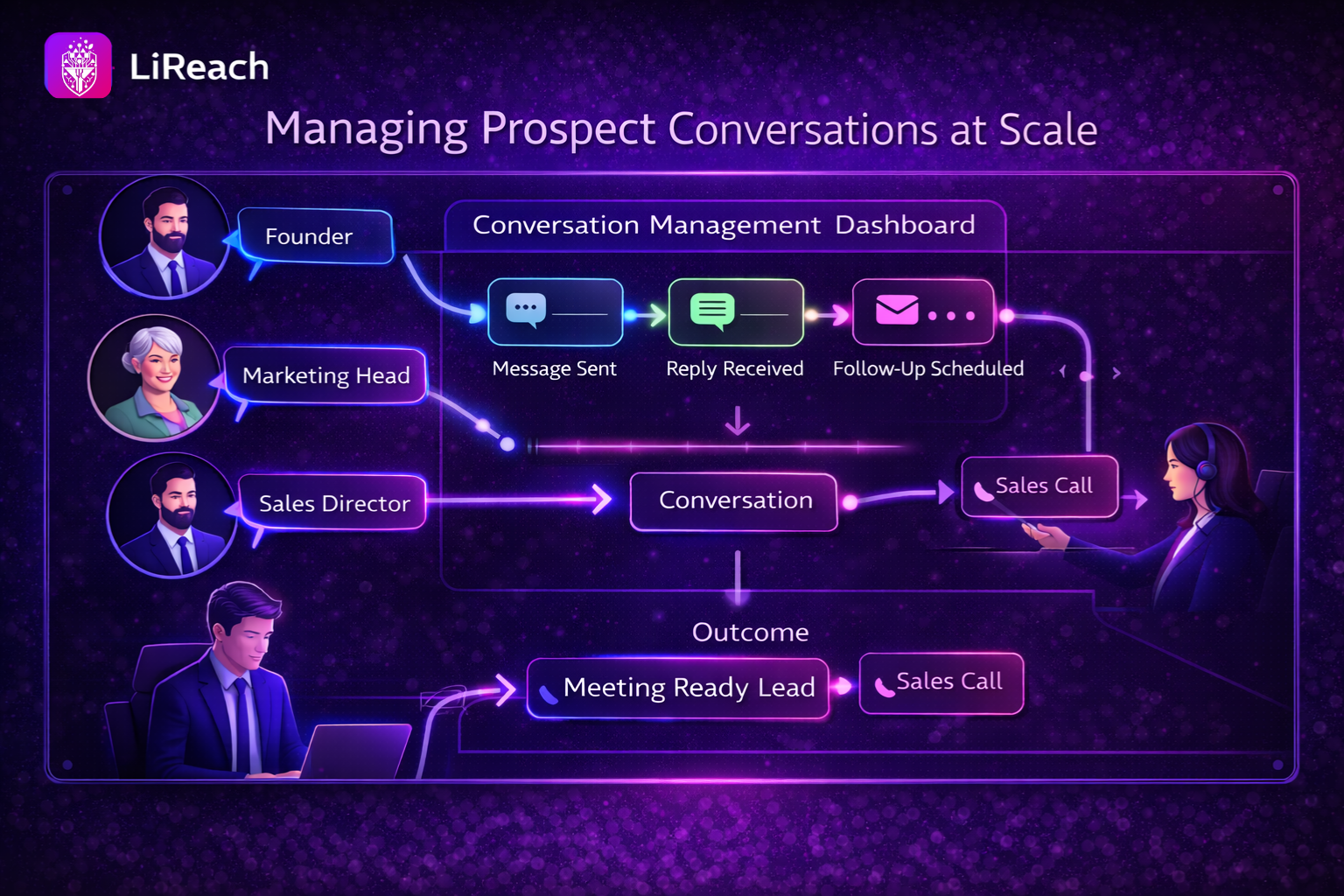
Messages appear across multiple platforms.
Follow-ups get missed.
Important prospects disappear.
Without organization, conversations rarely turn into meeting ready leads.
The Hidden Problem in Outbound Sales
Many founders believe the biggest challenge in outbound is generating leads.
In reality, the bigger challenge is organizing conversations once leads respond.
Outbound conversations usually happen across:
- LinkedIn messages
- cold email replies
- CRM notes
- meeting scheduling tools
Without a structured system, it becomes impossible to track what is happening.
Sales teams lose context and opportunities.
This prevents companies from generating consistent meeting ready leads.
The Conversation Pipeline Framework
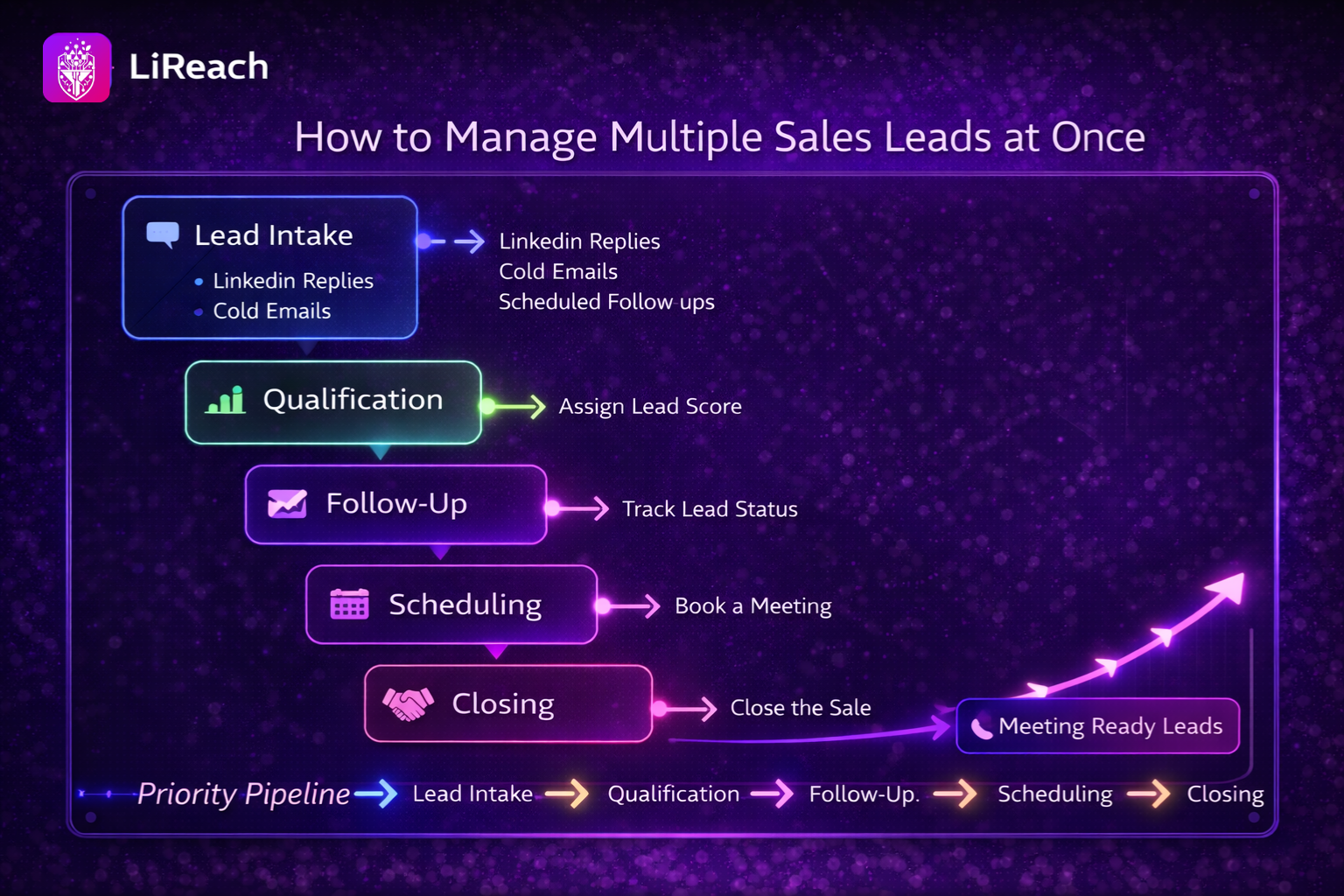
Successful outbound teams organize conversations using a pipeline structure.
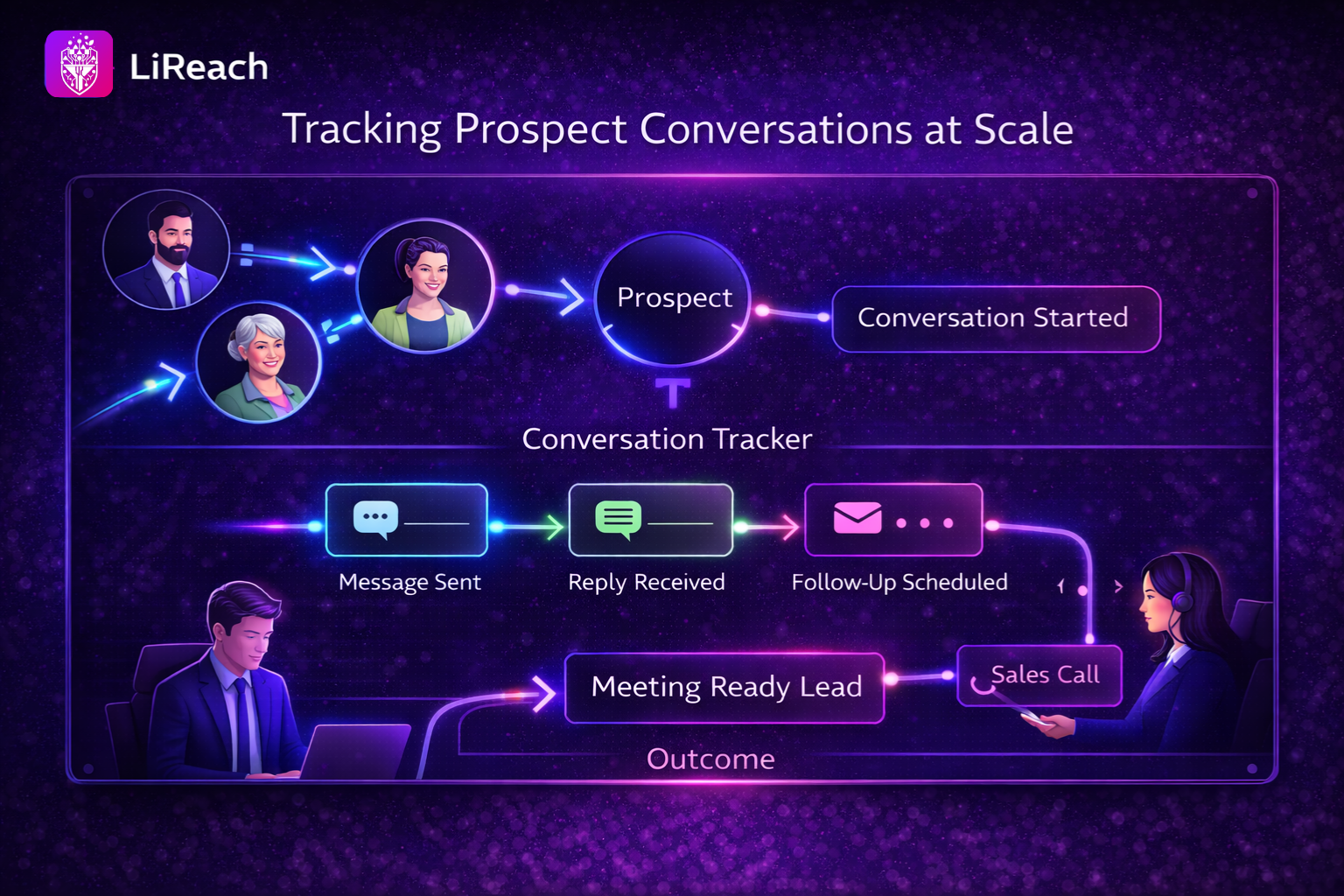
Prospect → Conversation → Follow-Up → Meeting → Client
Each stage represents progress toward generating meeting ready leads.
Stage 1: Prospect Identification
The process begins with identifying companies that match your ideal customer profile.
Important data points include:
- company name
- decision maker role
- industry
- business signals
This ensures that outreach focuses on companies most likely to become clients.
Stage 2: Conversation Started
Once outreach begins, the prospect enters the conversation stage.
Tracking messages at this stage is essential.
Each response should be logged and categorized.
This helps maintain context and keeps conversations moving toward becoming meeting ready leads.
Stage 3: Follow-Up Tracking
Most outbound deals require multiple follow-ups.
Effective follow-up systems track:
- last message sent
- prospect response
- next follow-up date
This dramatically increases response rates and meeting bookings.
Stage 4: Meeting Qualification
Once a prospect shows interest, the conversation moves toward scheduling a meeting.
These meetings represent the real output of outbound sales.
They are the meeting ready leads that drive revenue.
Why Most Teams Struggle to Organize Conversations
Many founders try to manage outbound conversations using spreadsheets.
But spreadsheets cannot track complex conversations effectively.
Common problems include:
- missed follow-ups
- duplicate outreach
- lost prospect context
- poor pipeline visibility
These problems prevent teams from converting conversations into meeting ready leads.
How LiReach Helps Organize Outbound Conversations
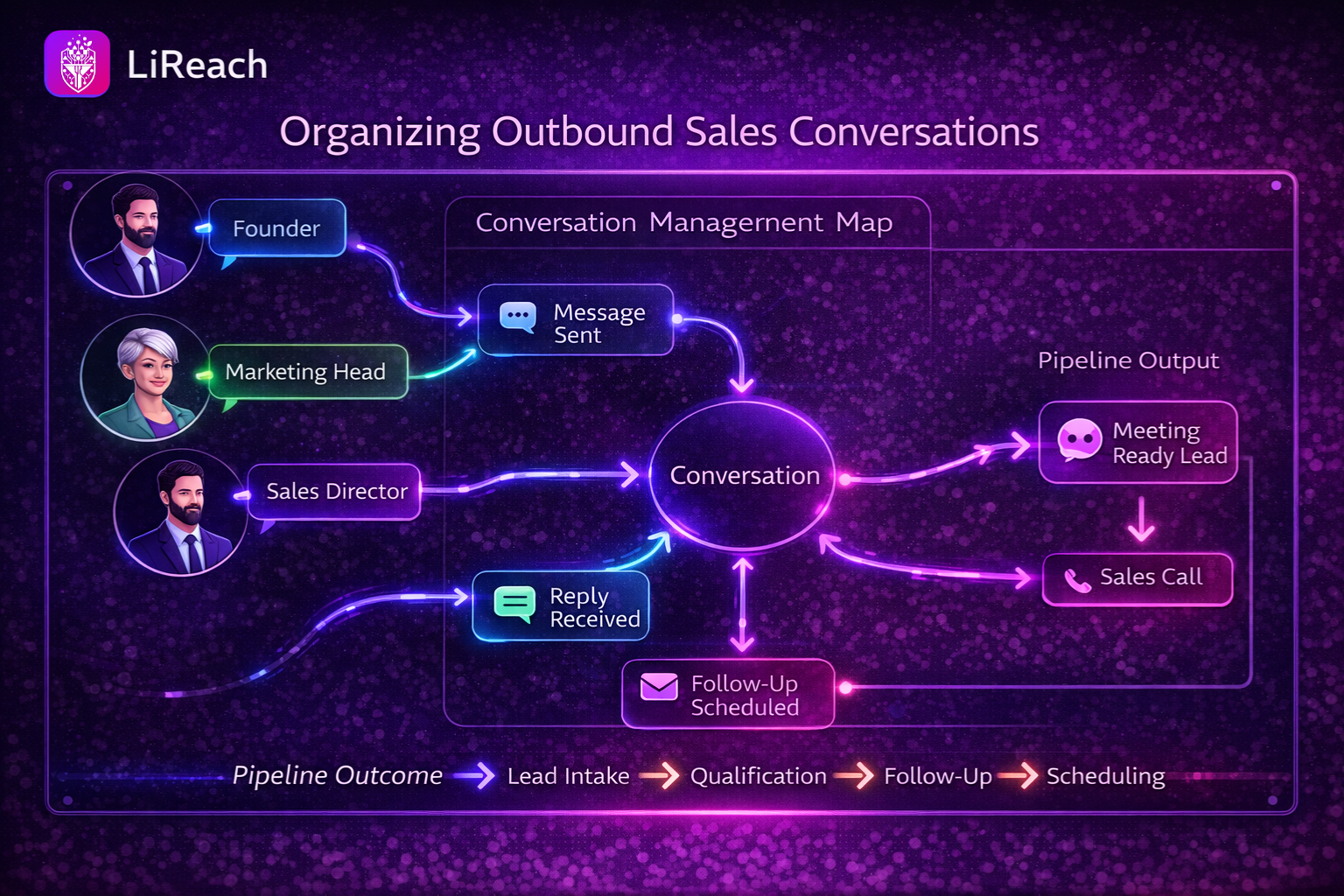
LiReach was built to help founders manage outbound sales conversations at scale.
The platform helps teams:
- track prospect conversations in one place
- monitor outreach responses
- automate follow-ups
- convert conversations into meetings
Instead of losing opportunities across different tools, teams can manage their entire outreach pipeline in one system.
This helps companies generate consistent meeting ready leads.
Final Thoughts
Starting conversations is easy.
Managing them effectively is the real challenge.
Companies that organize outbound conversations systematically generate more meetings.
And more meetings create more meeting ready leads.
With the right system, founders can turn scattered outreach into predictable pipelines.
Join 2,000+ Sales Leaders
Get advanced LinkedIn strategies, automation tips, and templates delivered to your inbox weekly. No spam, just value.