Personalization is the single biggest factor that determines whether cold outreach gets replies.
But scaling personalization creates a major challenge for founders and sales teams.
Writing thoughtful messages for 10 prospects is easy.
Writing relevant messages for 300 prospects every week is a completely different problem.
Most companies eventually compromise.
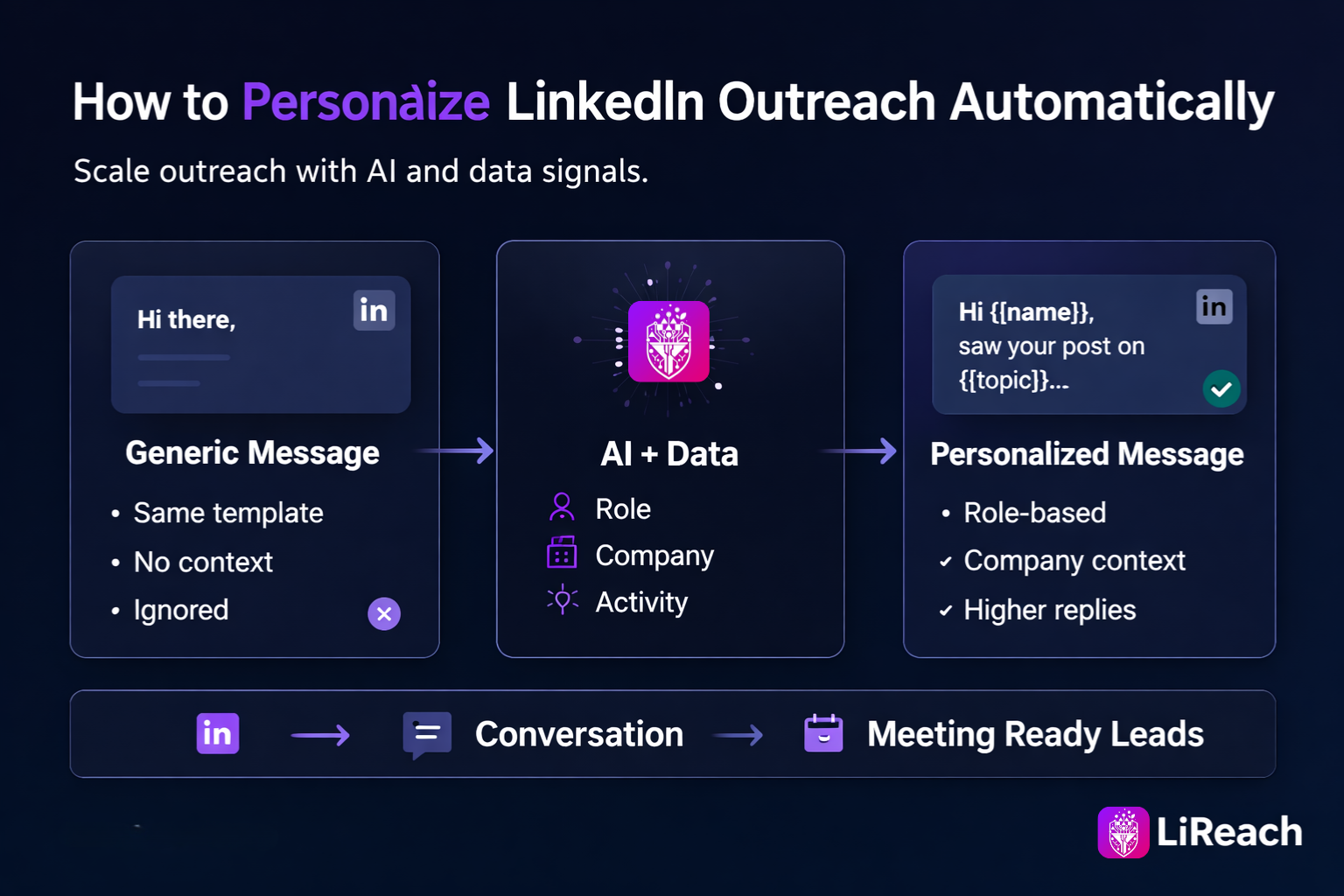
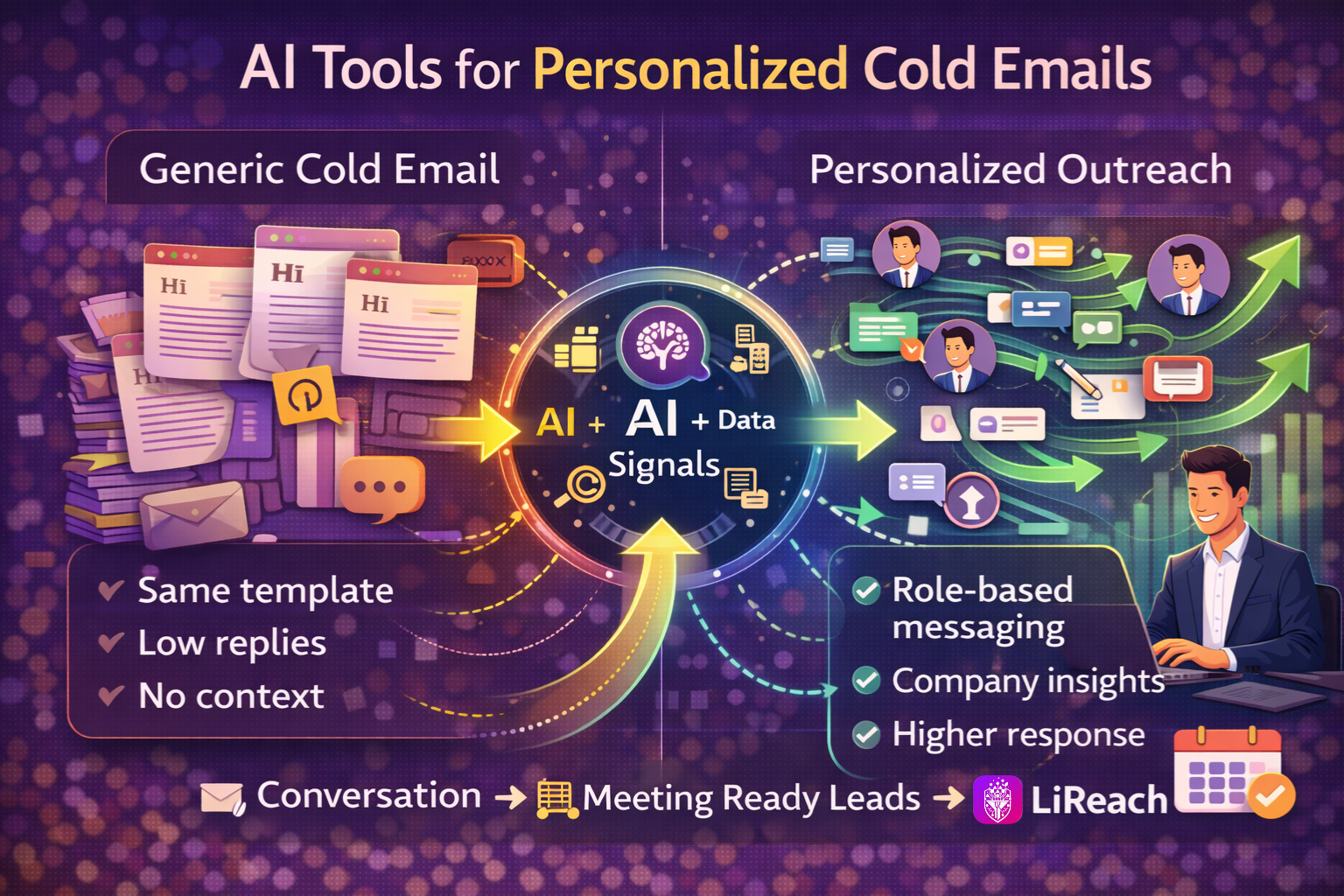
They switch to generic templates like this:
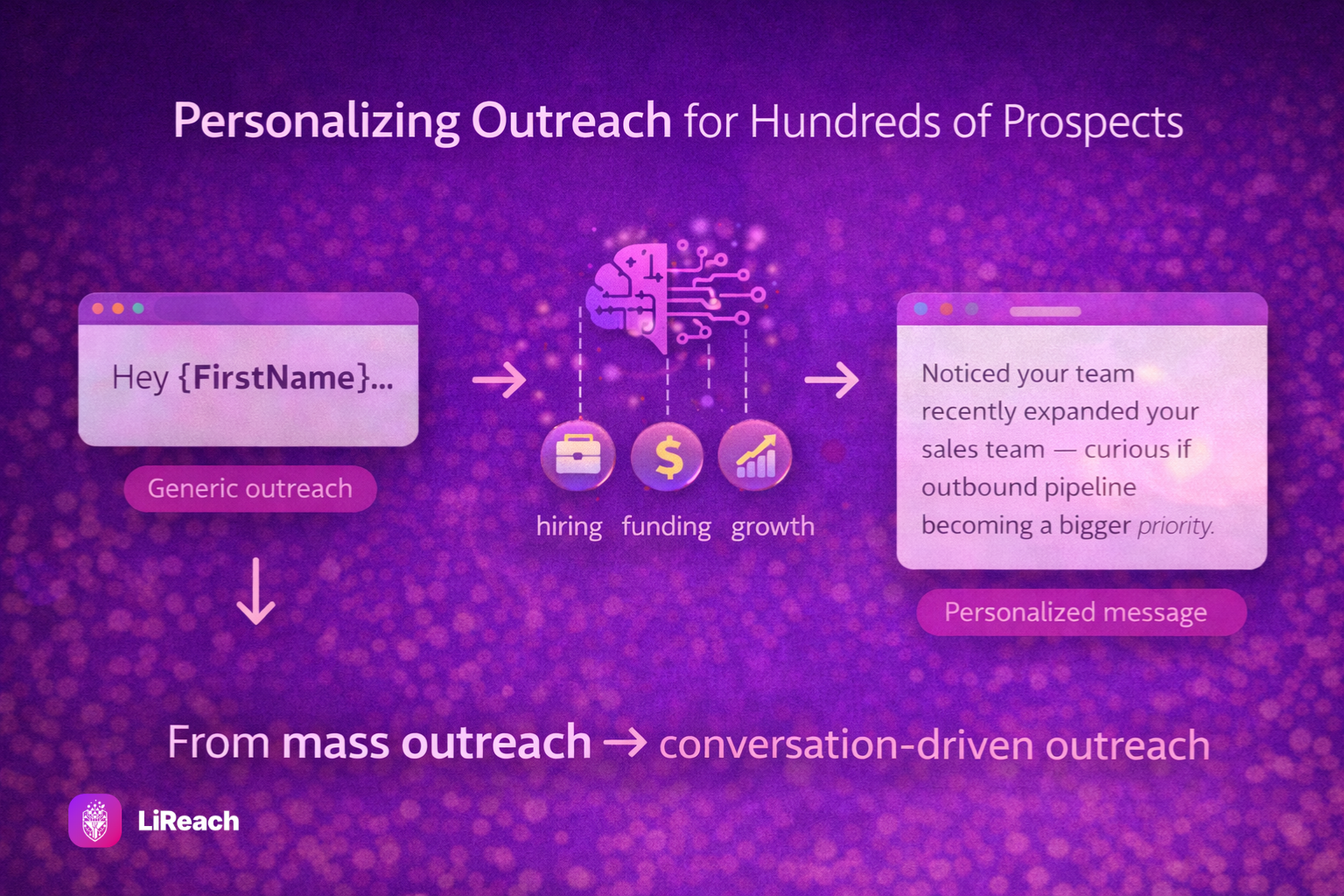
“Hey {FirstName}, saw you're the founder of {Company}…”
And suddenly outreach stops working.
Prospects recognize automated messages instantly.
Reply rates drop.
Pipelines slow down.
This creates the biggest challenge in modern B2B sales:
How do you personalize outreach for hundreds of prospects without writing hundreds of emails?
Why Most Outreach Personalization Fails
Most sales teams misunderstand personalization.
They think personalization means adding variables like:
- first name
- company name
- job title
But buyers don’t respond to variables.
They respond to relevance.
A message becomes relevant when it references something meaningful about the prospect’s business.
Examples include:
- recent hiring activity
- funding announcements
- market expansion
- product launches
This kind of personalization requires context.
And gathering context manually does not scale.
The Scalable Personalization Framework
At LiReach we help founder-led B2B companies solve this exact challenge.
Instead of writing every message manually, we build systems that generate personalization automatically.
The process includes four key stages.
1. Identify the Right Decision Makers
The first step in scalable outreach is targeting.
When your prospect list includes companies that match your ideal customer profile, personalization becomes much easier.
For example:
- SaaS founders scaling engineering teams
- B2B companies building outbound sales teams
- startups that recently raised funding
When prospects share similar challenges, outreach messaging becomes repeatable.
2. Use Prospect Signals Instead of Manual Research
Instead of manually researching each prospect, use signals that reveal business priorities.
Examples include:
- hiring new sales reps
- expanding into new markets
- launching new products
- raising funding
Signals provide the context needed to craft relevant messages quickly.
3. Turn Signals Into Conversation Starters
The goal of outreach is not pitching.
It is starting conversations.
Instead of explaining your service immediately, use insights to ask meaningful questions.
Example:
“Noticed your team recently expanded your SDR team — curious if outbound pipeline generation has become a bigger priority.”
This type of message feels natural and relevant.
4. Automate Follow-Ups Across Channels
Many conversations begin after multiple touchpoints.
A structured outreach sequence may include:
- LinkedIn connection requests
- LinkedIn messages
- email outreach
- follow-up reminders
This increases visibility while keeping outreach human.
How LiReach Personalizes Outreach at Scale
LiReach was built to help founder-led B2B companies run scalable outbound outreach without losing personalization.
The system automates:
- prospect identification
- signal analysis
- personalized message generation
- follow-up sequences
This allows teams to reach hundreds of prospects while maintaining message relevance.
Instead of sending mass messages, outreach becomes conversation-driven.
Example: Scaling Personalized Outreach
One B2B consulting firm previously relied on manual outreach.
Their process included:
- researching prospects individually
- writing custom messages
- sending manual follow-ups
This approach produced limited results:
- reply rate: 5%
- few qualified meetings
After implementing the LiReach system:
- prospect signals were automatically identified
- personalized conversation starters were generated
- multi-channel outreach was automated
Results improved significantly:
- reply rate increased to 17%
- conversation volume increased 3x
- meetings became predictable
Final Thoughts
Scaling personalized outreach is not about writing faster.
It is about building smarter systems.
When the right prospects receive the right message at the right time, conversations start naturally.
And conversations turn into meetings.
That is the real goal of outbound sales.
Not sending messages.
But starting meaningful conversations with the right buyers.
Join 2,000+ Sales Leaders
Get advanced LinkedIn strategies, automation tips, and templates delivered to your inbox weekly. No spam, just value.