Manual prospecting has been a part of sales for decades.
Salespeople search for companies, review LinkedIn profiles, analyze websites, and try to determine whether a prospect might be interested in their solution.
But in modern B2B sales, this approach creates a serious problem.
It consumes time.
And time is one of the most valuable resources in any sales organization.
At LiReach, we regularly analyze outbound workflows for B2B companies.
One pattern appears consistently.
The teams that struggle to generate opportunities spend enormous time on manual prospect research.
Meanwhile, the teams that consistently produce meeting ready leads rely on smarter systems rather than manual effort.
The Real Problem with Manual Prospecting
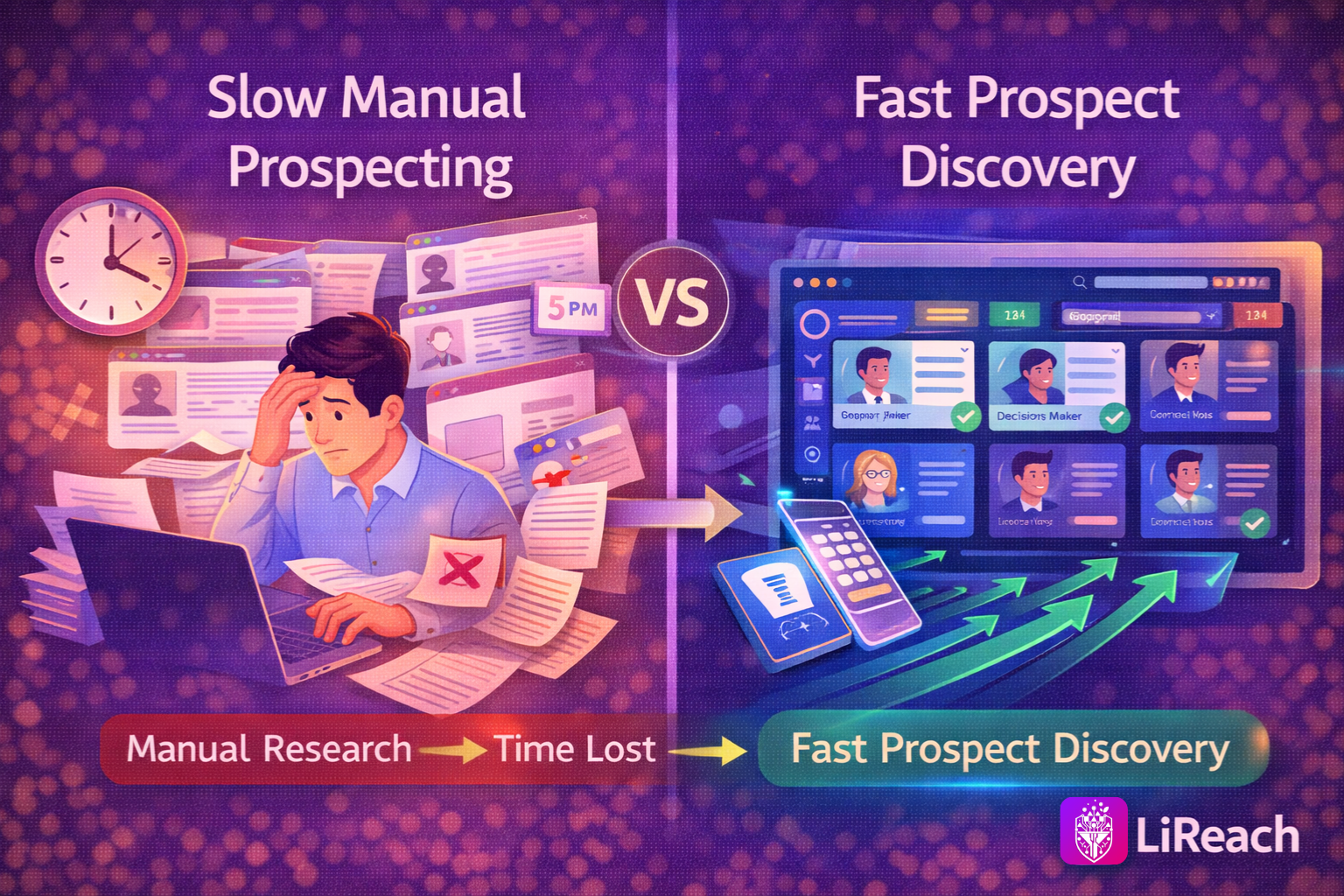
Manual prospecting is slow because it relies entirely on human effort.
A typical workflow might include:
- searching for companies
- checking LinkedIn profiles
- identifying decision makers
- analyzing whether the company is a good fit
This process may take several minutes for each prospect.
When multiplied across hundreds of prospects, it can consume entire workdays.
As a result, sales teams spend less time doing the one activity that truly drives revenue.
Starting conversations.
Why Prospecting Systems Work Better
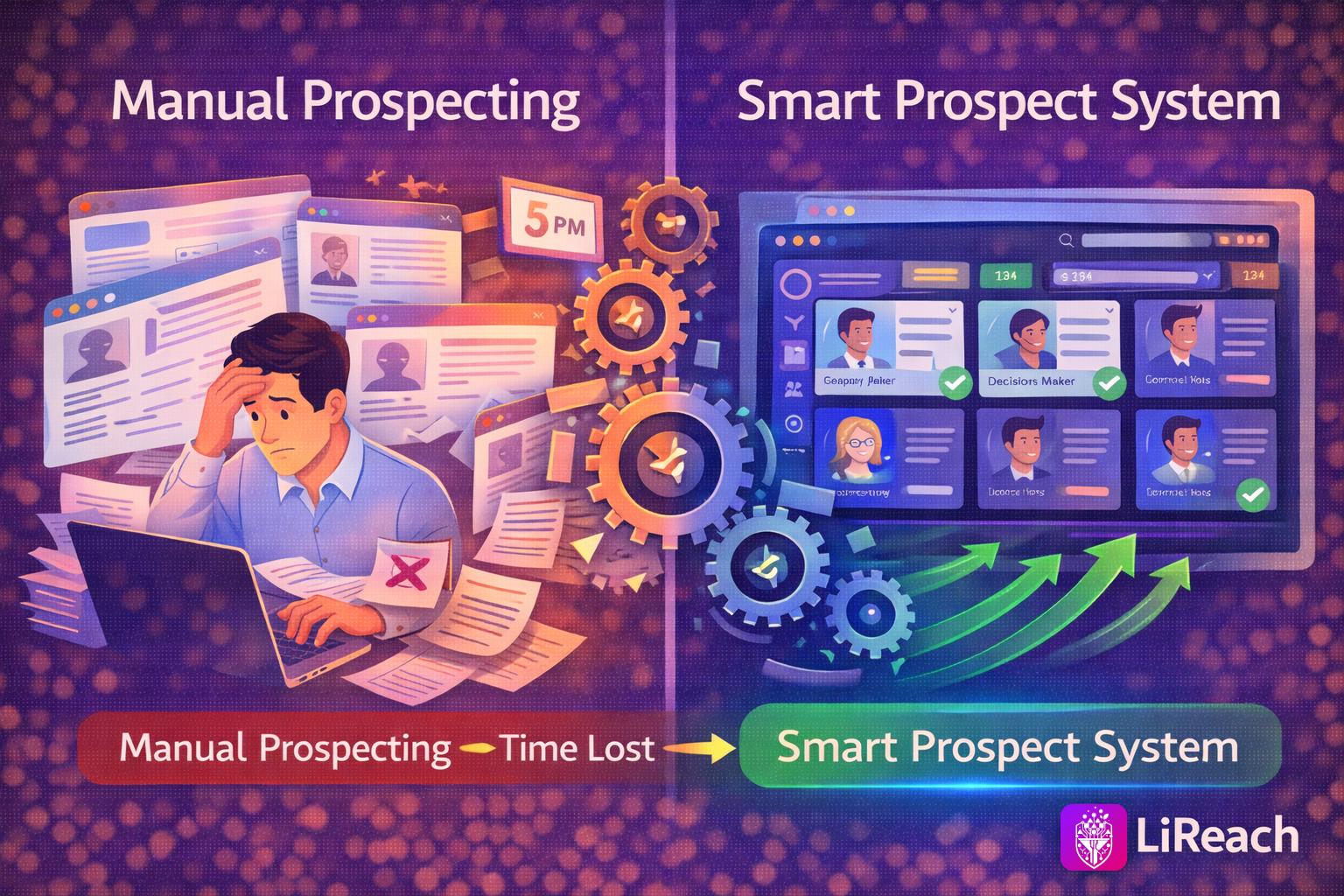
Instead of performing prospect research manually every day, modern sales teams build prospecting systems.
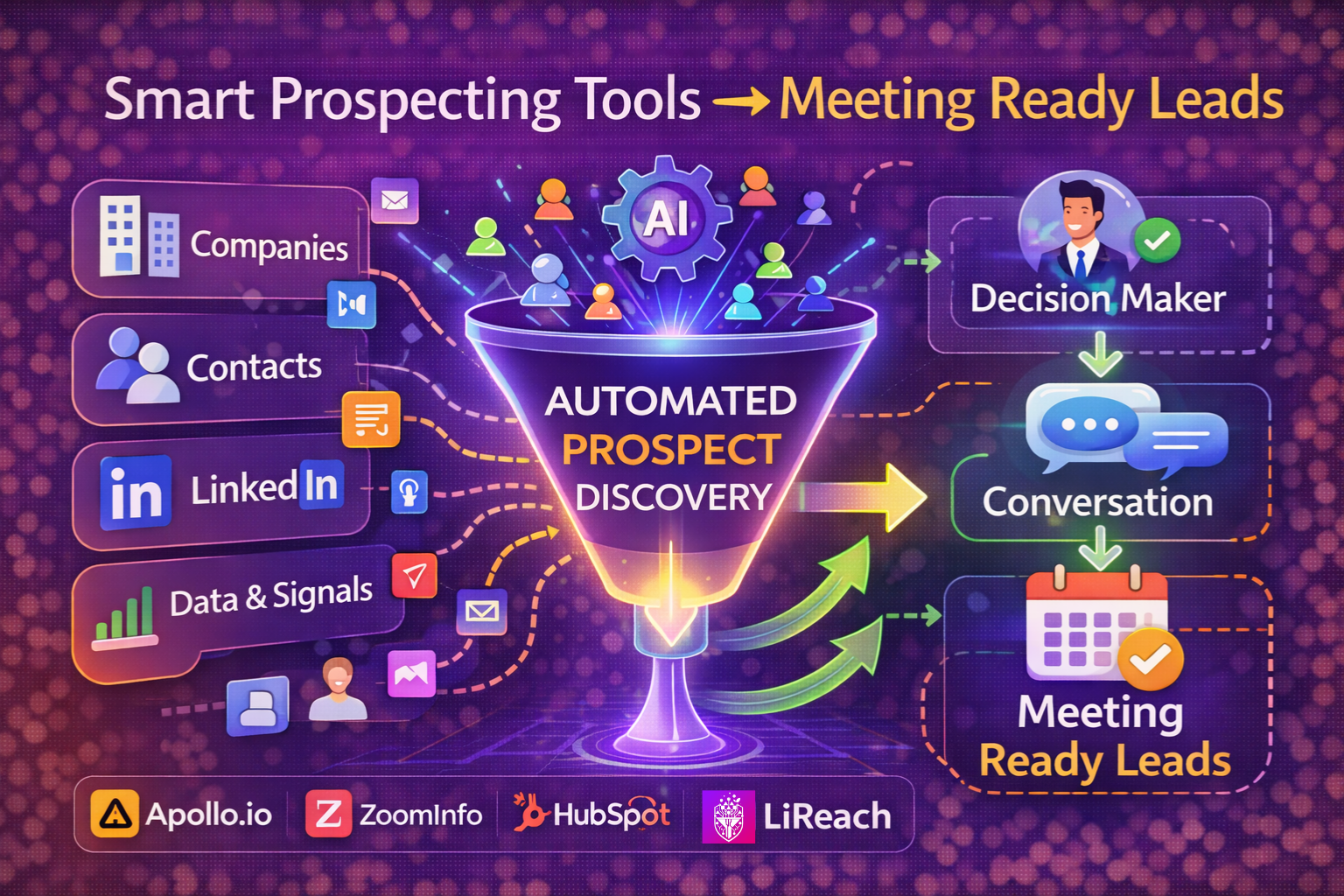
A prospecting system identifies and prioritizes relevant prospects automatically.
This allows sales teams to focus on engaging with potential buyers rather than constantly searching for them.
Define a Clear Ideal Customer Profile
The first step in reducing manual prospecting is defining a clear Ideal Customer Profile (ICP).
An ICP helps narrow the search to companies that are most likely to benefit from your solution.
Common ICP factors include:
- industry
- company size
- growth stage
- relevant decision maker roles
When the ICP is clear, prospecting becomes dramatically faster.
Focus on Decision Makers Instead of Employees
Many sales teams waste time contacting employees who cannot influence the buying decision.
Effective prospecting focuses on decision makers.
This may include roles such as:
- Founder
- CEO
- Head of Sales
- CMO
Reaching the right person early in the process saves time and increases the likelihood of meaningful conversations.
Eliminate Repetitive Research Tasks
One of the biggest inefficiencies in prospecting is repetition.
Sales teams repeatedly perform the same research tasks.
Reviewing LinkedIn profiles. Checking company websites. Analyzing growth signals.
When these tasks are streamlined or automated, prospecting becomes far more efficient.
This allows sales teams to focus on conversations rather than data gathering.
Prioritize Prospects with Strong Signals
Not every company is equally likely to respond to outreach.
Effective prospecting prioritizes prospects showing signs of growth or change.
These signals might include:
- recent hiring activity
- company expansion
- active leadership presence on LinkedIn
These signals increase the probability that a conversation will lead somewhere meaningful.
From Prospecting Efficiency to Meeting Ready Leads
Reducing manual prospecting does more than save time.
It improves targeting.
When outreach focuses on relevant companies and real decision makers, conversations become more valuable.
And valuable conversations often turn into meeting ready leads.
The LiReach Perspective
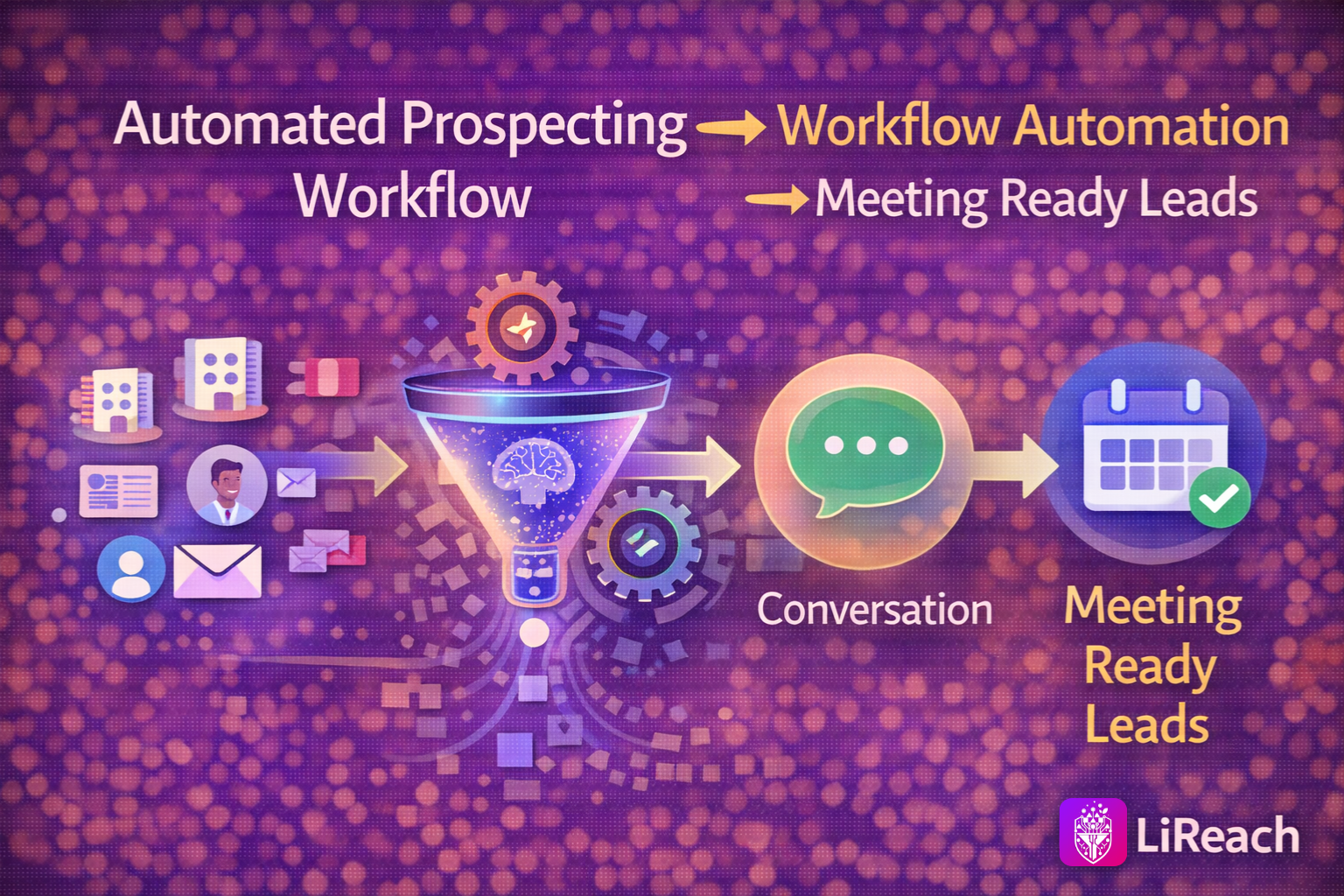
At LiReach, we believe outbound sales should be built around systems rather than manual effort.
Our platform helps teams:
- identify relevant prospects quickly
- find decision makers inside target companies
- reduce time spent on repetitive research
- generate meeting ready leads through real conversations
The result is a prospecting process that is both faster and more effective.
Final Thought
Manual prospecting is not sustainable for modern B2B sales teams.
The companies that succeed build systems that continuously identify and prioritize the right prospects.
When prospecting becomes more efficient, sales teams gain something extremely valuable.
More time to start conversations.
And conversations are what ultimately drive growth.
Join 2,000+ Sales Leaders
Get advanced LinkedIn strategies, automation tips, and templates delivered to your inbox weekly. No spam, just value.