Every founder eventually hits the same wall.
Personalized sales messages work incredibly well.
But scaling them feels impossible.
Writing thoughtful outreach for 10 prospects is easy.
Writing it for 500 prospects every month is a completely different challenge.
Most founders eventually fall into one of two traps:
- They continue manual outreach and burn hours every week
- They switch to automation tools and lose personalization
Both approaches break eventually.
Manual outreach does not scale.
Mass automation destroys response rates.
At LiReach, we work with founder-led B2B companies that face this exact problem. They need to consistently start conversations with decision-makers without turning outreach into spam.
The real question is not whether outreach works.
The real question is:
How do you scale personalized sales messages without losing authenticity?
Why Most Personalized Outreach Does Not Scale
When founders first start outbound, personalization is simple.
They research each prospect manually.
They write a custom message.
They send it.
It works.
Reply rates are high.
But this approach breaks once outreach volume increases.
Imagine sending outreach to 300 prospects.
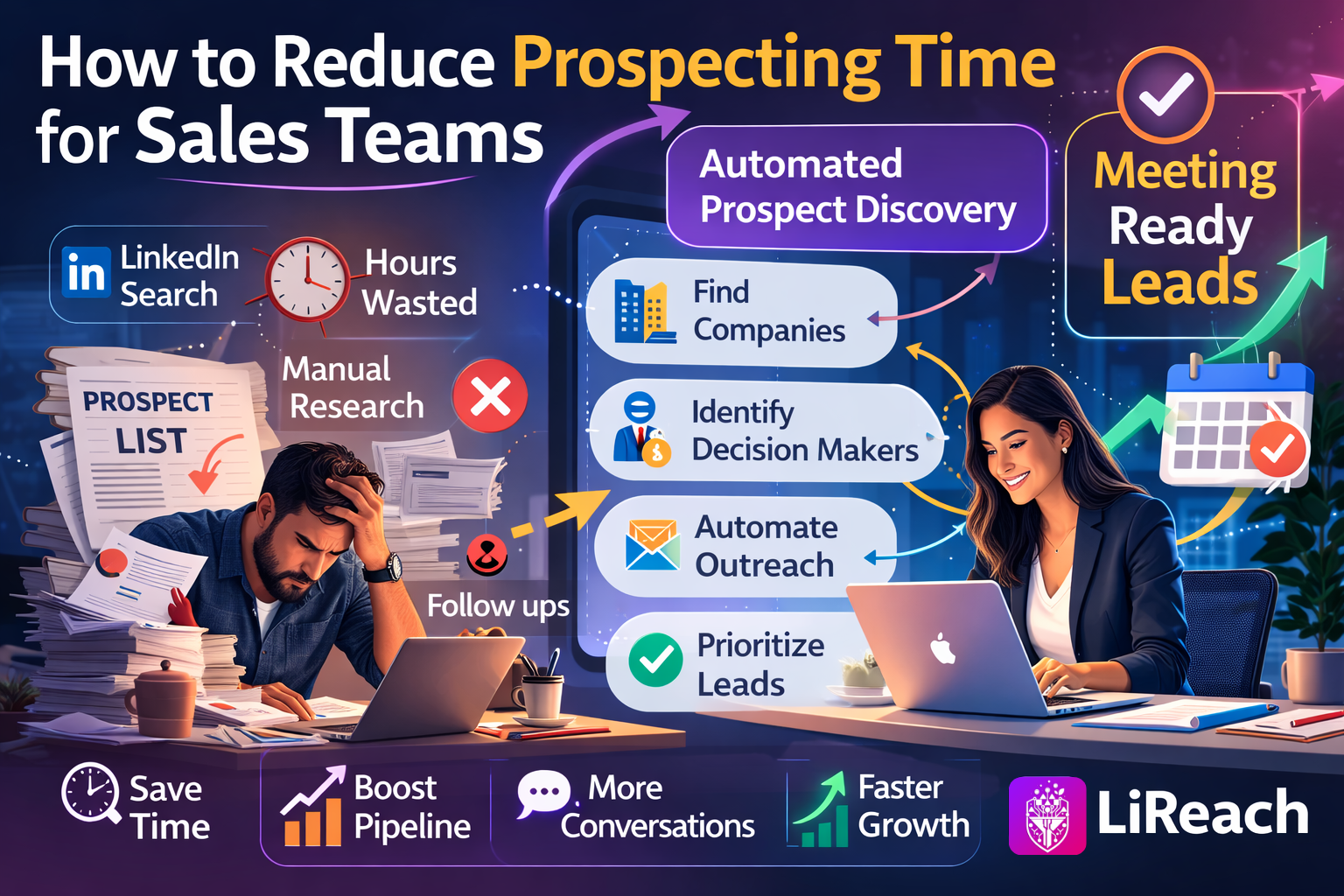
If proper research takes 5 minutes per lead, that is:
25 hours of research every month.
Add message writing, follow-ups, and CRM updates, and outreach quickly becomes a full-time job.
Most founders simply cannot sustain this.
The Real Secret to Scaling Personalized Outreach
The biggest misconception in outbound sales is that personalization happens inside the message.
In reality, personalization happens before the message is written.
It starts with understanding the prospect.
High-performing outbound teams focus on three elements:
- Prospect context
- Problem relevance
- Conversation triggers
Once these exist, writing the message becomes easy.
The LiReach Framework for Scaling Personalized Sales Messages
At LiReach we built our system around a simple principle:
Outbound should start conversations — not send mass messages.
Our framework focuses on four core stages.
1. Identify the Right Decision Makers
Scaling outreach begins with targeting.
Most companies build large prospect lists.
But large lists rarely convert.
LiReach focuses on identifying decision-makers inside companies that match the ideal customer profile.
This immediately increases relevance and reply probability.
For example:
- SaaS founders scaling engineering teams
- B2B companies hiring sales teams
- Startups that recently raised funding
When the audience is correct, personalization becomes dramatically easier.
2. Add Context to Every Prospect
Context is what makes a message feel human.
Instead of generic introductions, outreach references real signals such as:
- company hiring activity
- industry trends
- product launches
- growth signals
Example:
Generic outreach:
""Hey David, I saw you're the founder of ABC company.""
Context-driven outreach:
""Noticed your team has been hiring multiple sales reps recently — looks like you're preparing for aggressive growth.""
That single insight dramatically increases response probability.
3. Use AI to Generate Insight-Based Messages
This is where modern outreach systems change the game.
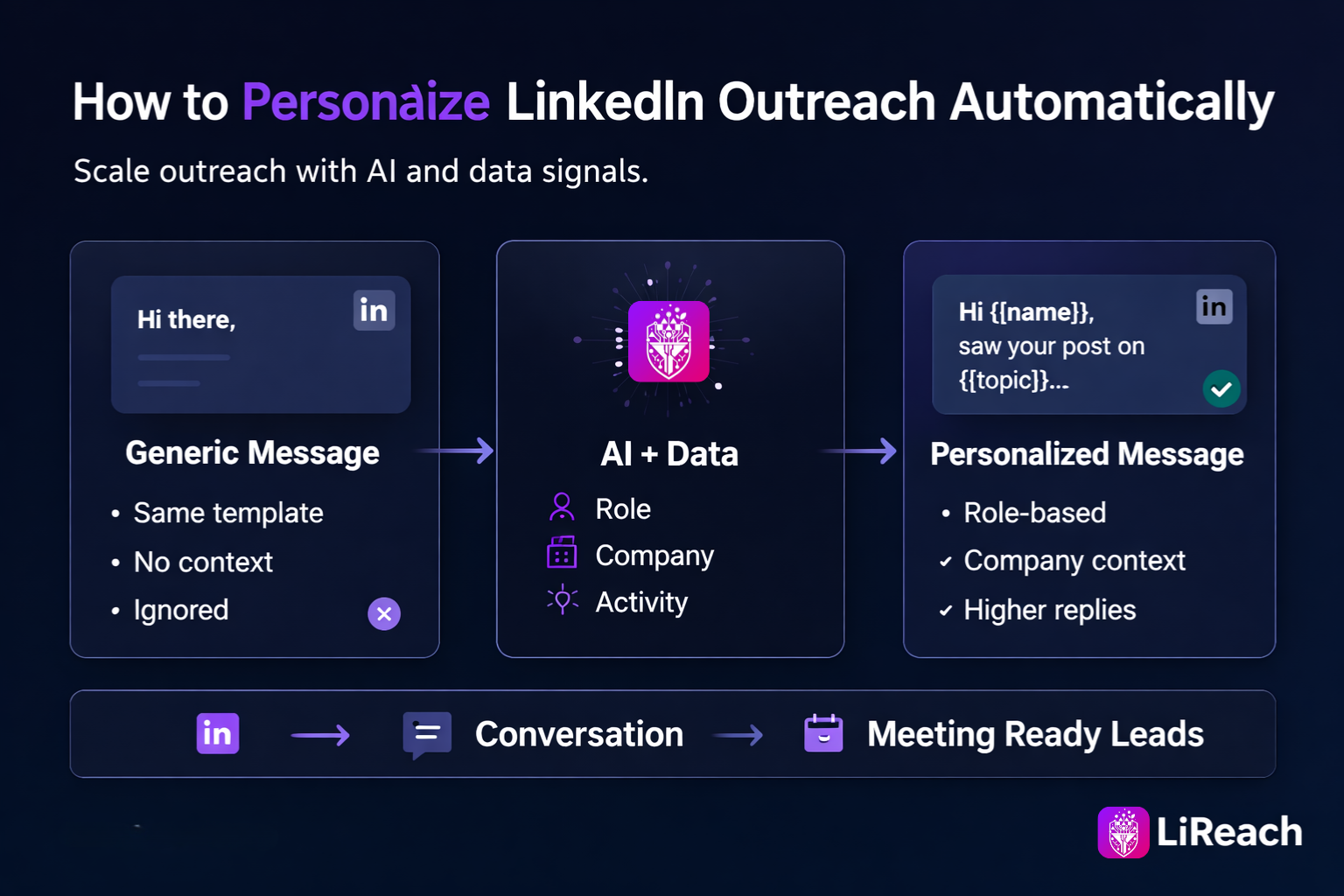
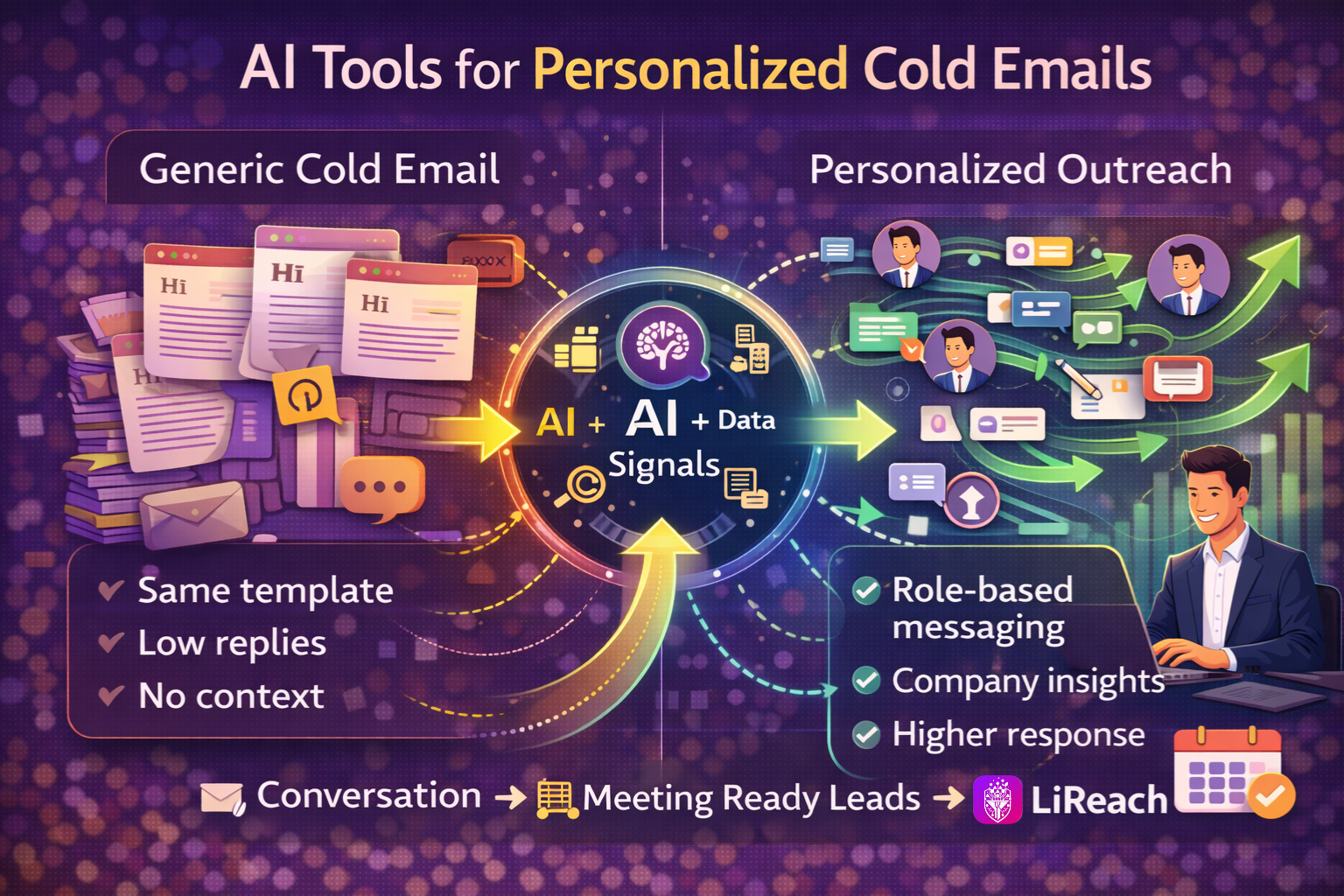
Instead of writing every message manually, AI helps transform prospect context into relevant conversation starters.
LiReach uses AI to:
- analyze prospect data
- identify relevant signals
- generate personalized outreach suggestions
This allows teams to scale personalization without sacrificing quality.
4. Structure Follow-Ups Intelligently
Most replies come from follow-ups, not first messages.
But follow-ups should never feel repetitive.
LiReach sequences follow-ups across multiple channels including:
- LinkedIn messages
- email outreach
- conversation reminders
This increases visibility while maintaining a natural communication flow.
Case Study: From Random Outreach to Predictable Meetings
One consulting firm we worked with struggled to generate consistent meetings through outbound.
Their original process looked like this:
- manual LinkedIn outreach
- generic cold email templates
- no structured follow-up system
Results:
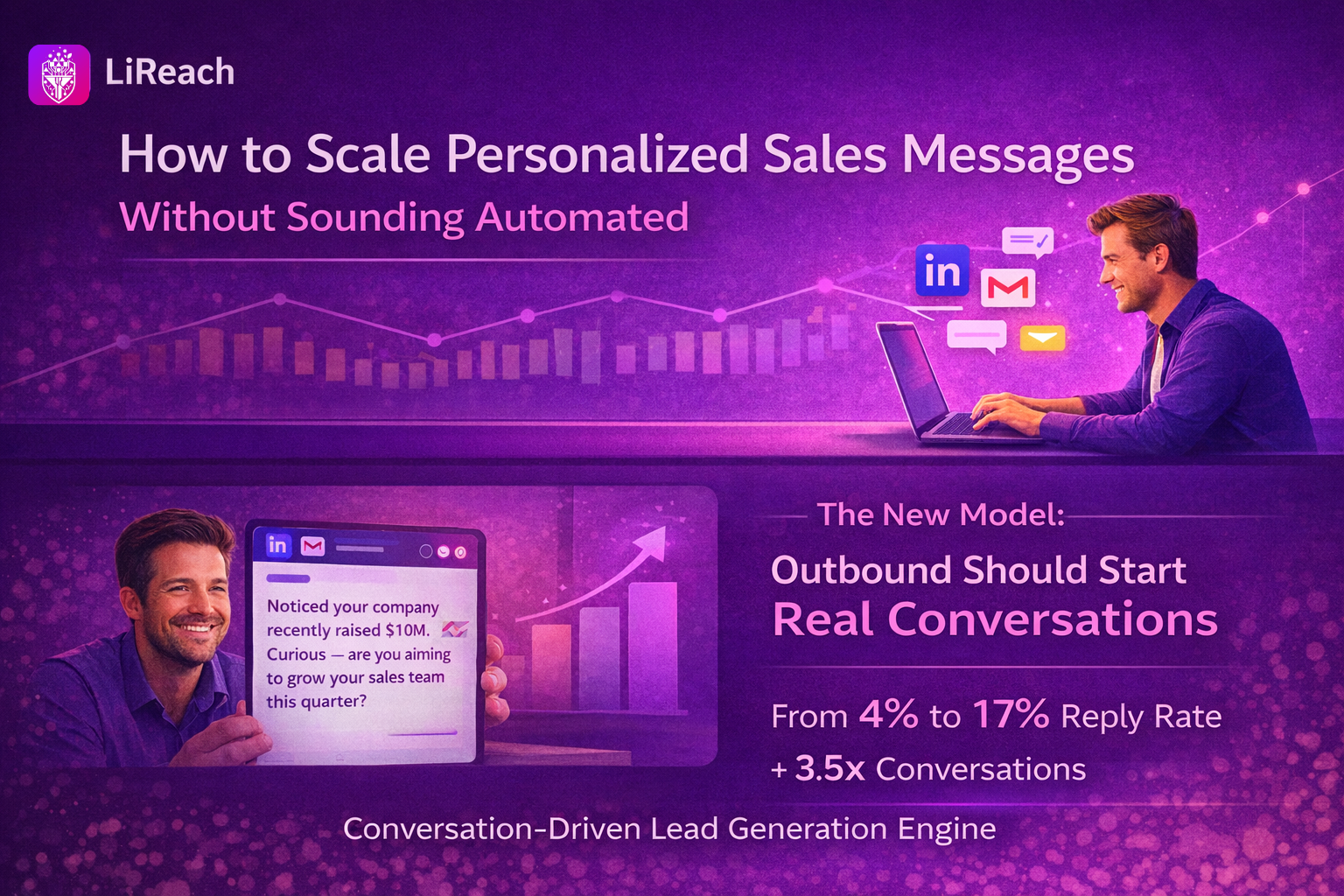
- reply rate: 4%
- 2–3 meetings per month
After implementing a structured LiReach workflow:
- targeted decision-maker lists
- context-driven personalization
- multi-channel follow-ups
Results improved dramatically:
- reply rate increased to 17%
- conversation volume increased 3.5x
- meetings became predictable
This is what happens when outreach becomes a system rather than random activity.
The Future of Sales Outreach
Buyers today receive hundreds of sales messages every week.
The only ones that stand out are the ones that feel relevant.
The future of outbound sales will not be defined by volume.
It will be defined by intelligence.
Companies that combine targeting, context, AI, and structured follow-ups will dominate outbound sales.
That is exactly what LiReach was designed to enable.
Final Thoughts
Scaling personalized sales messages is not about writing more emails.
It is about building a smarter outreach system.
When the right prospects receive the right message at the right time, conversations happen naturally.
And conversations turn into meetings.
That is the real goal of outbound.
Not replies.
Not clicks.
But meeting-ready leads.
Join 2,000+ Sales Leaders
Get advanced LinkedIn strategies, automation tips, and templates delivered to your inbox weekly. No spam, just value.