An unstable sales pipeline is one of the most common problems B2B companies face.
Some months the pipeline is full of opportunities.
Other months it feels like nothing is moving.
Leaders start asking difficult questions.
Where did the opportunities go?
Why did meetings suddenly stop?
And most importantly: how can we make revenue more predictable?
After analyzing dozens of B2B sales teams, the LiReach team has observed a consistent pattern.
Pipelines become unstable when companies rely on unpredictable lead sources instead of building a system that consistently produces meeting ready leads.
Stabilizing a pipeline requires more than generating leads.
It requires a repeatable process for creating sales conversations every week.
Why B2B Sales Pipelines Become Unstable
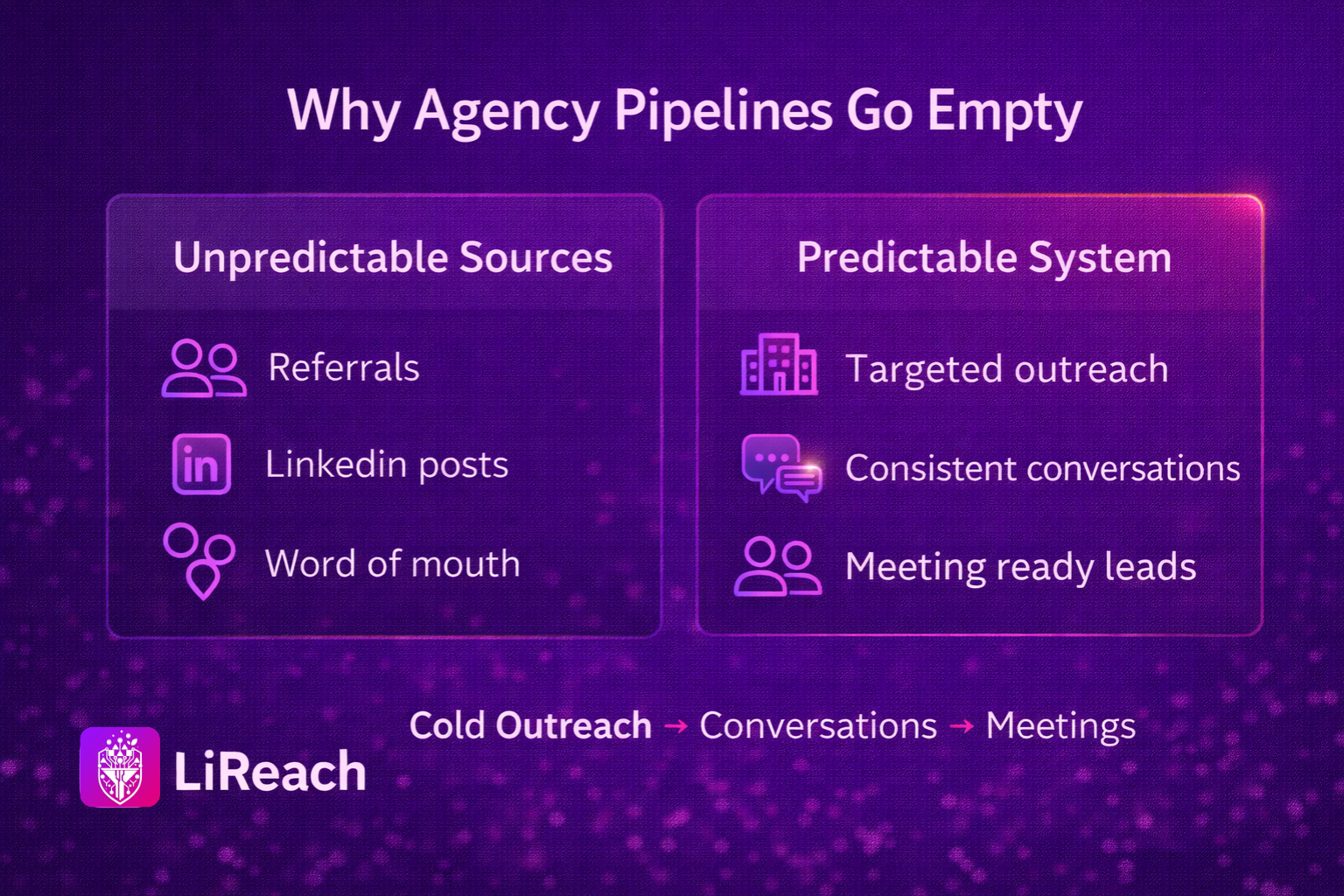
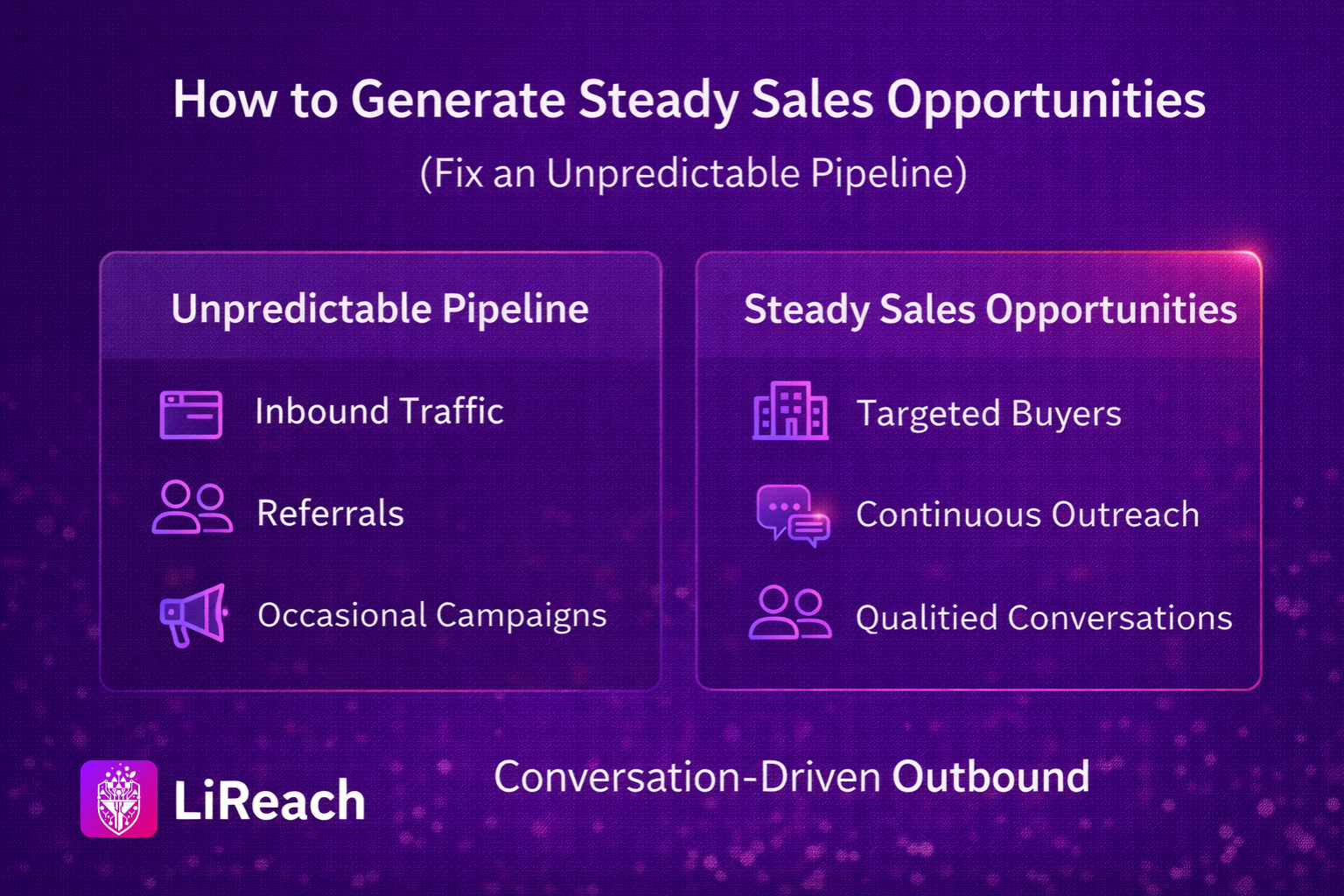
Many companies build their pipeline from a combination of:
- Inbound marketing
- Referrals
- Networking
- Occasional outbound campaigns
While these sources can produce strong results, they share a critical weakness.
They are unpredictable.
Inbound leads depend on marketing performance.
Referrals depend on client behavior.
Networking depends on timing and relationships.
Because these sources fluctuate, the pipeline naturally fluctuates as well.
Stable pipelines require a reliable engine that continuously produces opportunities.
The Key Metric Behind Pipeline Stability
Most companies track metrics such as:
- Website traffic
- Email opens
- Campaign responses
While useful, these metrics do not directly predict revenue.
The metric that actually determines pipeline stability is much simpler.
How many meeting ready leads enter the pipeline each week?
Meeting ready leads are prospects who:
- Match your ideal customer profile
- Have a clear business problem
- Are open to a conversation about solving it
When companies consistently generate these leads, pipeline volatility decreases significantly.
The System That Stabilizes Sales Pipelines
In high-performing B2B teams, pipelines remain stable because prospecting follows a structured system.
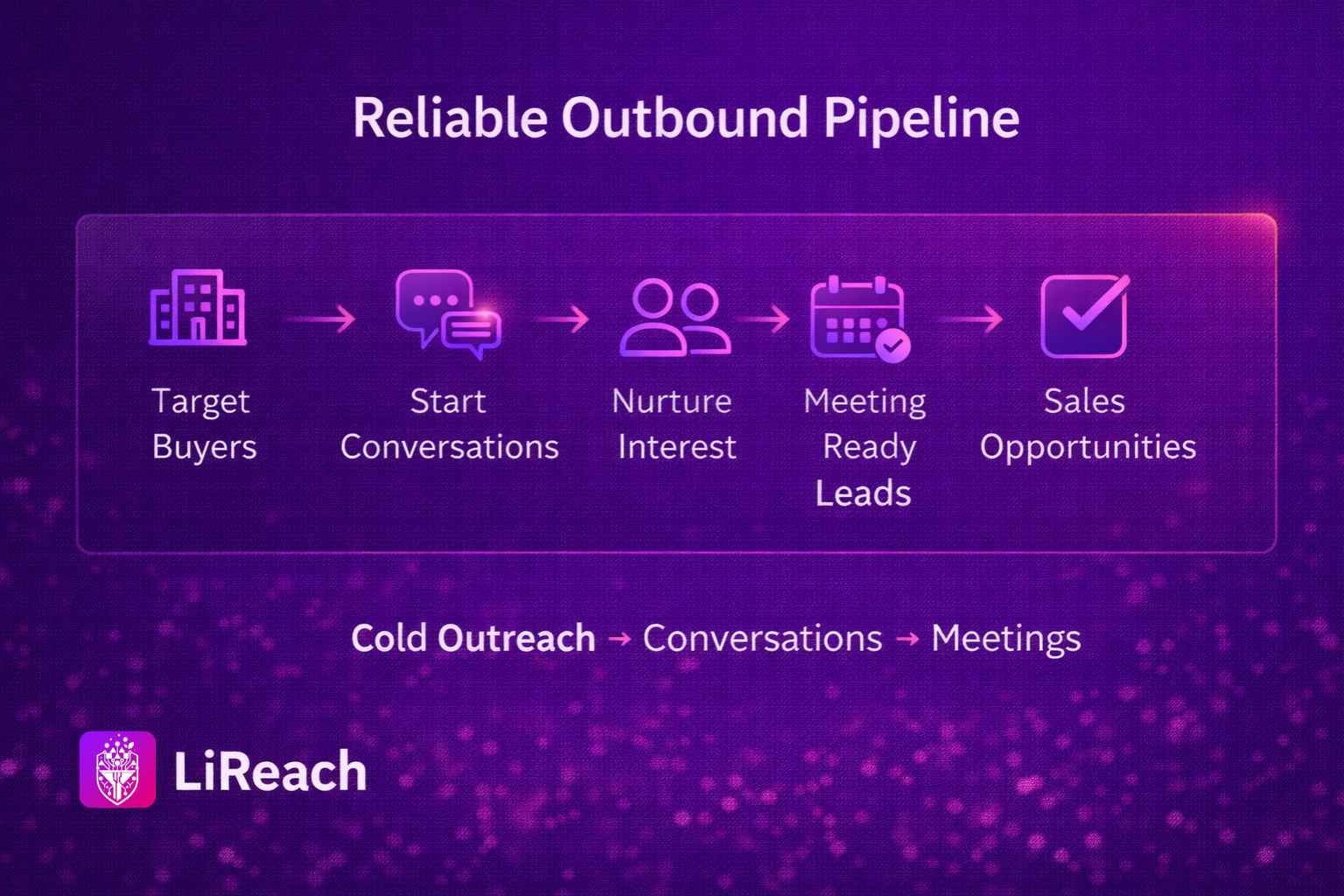
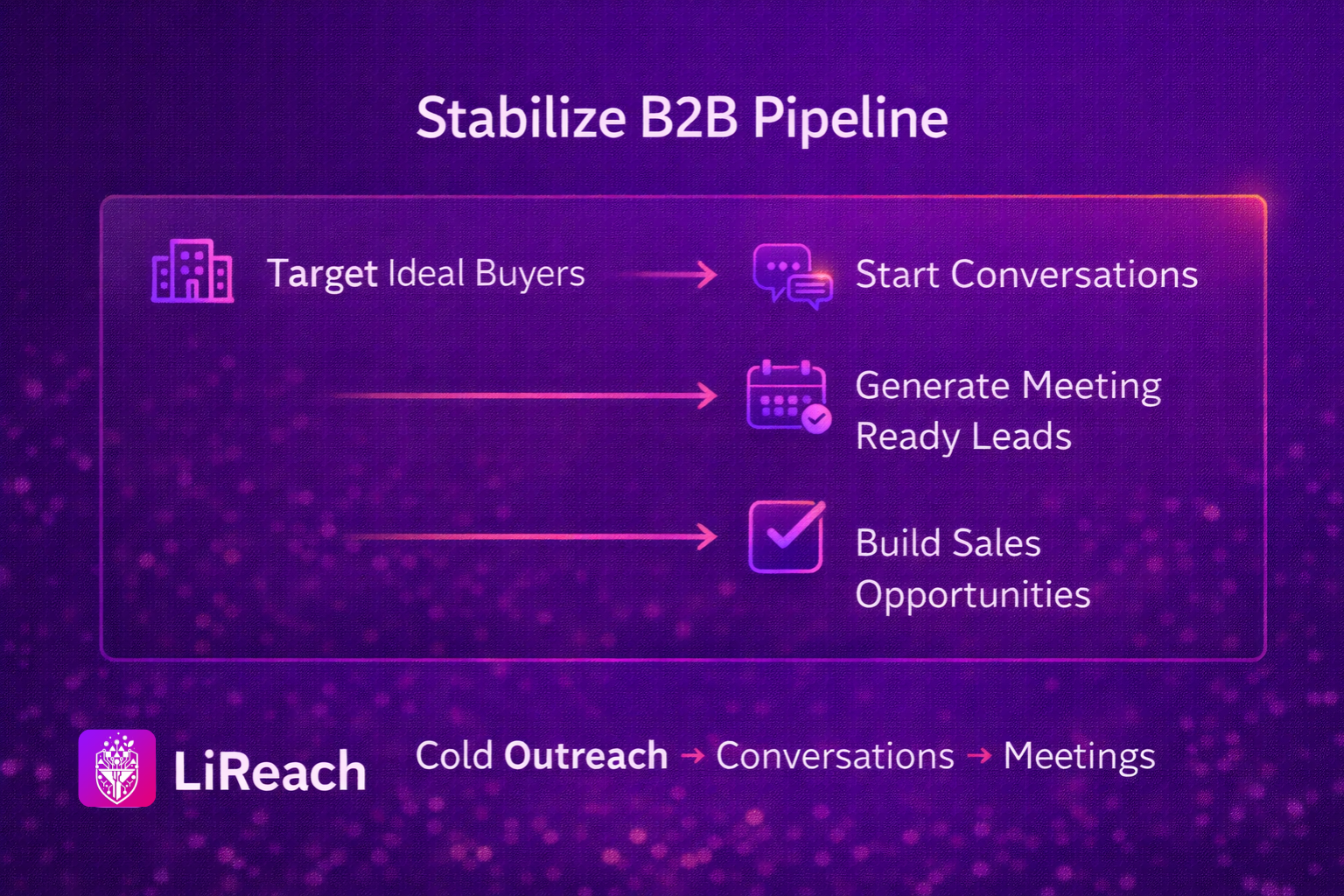
This system focuses on four operational stages.
1. Define Ideal Customers Clearly
Stable pipelines begin with clarity about who you should sell to.
Companies that define their ideal customer profile precisely can focus outreach on the most relevant prospects.
This increases response rates and conversation quality.
2. Start Targeted Conversations
Modern B2B buyers ignore generic sales pitches.
Successful outreach focuses on relevant insights about the prospect’s business rather than pushing products.
This approach increases engagement and builds trust.
3. Maintain Consistent Prospecting
One of the biggest mistakes companies make is starting prospecting only when the pipeline is already shrinking.
Consistent prospecting ensures that new conversations are always entering the pipeline.
This is essential for pipeline stability.
4. Convert Conversations Into Meetings
When prospects show interest, the next step is guiding them toward a discovery call.
These meetings represent real opportunities and form the foundation of the sales pipeline.
Why Conversation-Driven Outbound Works
Outbound sales has evolved significantly in recent years.
Buyers now receive hundreds of messages every week.
The outreach that stands out today is not the most aggressive message.
It is the most relevant conversation.
When outreach focuses on starting meaningful discussions, prospects are more likely to respond.
This approach generates a steady stream of meeting ready leads.
How LiReach Helps Stabilize Pipelines
LiReach was designed to help B2B companies build predictable outbound systems.
The platform helps teams:
- Identify high-fit prospects
- Start personalized outreach
- Manage ongoing conversations
- Convert interest into meeting ready leads
By focusing on conversations instead of raw lead volume, companies can transform outbound into a reliable pipeline engine.
The New Sales Discipline
Stabilizing a pipeline is not about working harder during slow months.
It is about creating a system that continuously produces opportunities.
The companies with the most stable pipelines share one common habit.
They start new sales conversations every week.
Because every predictable pipeline begins the same way.
With a conversation that turns a prospect into a potential customer.
Join 2,000+ Sales Leaders
Get advanced LinkedIn strategies, automation tips, and templates delivered to your inbox weekly. No spam, just value.