LinkedIn has become one of the most powerful platforms for outbound sales.
Founders and sales teams use it daily to connect with decision makers, start conversations, and generate new opportunities.
But once conversations begin, a new challenge appears.
Tracking them becomes difficult.
One prospect replies to your connection request.
Another responds to a follow-up message.
Someone asks for more information about your service.
Within a few days, you may be managing dozens of LinkedIn conversations.
Without a clear system, these conversations quickly become disorganized.
Follow-ups get missed.
Important prospects disappear.
And opportunities that could have become meeting ready leads are lost.
The Challenge With LinkedIn Outreach
Most outbound founders start LinkedIn outreach manually.
They track prospects using:
- LinkedIn inbox
- spreadsheet lists
- personal notes
But as outreach grows, this approach stops working.
Conversations multiply quickly.
Sales teams struggle with:
- lost conversations
- missed follow-ups
- duplicate outreach
- poor pipeline visibility
Without organization, LinkedIn outreach rarely produces consistent meeting ready leads.
The LinkedIn Conversation Pipeline
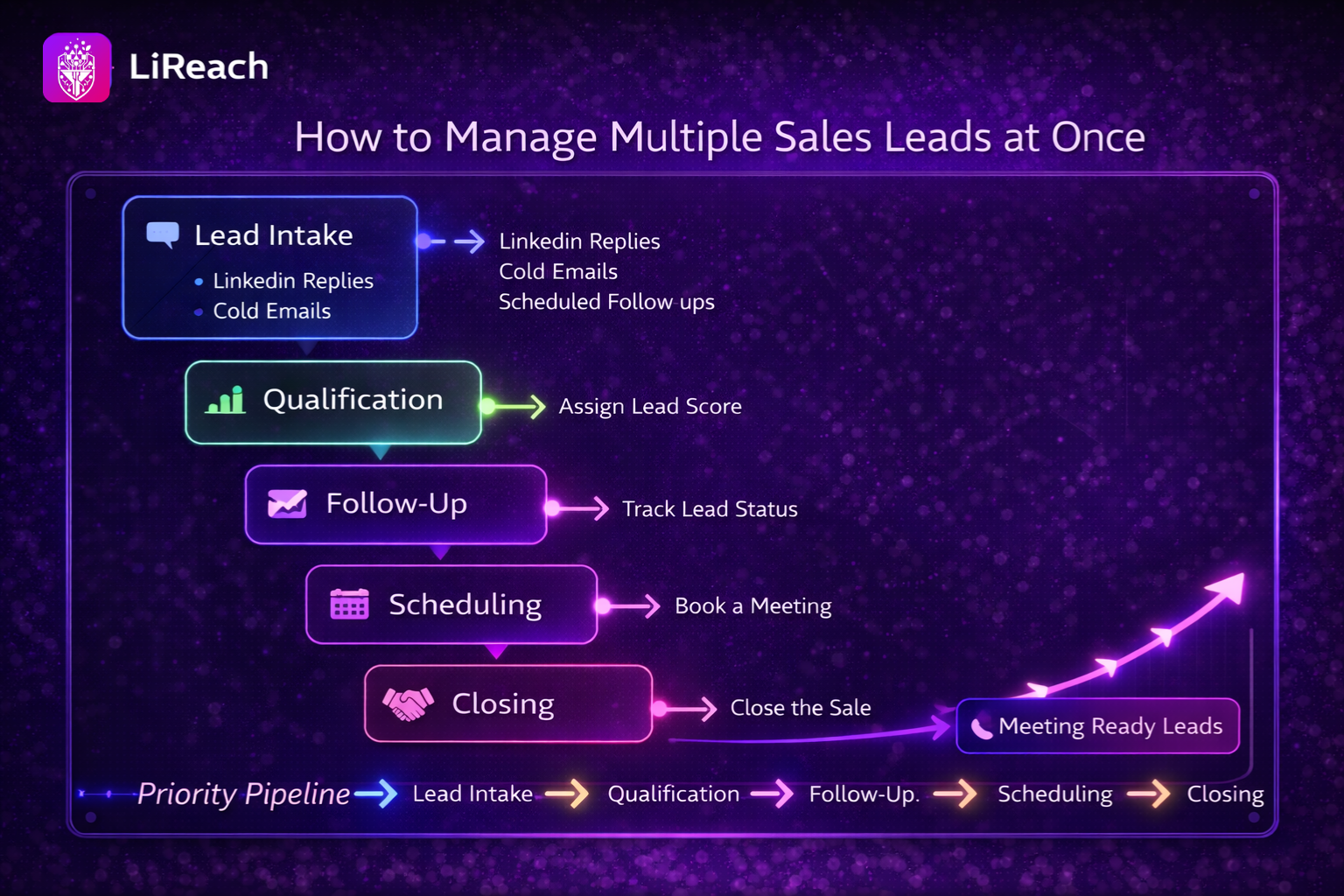
Successful outbound teams organize LinkedIn conversations using a simple pipeline:
Connection → Conversation → Follow-Up → Meeting → Client
Each stage represents progress toward generating meeting ready leads.
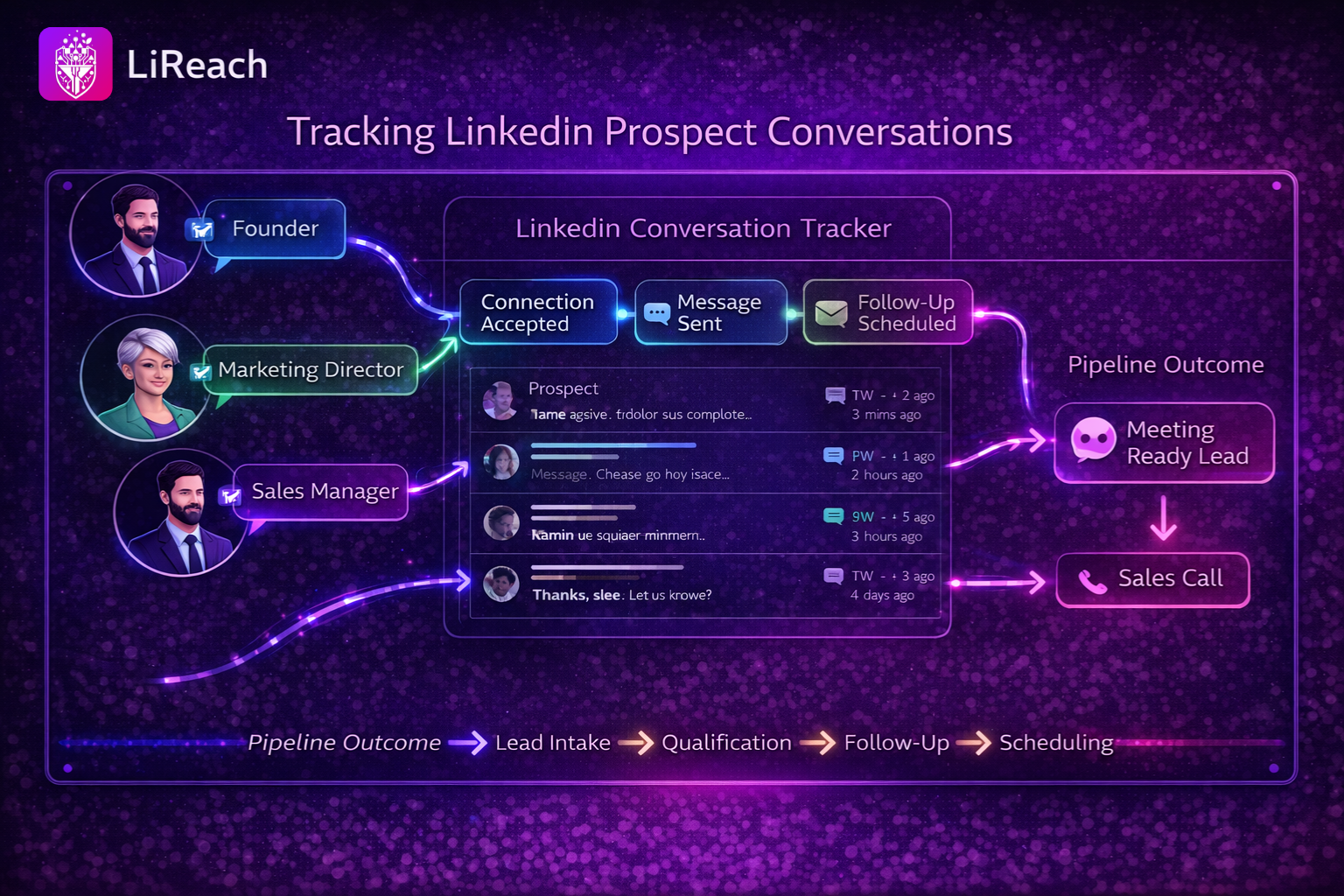
Stage 1: Connection Accepted
The first stage begins when a prospect accepts your connection request.
At this point the relationship begins.
Tracking accepted connections helps prioritize who to message next.
Stage 2: Conversation Started
After sending your first message, the prospect enters the conversation stage.
Each reply should be tracked.
This ensures context is maintained and conversations continue moving forward.
Well-managed conversations are far more likely to become meeting ready leads.
Stage 3: Follow-Up System
Most LinkedIn conversations require multiple follow-ups.
Strong follow-up systems track:
- last message sent
- prospect response
- next follow-up date
This dramatically increases reply rates and meeting bookings.
Stage 4: Meeting Conversion
Once a prospect shows interest, the conversation moves toward scheduling a meeting.
These meetings are the true output of LinkedIn outreach.
They represent meeting ready leads.
Why LinkedIn Conversations Often Get Lost
Many founders rely solely on LinkedIn's messaging interface to track conversations.
But LinkedIn was not designed to manage large outbound pipelines.
As conversations increase, it becomes difficult to:
- find older messages
- track follow-ups
- prioritize hot prospects
- monitor pipeline progress
This is why many outbound efforts fail to generate consistent meeting ready leads.
How LiReach Helps Track LinkedIn Prospect Conversations
LiReach was built to help founders manage LinkedIn outreach at scale.
The platform helps teams:
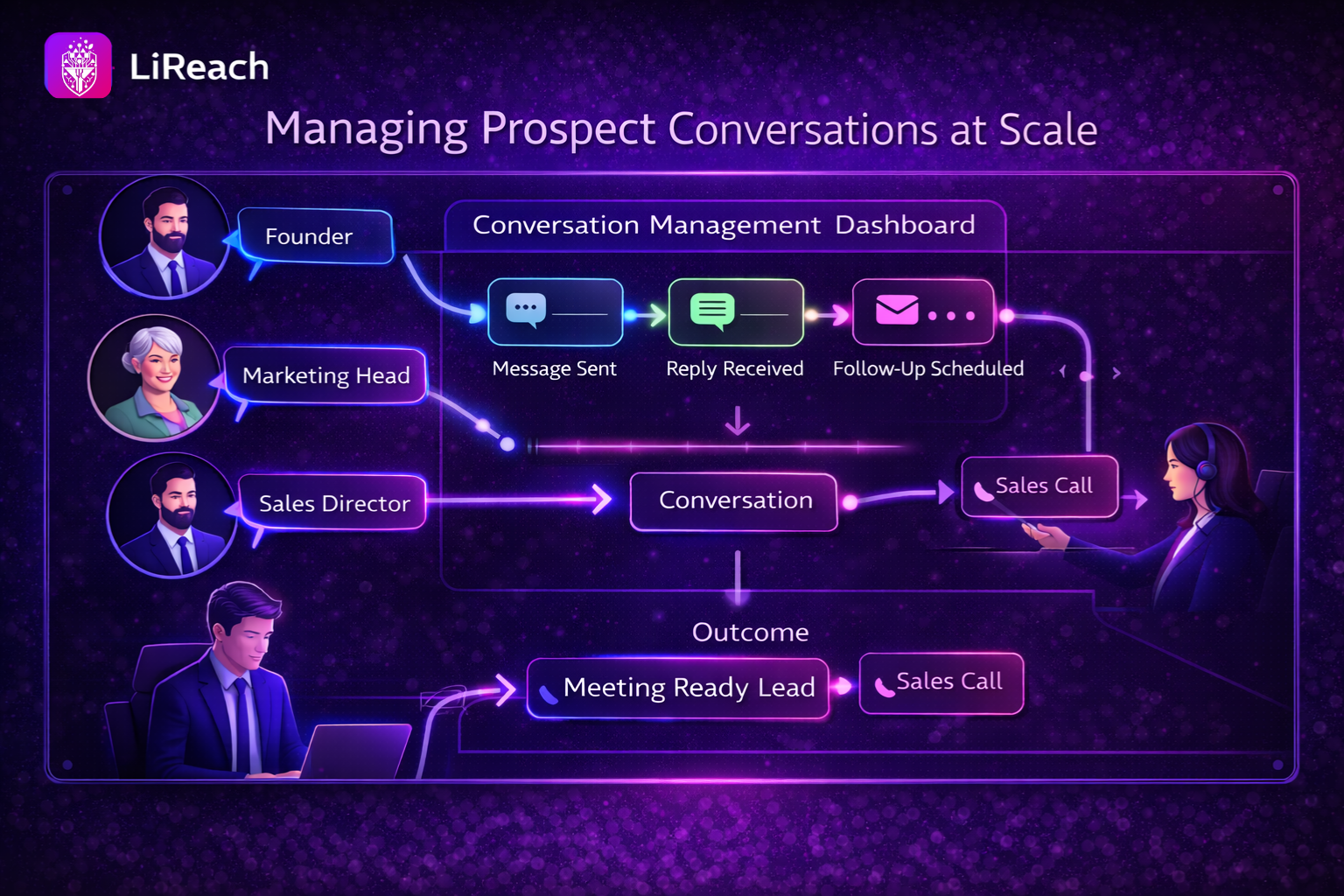
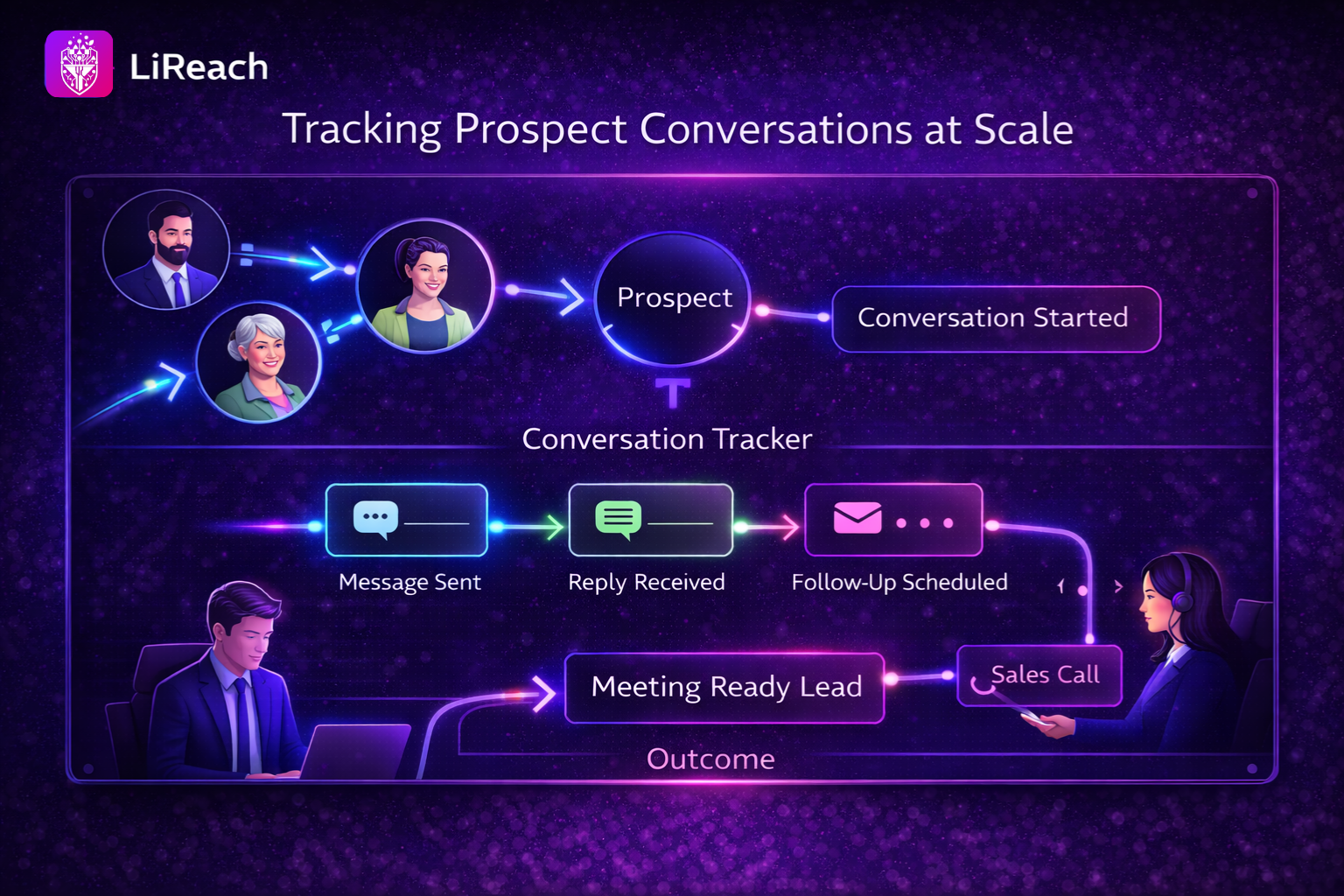
- track LinkedIn prospect conversations
- monitor outreach responses
- automate follow-ups
- convert conversations into meetings
Instead of losing conversations inside LinkedIn inboxes, teams can manage their entire outreach pipeline in one place.
This helps turn LinkedIn conversations into consistent meeting ready leads.
Final Thoughts
LinkedIn outreach can generate powerful opportunities.
But success depends on more than sending messages.
It requires organization.
Companies that track conversations systematically generate more meetings.
And more meetings create more meeting ready leads.
With the right system, LinkedIn outreach becomes a predictable pipeline instead of random conversations.
Join 2,000+ Sales Leaders
Get advanced LinkedIn strategies, automation tips, and templates delivered to your inbox weekly. No spam, just value.