At LiReach, we regularly speak with founders, sales leaders, and outbound teams running B2B companies.
Almost every conversation eventually leads to the same frustration:
""Our pipeline is unpredictable.""
One quarter the team is closing deals and booking calls every week. The next quarter things slow down dramatically. Meetings disappear, response rates drop, and suddenly everyone starts asking the same question:
“Where did the pipeline go?”
Many companies assume the answer is simple — they need more leads.
But after analyzing dozens of outbound programs and sales pipelines, we’ve learned something different.
The real issue isn’t lead generation.
The real issue is the lack of meeting ready leads.
And there’s a huge difference between the two.
The False Comfort of Lead Volume
Many B2B companies are sitting on thousands of leads.
CRMs are full. Databases are full. Sales teams have contact lists.
Yet when leadership asks, “How many meetings do we have this week?” the answer is often disappointing.
This happens because leads alone do not create pipeline momentum.
Only conversations do.
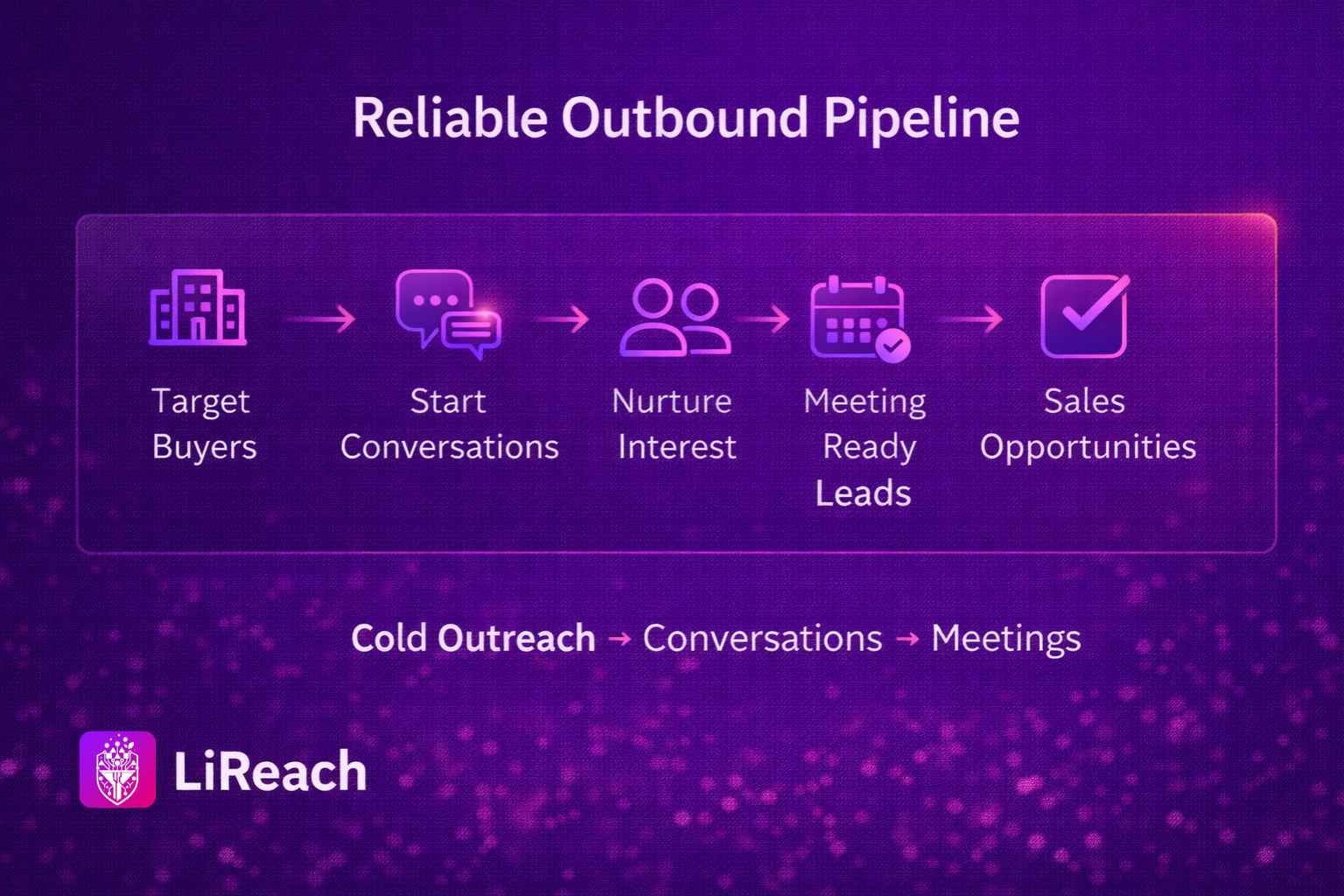
In our experience working with outbound teams, predictable pipelines always follow the same progression:
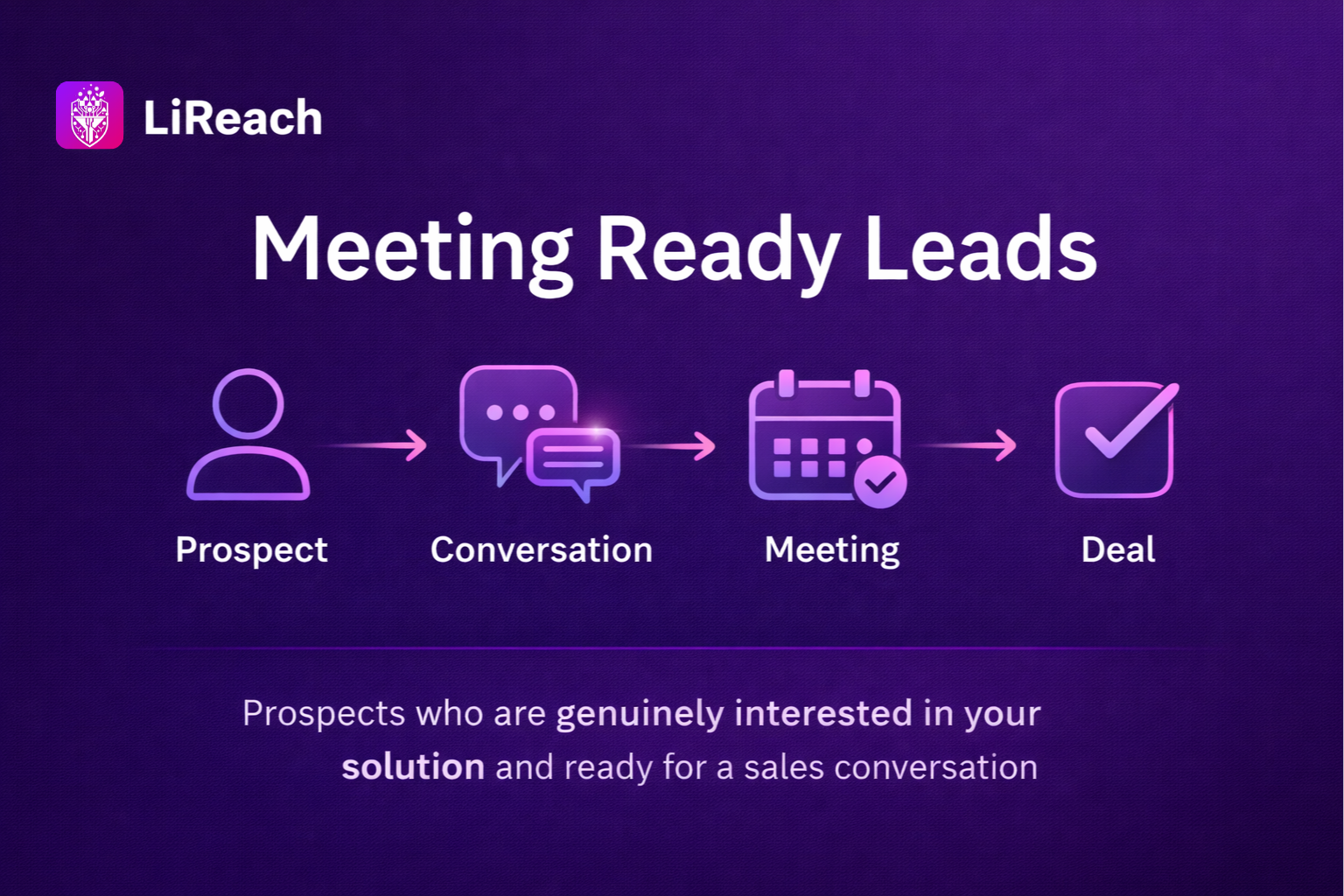
Prospect → Conversation → Meeting → Opportunity → Deal
The majority of pipeline breakdowns occur between two specific stages:
Outreach → Conversation
If outreach fails to generate conversations, the pipeline dries up no matter how many leads exist.
The Real Metric That Predicts Pipeline Growth
Most companies track metrics like:
- Number of leads generated
- Emails sent
- LinkedIn messages sent
- Website visitors
But the most important pipeline indicator is rarely tracked.
How many meeting ready leads are entering your pipeline every week?
Meeting ready leads are prospects who have already shown enough interest to consider a conversation about solving a real business problem.
They are not just contacts.
They are potential buyers.
The companies with predictable pipelines know exactly how many meeting ready leads they generate every week.
The Pipeline Pattern We See Across B2B Companies
When we review sales pipelines across B2B companies, the pattern is remarkably consistent.
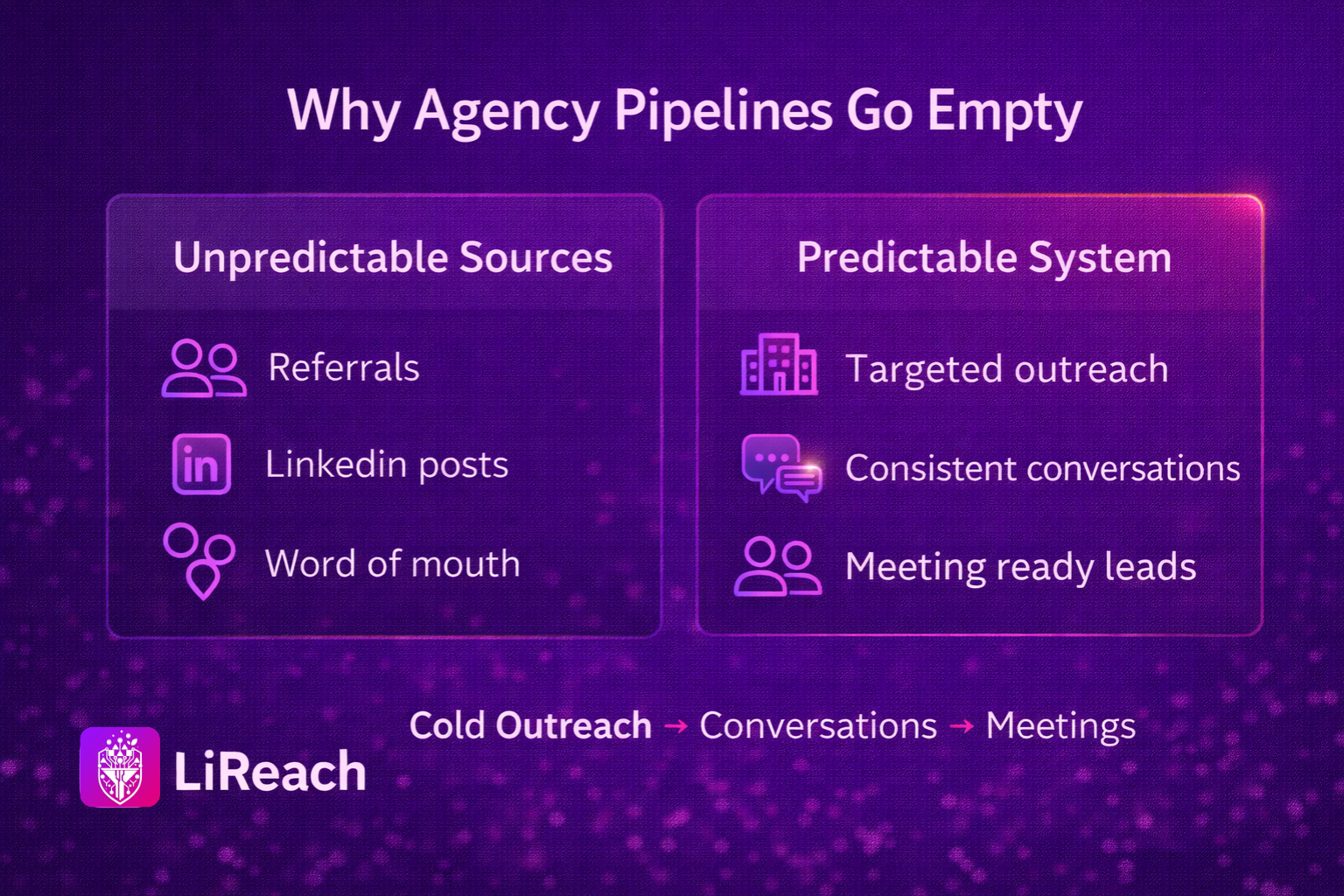
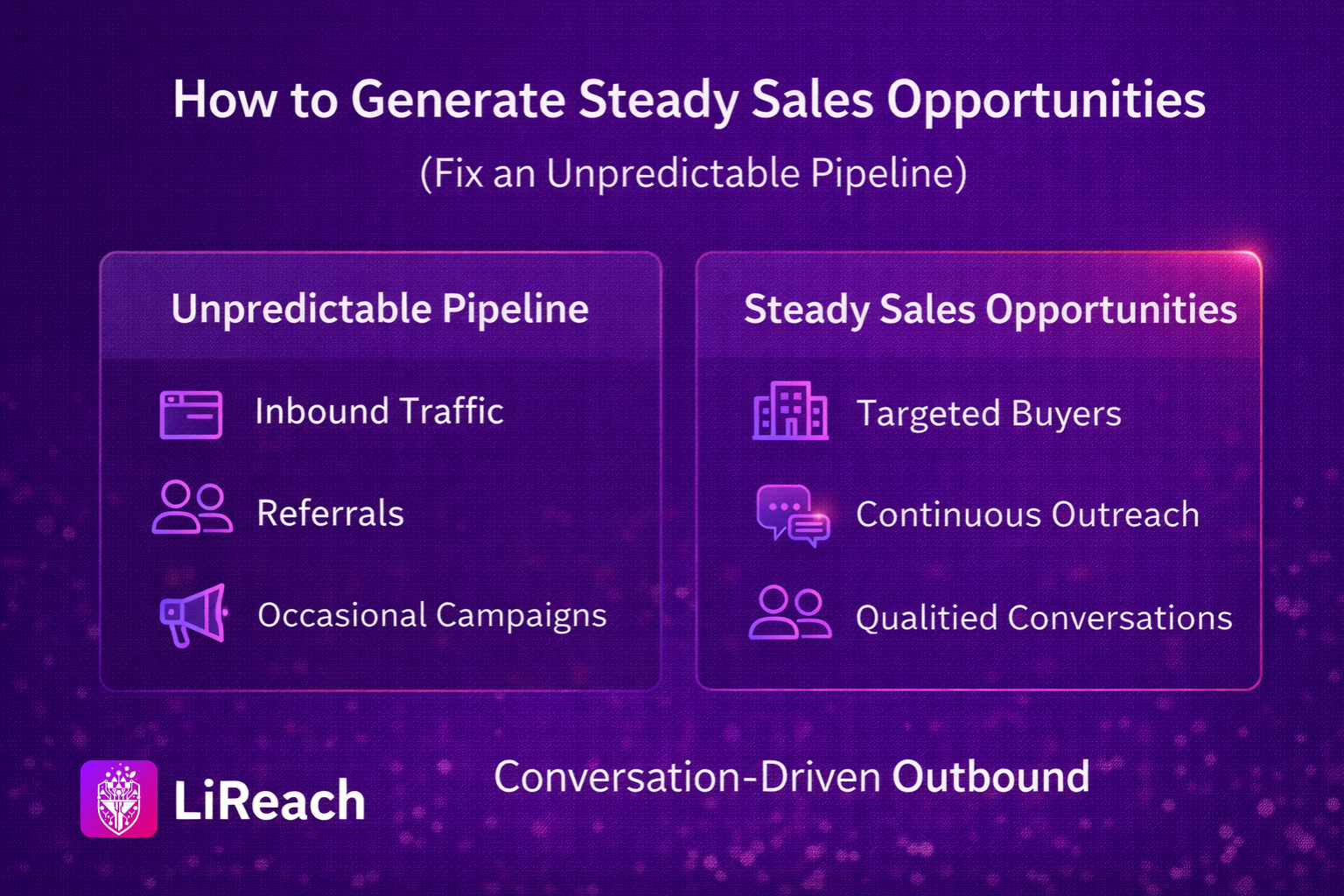
Most pipelines depend on a combination of:
- Referrals
- Inbound leads
- Occasional outbound campaigns
This creates a growth model that feels productive but lacks stability.
Referrals arrive unpredictably.
Inbound traffic fluctuates.
Outbound campaigns start and stop.
The result is a pipeline that behaves like a roller coaster.
Predictable companies solve this by building one reliable engine:
conversation-driven outbound.
Outbound Done Right Creates Predictability
Outbound sales often gets a bad reputation because many teams execute it poorly.
Mass messaging, generic templates, and irrelevant outreach have made buyers resistant to cold messages.
However, when outbound is designed around conversations rather than volume, something interesting happens.
Response rates improve.
Meetings become easier to schedule.
And pipelines stabilize.
The key shift is simple:
Stop sending outreach. Start starting conversations.
How High-Performing Teams Generate Meeting Ready Leads
From our work with B2B teams, predictable pipelines typically rely on five operational principles.
1. Precision Targeting
High-performing outbound teams rarely target broad audiences.
Instead, they build extremely specific ideal customer profiles.
They know exactly which companies, industries, and roles experience the problem their product solves.
This dramatically increases the probability that outreach leads to meeting ready leads.
2. Conversation First Messaging
The best outreach messages are not sales pitches.
They are conversation starters.
They reference real industry problems, observations, or insights that make the recipient want to respond.
3. Structured Follow-Up Systems
Most meetings are not booked after the first message.
They happen after several thoughtful follow-ups.
Teams with predictable pipelines design follow-up sequences that provide value rather than pressure.
4. Prospect Nurturing
Not every conversation turns into an immediate meeting.
Some prospects require time before they become meeting ready leads.
Smart teams maintain ongoing conversations instead of abandoning prospects too early.
5. Conversation Analytics
Predictable teams analyze which messages, industries, and conversations convert into meetings.
Over time, this data creates a repeatable system for generating meeting ready leads.
Where LiReach Fits Into This Process
LiReach was built around a simple observation:
Most outbound tools focus on generating leads.
Very few focus on generating conversations.
The platform helps B2B teams identify ideal prospects, start personalized outreach, and manage conversations until they become meeting ready leads.
The goal isn’t simply to send more messages.
The goal is to help companies build a reliable system for generating sales conversations every week.
When conversations become predictable, pipelines become predictable.
The New Way to Think About Pipeline Growth
The next generation of B2B sales teams will not compete on lead volume.
They will compete on conversation quality.
Companies that consistently generate meeting ready leads will always outperform those relying on random bursts of inbound traffic.
If your sales pipeline feels unpredictable, the question is not:
“How can we generate more leads?”
The real question is:
“How can we start more conversations with the right buyers?”
Because every predictable pipeline begins with one thing.
A conversation.
Join 2,000+ Sales Leaders
Get advanced LinkedIn strategies, automation tips, and templates delivered to your inbox weekly. No spam, just value.