Many founders believe their outreach problem is getting replies.
But the real problem appears later.
Prospects reply.
A conversation starts.
Then suddenly… it stops.
No meeting.
No follow-up response.
No sales opportunity.
This is one of the most common problems in B2B outreach.
Conversations begin but never reach the meeting stage.
Understanding why this happens is the first step to fixing it.
Why Outreach Conversations Lose Momentum
1. The Conversation Turns Into a Pitch Too Quickly
Many outreach conversations start well.
But after the first reply, the sender immediately pitches their product.
Example:
Prospect: “Interesting, tell me more.” Sender: “We offer a platform that helps companies generate more leads.”
At that moment the conversation changes from discussion to sales pitch.
Prospects often lose interest.
2. The Prospect’s Problem Isn’t Clear
If the conversation does not identify a specific challenge, the discussion remains vague.
Without a clear problem, prospects do not see the value of continuing the conversation.
3. The Conversation Lacks Direction
Many outreach conversations end like this:
Prospect: “Sounds interesting.” Sender: “Let me know if you'd like more information.”
This removes momentum from the conversation.
Instead of progressing toward a meeting, the discussion stalls.
4. The Prospect Doesn’t Feel Urgency
Scheduling a meeting requires time.
If the value of the conversation is unclear, the prospect postpones it indefinitely.
The Conversation-Driven Outreach Framework
At LiReach we approach outreach differently.
Instead of pushing sales immediately, we guide conversations toward meetings naturally.
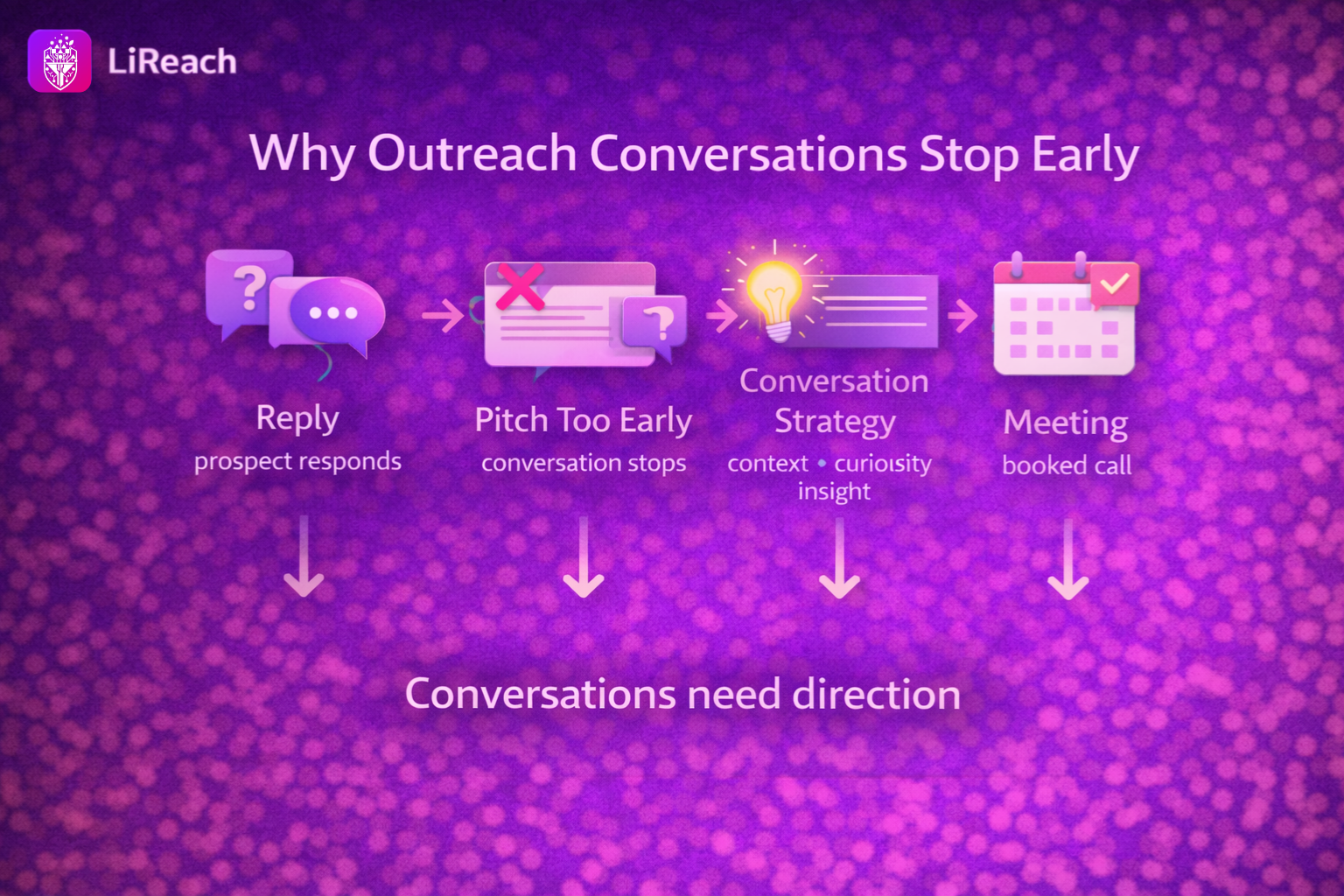
The process follows four stages.
1. Context
Start the conversation with something relevant about the prospect’s business.
Example:
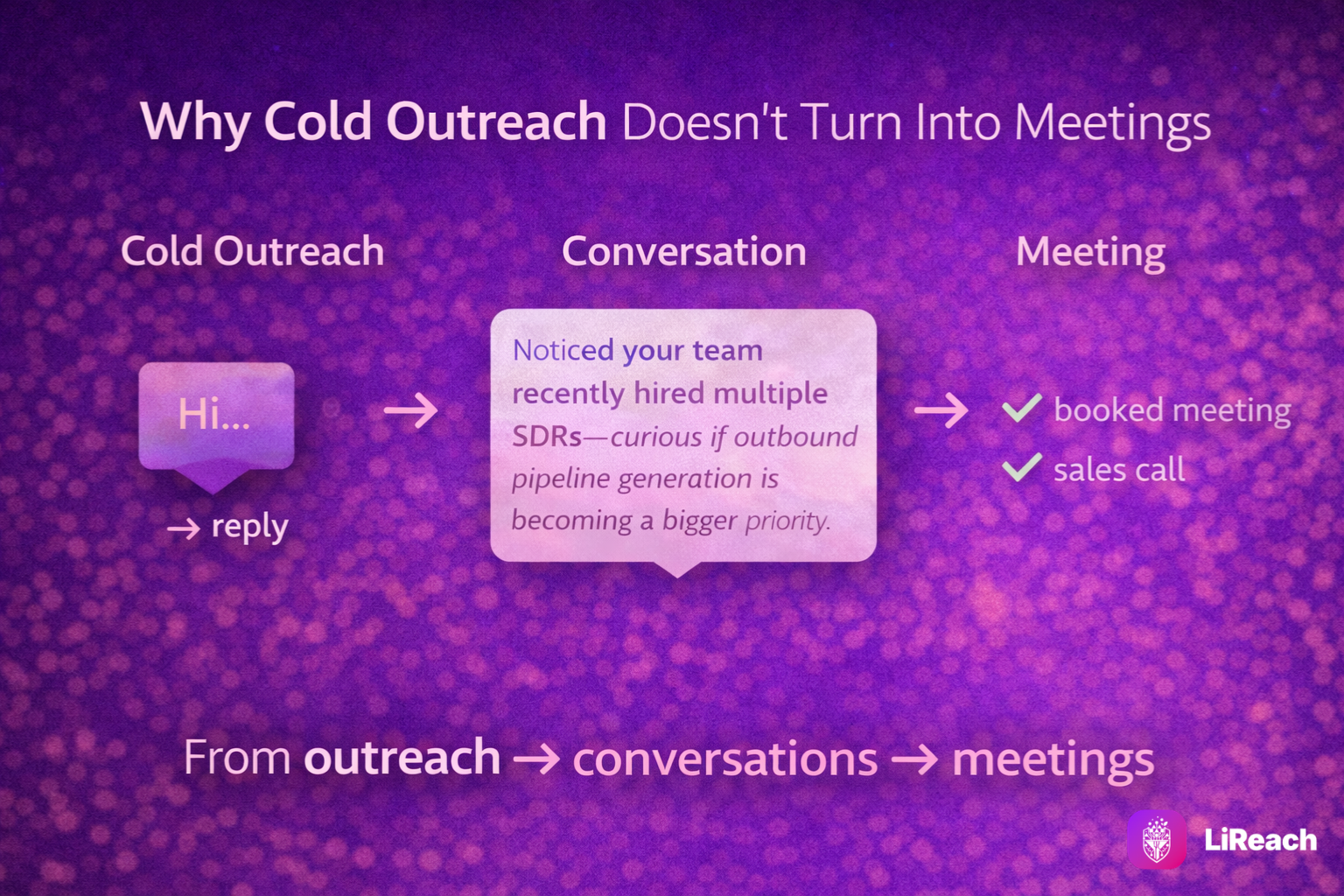
“Noticed your team recently hired multiple SDRs — curious if outbound pipeline generation is becoming a bigger focus.”
2. Curiosity
Ask a discovery question that encourages discussion.
Example:
“Are most of your deals currently coming from inbound leads or outbound outreach?”
3. Insight
Share a short observation that highlights a challenge.
Example:
“Many B2B founders we speak with struggle to convert LinkedIn outreach into booked meetings.”
4. Meeting
Once the problem is clear, suggest a short discussion.
Example:
“Happy to share what we've seen working for other B2B founders if you're exploring outbound growth.”
This transition feels natural rather than pushy.
How LiReach Keeps Conversations Moving
LiReach was built to help founder-led B2B companies maintain momentum in outreach conversations.
The platform helps teams:
- identify high-fit prospects
- detect relevant business signals
- generate personalized conversation starters
- automate follow-ups
Instead of conversations dying early, outreach becomes a predictable pipeline of meetings.
Final Thoughts
Outreach conversations don’t fail because prospects aren’t interested.
They fail because the conversation loses direction.
When outreach follows a structured conversation path, discussions naturally progress toward meetings.
And those meetings create real sales opportunities.
Join 2,000+ Sales Leaders
Get advanced LinkedIn strategies, automation tips, and templates delivered to your inbox weekly. No spam, just value.