Why Your Sales Pipeline Is Inconsistent (And What Most B2B Teams Get Wrong)
One of the most common questions founders ask the LiReach team is surprisingly simple:
""Why is our sales pipeline so inconsistent?""
Some months the calendar is full of demos and discovery calls. The team feels confident, deals are moving forward, and growth looks predictable.
Then suddenly things slow down.
Meetings stop coming in.
Sales reps start asking where the leads are.
And leadership begins reviewing dashboards trying to figure out what changed.
After studying dozens of B2B sales teams, we’ve learned that inconsistent pipelines rarely happen because of poor products or weak salespeople.
The real problem is almost always the same.
The company doesn’t have a consistent system for generating meeting ready leads.
And without that system, pipeline performance will always fluctuate.
The Hidden Reason Most Pipelines Become Inconsistent
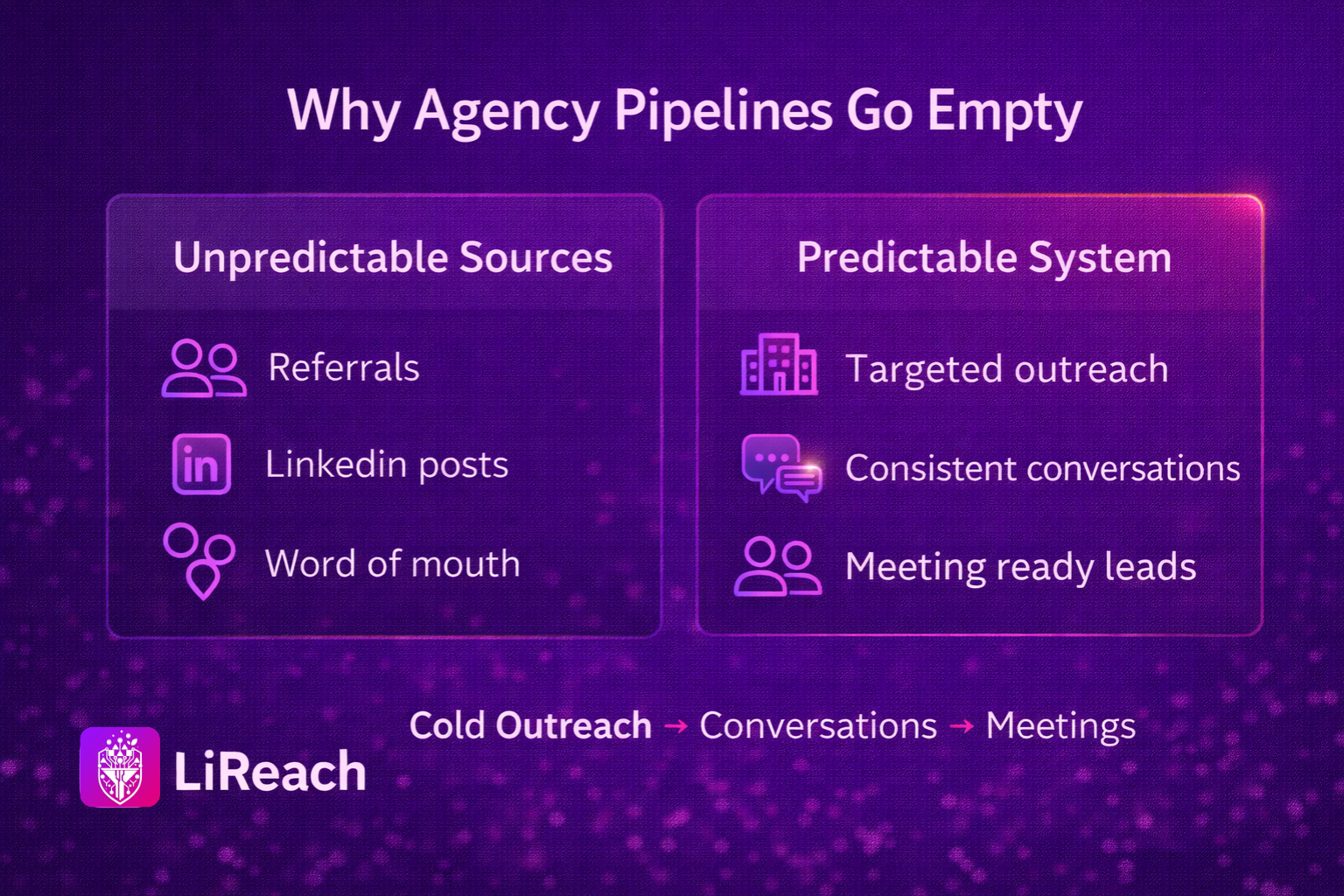
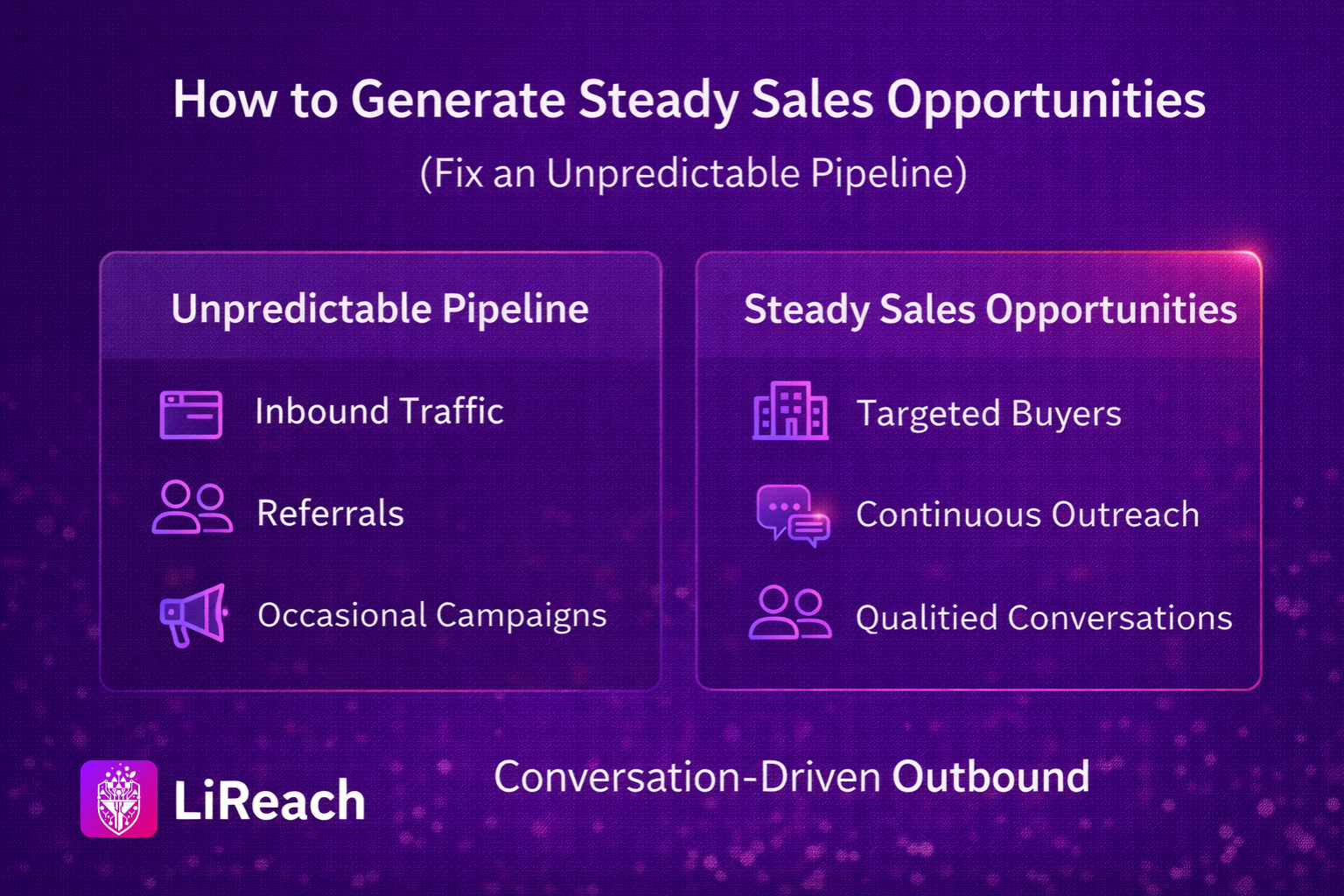
Most B2B pipelines rely on a mix of sources:
- Inbound leads
- Referrals
- Past customer relationships
- Occasional outbound campaigns
While this sounds healthy, it creates a major structural problem.
None of these sources are predictable.
Inbound traffic depends on marketing momentum.
Referrals depend on existing clients talking about you.
Outbound campaigns often run in bursts instead of consistently.
This creates what we call pipeline spikes.
You experience short periods of strong activity followed by quiet periods where almost no new opportunities appear.
From the outside, it looks like a sales performance issue.
But in reality, it's a pipeline generation problem.
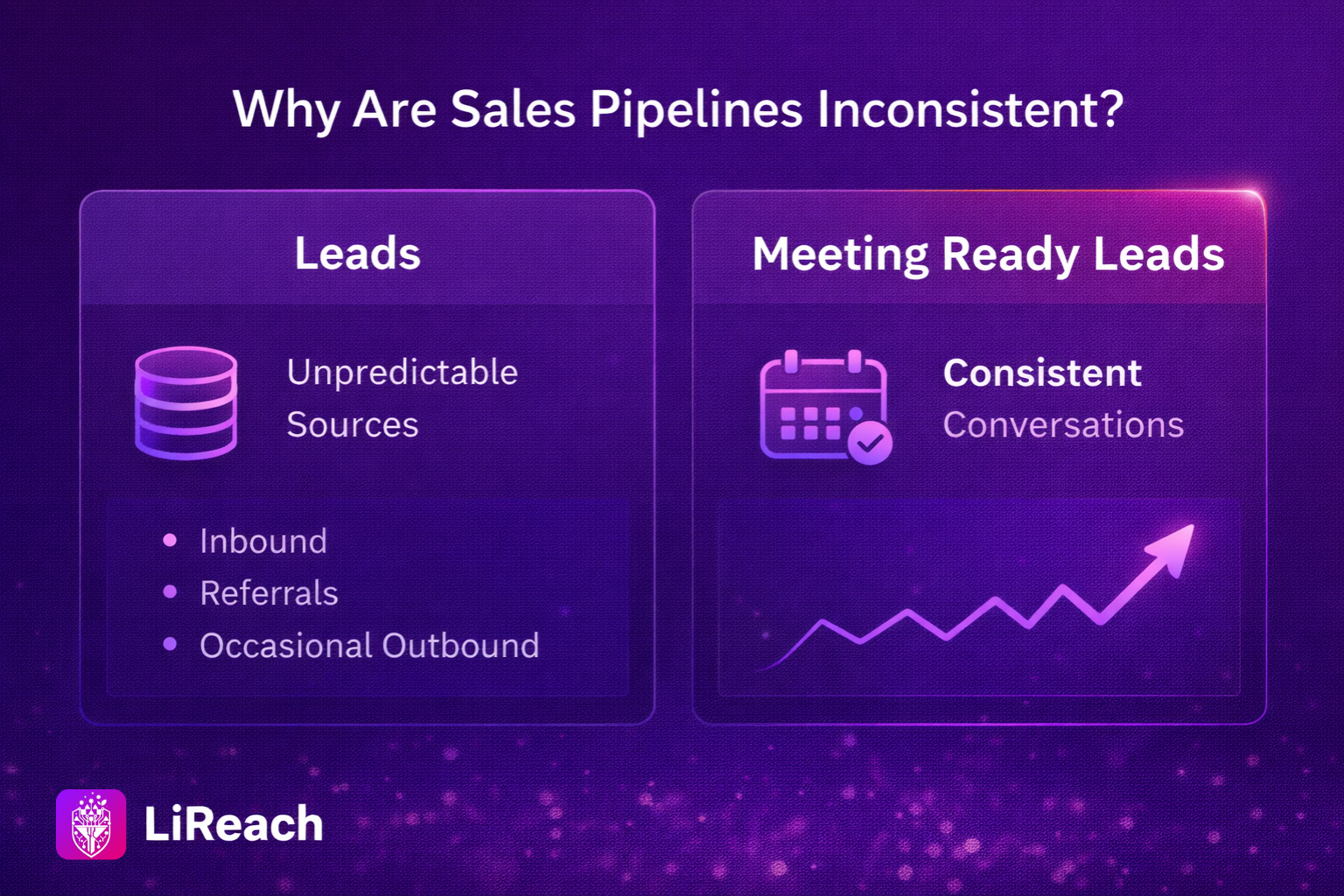
The Difference Between Leads and Meeting Ready Leads
Another reason pipelines feel inconsistent is because many companies measure the wrong metric.
They track:
- Number of leads generated
- Email open rates
- Website traffic
- Campaign responses
These metrics look impressive in reports.
But they don’t always translate into real opportunities.
The metric that actually determines pipeline stability is:
How many meeting ready leads are entering your pipeline every week?
A meeting ready lead is not just a contact in your database.
It is someone who:
- Fits your ideal customer profile
- Understands the problem you solve
- Is willing to have a conversation about solving it
Companies that consistently generate meeting ready leads rarely experience pipeline droughts.
What Consistent Sales Pipelines Actually Look Like
When we analyze companies with predictable revenue growth, their pipelines follow a surprisingly simple pattern.
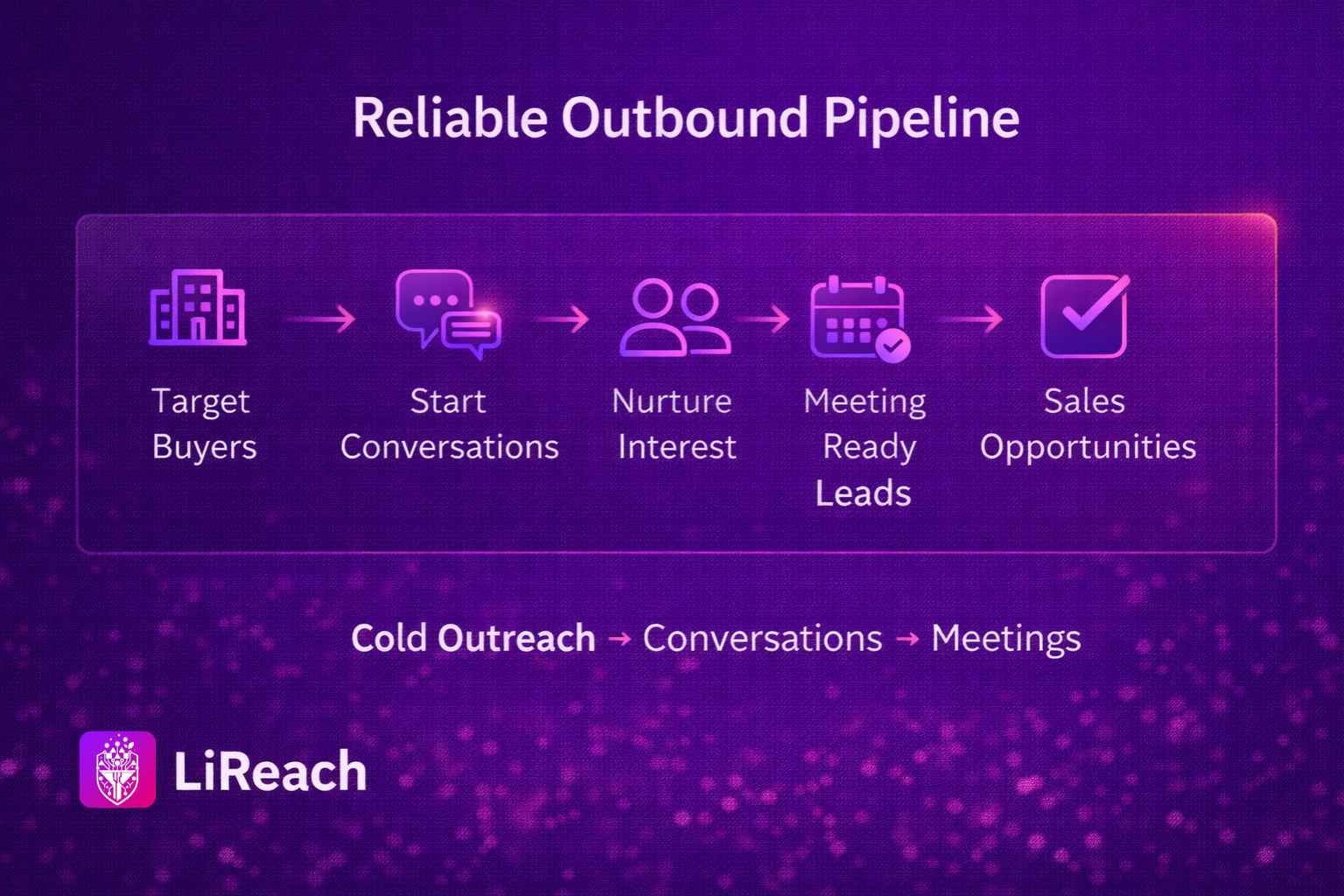
They operate a steady system that continuously moves prospects through four stages:
Target → Conversation → Meeting → Opportunity
This process runs every week.
Not occasionally.
Not when the pipeline gets empty.
Every week.
When outreach continuously creates conversations, meetings become a natural outcome.
And when meetings are consistent, the pipeline stabilizes.
The Outbound Mistake That Kills Pipeline Consistency
Many companies attempt outbound sales but abandon it after poor results.
This usually happens because outreach is treated as a volume game.
Sales teams send hundreds or thousands of messages hoping something sticks.
The problem is that modern buyers quickly recognize generic outreach.
Response rates fall.
Meetings disappear.
Outbound gets labeled as ineffective.
But the issue isn’t outbound itself.
The issue is conversation quality.
Why Conversations Drive Pipeline Stability
Sales pipelines are ultimately built through conversations.
Every deal begins with a moment where two people start discussing a problem.
Yet most outreach strategies skip this step entirely.
They jump straight into selling.
When outreach is designed to start conversations instead of push sales pitches, something powerful happens:
- Prospects respond more often
- Trust develops earlier
- Meetings become easier to schedule
This is how consistent streams of meeting ready leads are created.
The System B2B Teams Need Today
Modern outbound systems are built around three key components:
1. Precise Prospect Identification
Instead of targeting broad audiences, successful teams identify companies that clearly experience the problem their solution addresses.
This dramatically improves conversation quality.
2. Insight-Driven Outreach
Rather than sending promotional messages, effective outreach focuses on insights, observations, or questions that trigger meaningful replies.
3. Structured Follow-Ups
Many prospects do not respond immediately.
Thoughtful follow-ups ensure that valuable conversations are not lost.
Over time, this creates a reliable stream of meeting ready leads entering the pipeline.
How LiReach Helps Stabilize Sales Pipelines
LiReach was designed around one central goal:
Turning outbound conversations into meeting ready leads.
The platform helps B2B teams identify relevant prospects, start personalized conversations, and manage those conversations until they convert into booked meetings.
Instead of focusing purely on lead generation, the system focuses on the stage that actually builds pipelines:
Conversations with the right buyers.
When companies adopt this approach, something interesting happens.
The pipeline stops behaving unpredictably.
Meetings begin appearing consistently.
And sales teams finally gain the one thing every founder wants:
pipeline visibility.
The Question Every Sales Leader Should Ask
If your pipeline feels inconsistent, the solution isn’t to chase more leads.
The real question is:
Do we have a system that consistently generates meeting ready leads?
Because predictable revenue rarely comes from luck.
It comes from conversations happening every single week.
Join 2,000+ Sales Leaders
Get advanced LinkedIn strategies, automation tips, and templates delivered to your inbox weekly. No spam, just value.