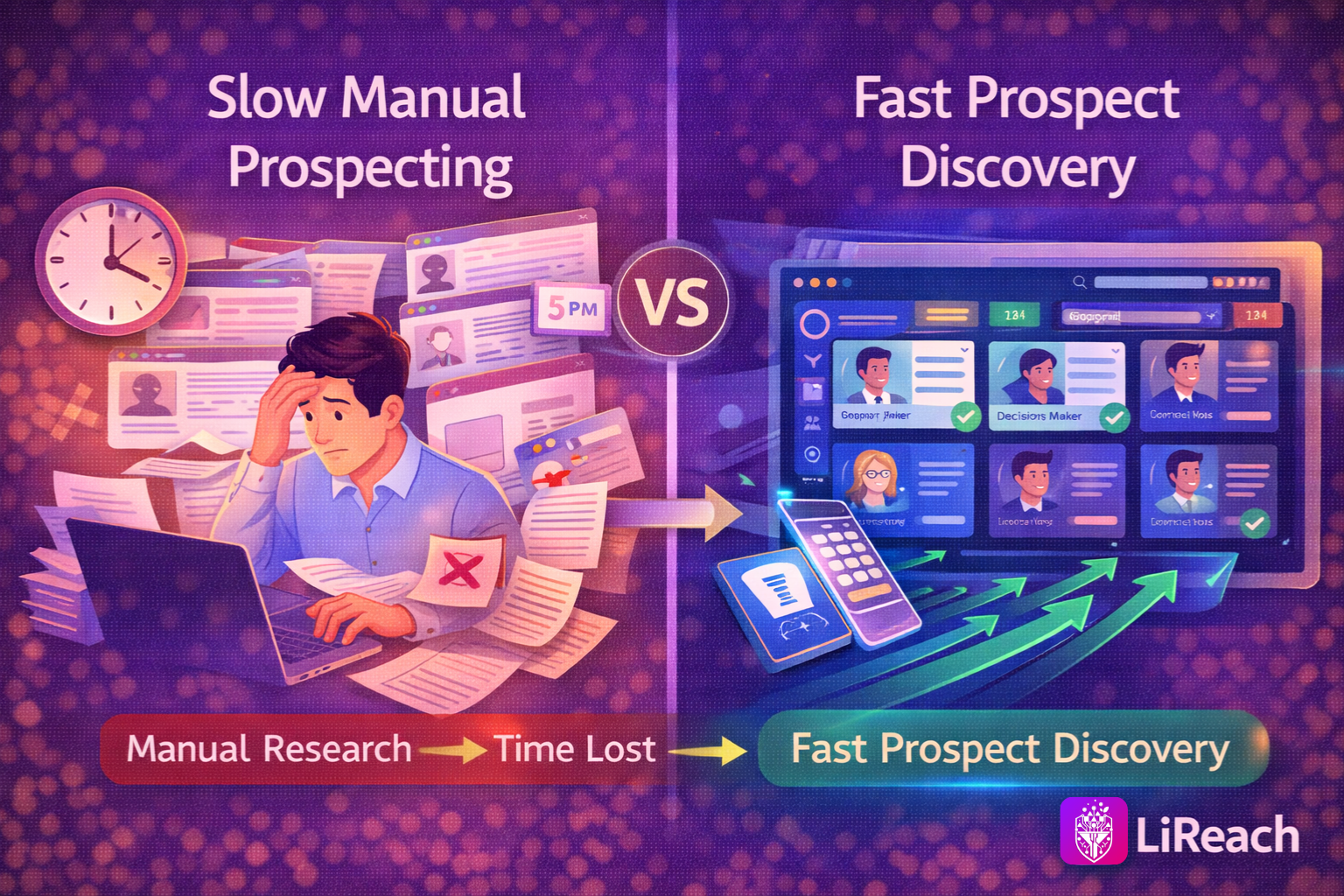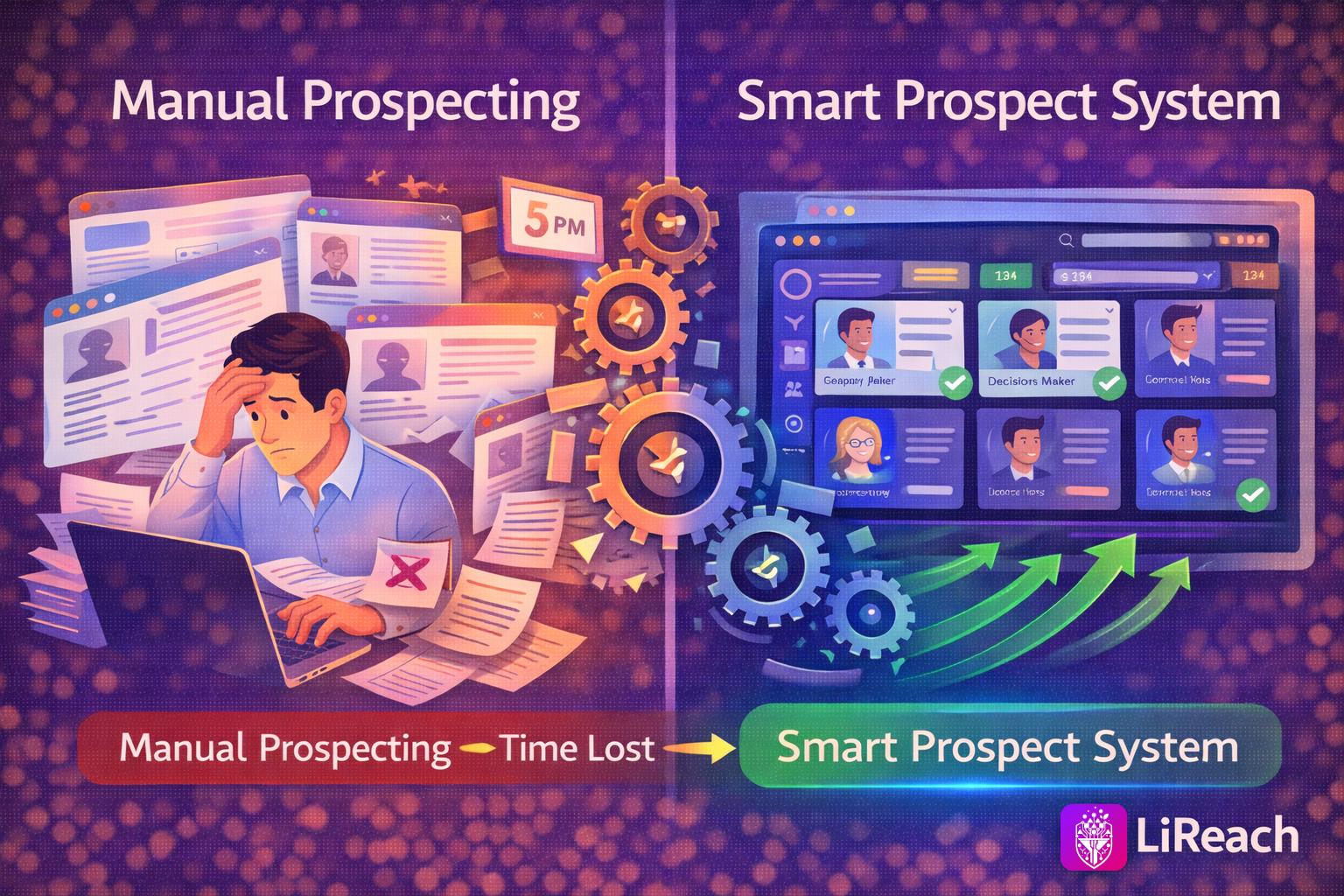
Prospecting used to be a manual job.
Sales teams spent hours searching LinkedIn, browsing company websites, and building lead lists one contact at a time.
But modern B2B sales has changed.
The companies generating consistent growth no longer rely on manual prospecting.
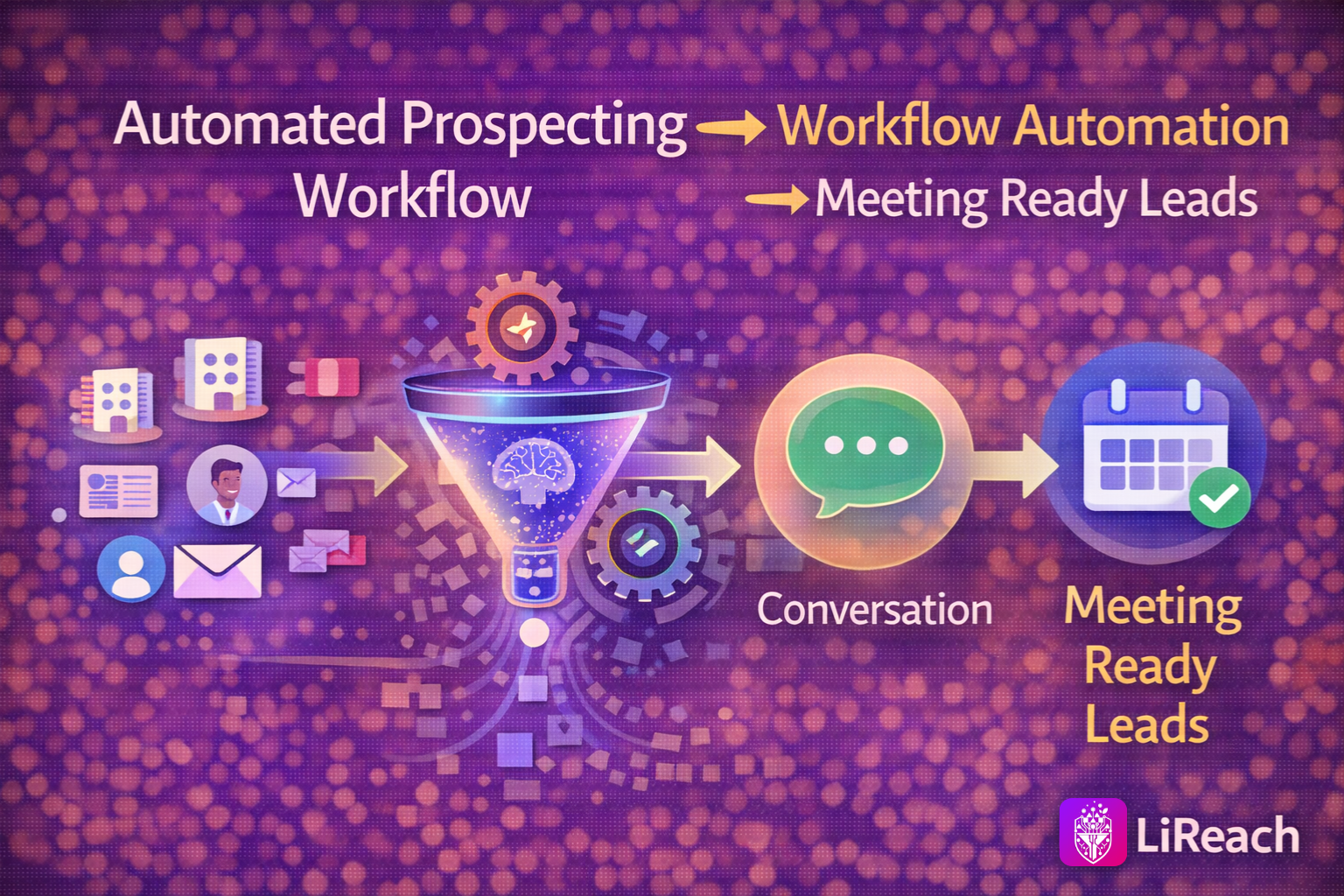
Instead, they use automated prospecting systems to identify potential buyers faster and start conversations earlier.
And that shift is exactly what allows them to generate meeting ready leads consistently.
The Problem with Manual Lead Prospecting
Manual prospecting creates three major challenges for sales teams.
- It consumes too much time
- It limits outreach scale
- It creates inconsistent pipelines
Sales teams often spend more time researching prospects than actually talking to them.
This slows down the entire sales pipeline.
When prospecting slows down, opportunities slow down as well.
What Automated Lead Prospecting Actually Means
Automated lead prospecting does not mean replacing salespeople.
It means removing repetitive research tasks so sales teams can focus on meaningful conversations.
Automation helps identify:
- relevant companies
- decision makers
- high-intent prospects
Instead of manually searching for each prospect, automated systems continuously surface potential buyers.
Key Categories of Prospecting Tools
Most automated prospecting tools fall into a few core categories.
1. Data Discovery Platforms
These tools help identify companies and decision makers inside target markets.
They allow sales teams to filter prospects based on industry, company size, and job roles.
This helps build highly targeted prospect lists quickly.
2. Intent Signal Tools
Intent tools detect signals that indicate a company may be actively researching solutions.
Examples include:
- content engagement
- technology changes
- company growth signals
These signals help prioritize outreach toward companies most likely to respond.
3. Outreach Automation Platforms
Outreach platforms help start conversations with prospects at scale.
They allow sales teams to send personalized messages, follow up automatically, and track responses.
The goal is not mass messaging.
The goal is structured conversations.
Why Automation Alone Is Not Enough
Many companies make the mistake of relying only on automation.
Automation without strategy simply increases the volume of ignored messages.
Successful outbound teams combine automation with intelligent targeting.
They focus on:
- relevant prospects
- clear messaging
- personalized conversations
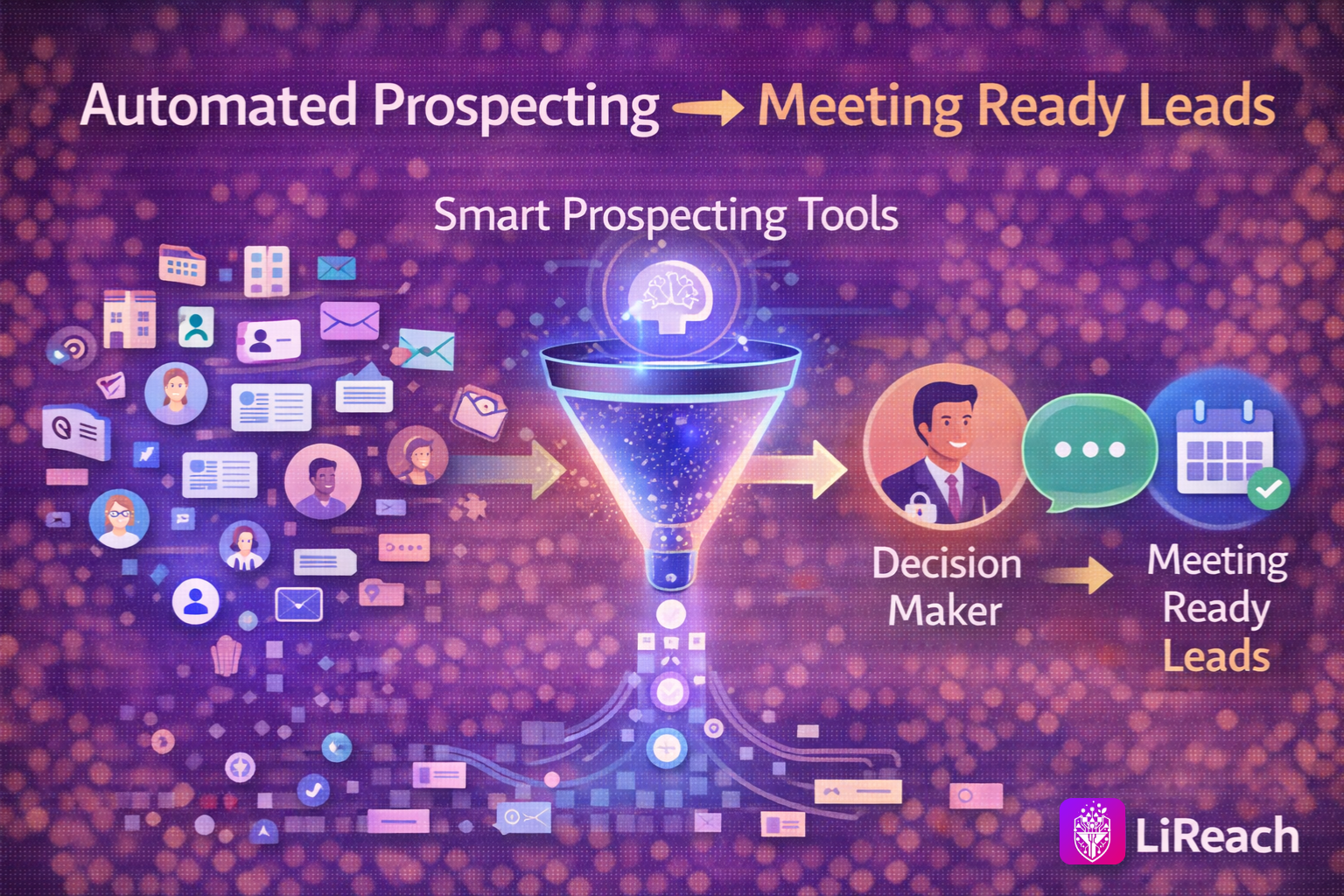
This is what transforms automated prospecting into meeting ready leads.
The LiReach Approach to Automated Prospecting
At LiReach, we focus on one outcome.
Helping sales teams generate real conversations with relevant decision makers.
Instead of simply sending outreach at scale, LiReach helps teams:
- identify relevant companies
- reach decision makers directly
- start conversations naturally
- convert outreach into meeting ready leads
This approach combines automation with intelligent targeting.
The result is outreach that feels human rather than robotic.
The Future of Prospecting
The future of sales prospecting is not manual.
And it is not purely automated either.
The future belongs to systems that combine data, automation, and human conversations.
Sales teams that adopt these systems gain a major advantage.
They spend less time searching for prospects.
And far more time talking to potential buyers.
Final Thoughts
Manual prospecting will always limit sales growth.
Automation allows teams to identify the right prospects faster.
But the real goal is not simply more outreach.
The real goal is generating meaningful conversations.
Because meaningful conversations are what ultimately become meeting ready leads.
Join 2,000+ Sales Leaders
Get advanced LinkedIn strategies, automation tips, and templates delivered to your inbox weekly. No spam, just value.