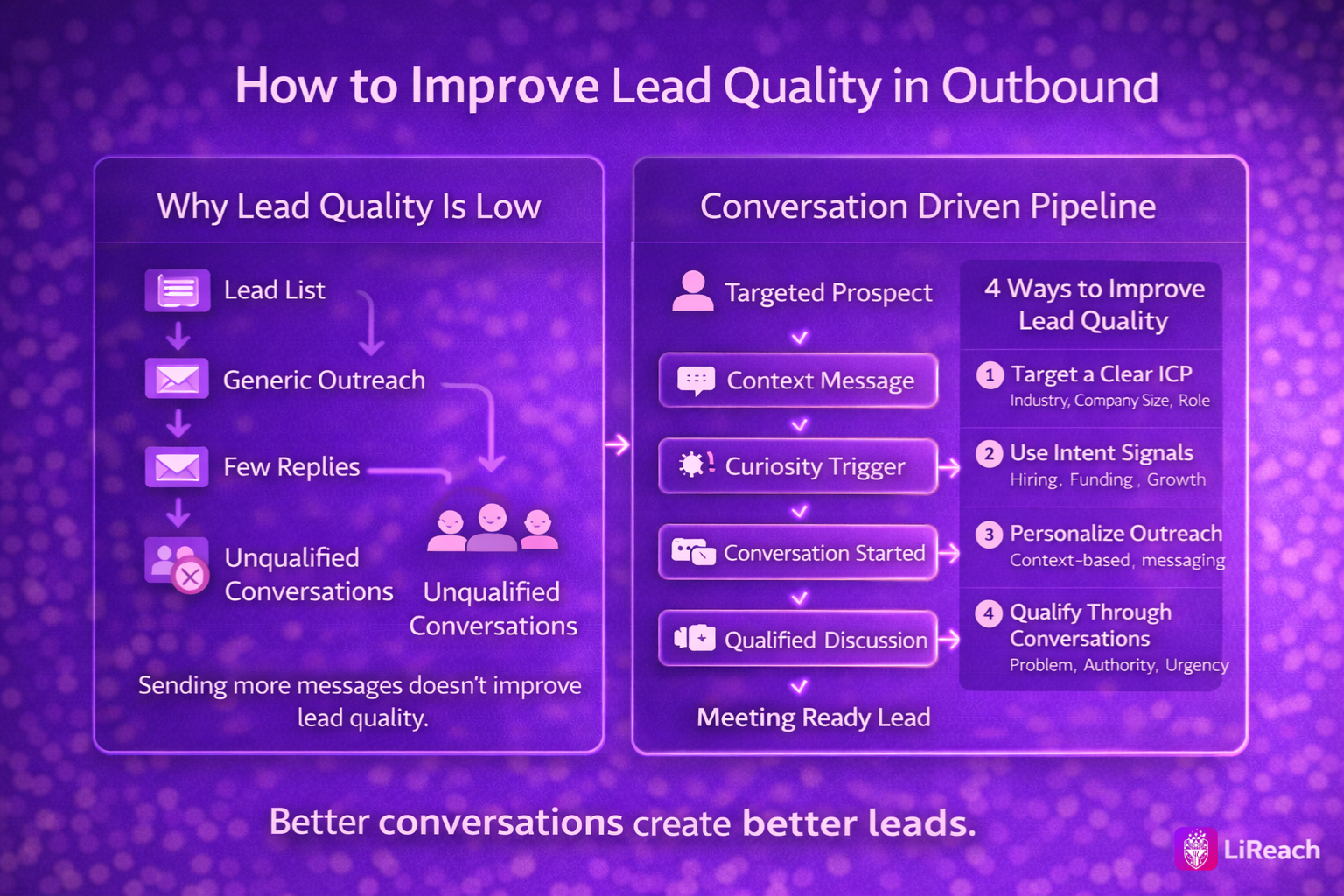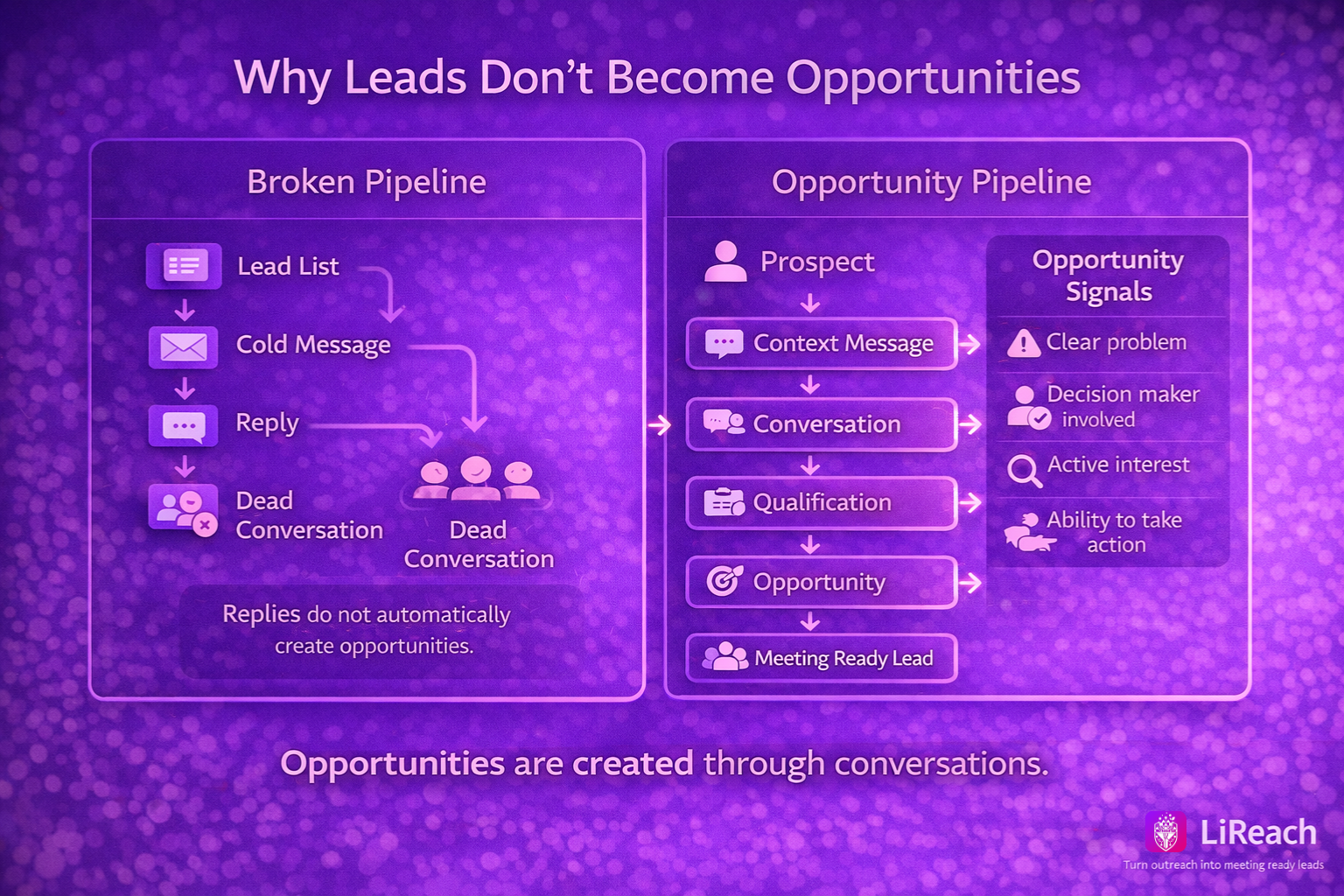
One of the biggest frustrations in B2B sales is dealing with low-intent leads.
Companies run outreach campaigns, collect hundreds of prospects, and receive a few replies. But when conversations begin, most leads are not ready to buy.
They are curious but not serious.
Interested but not urgent.
And sometimes they simply replied out of politeness.
This is why the real challenge in outbound sales is not generating more leads.
The real challenge is generating high-intent leads that can quickly turn into meeting ready leads.
When your pipeline is filled with high-intent prospects, conversations become easier and meetings happen naturally.
What Are High-Intent B2B Leads?
High-intent leads are prospects who are already experiencing the problem you solve and are actively thinking about improving it.
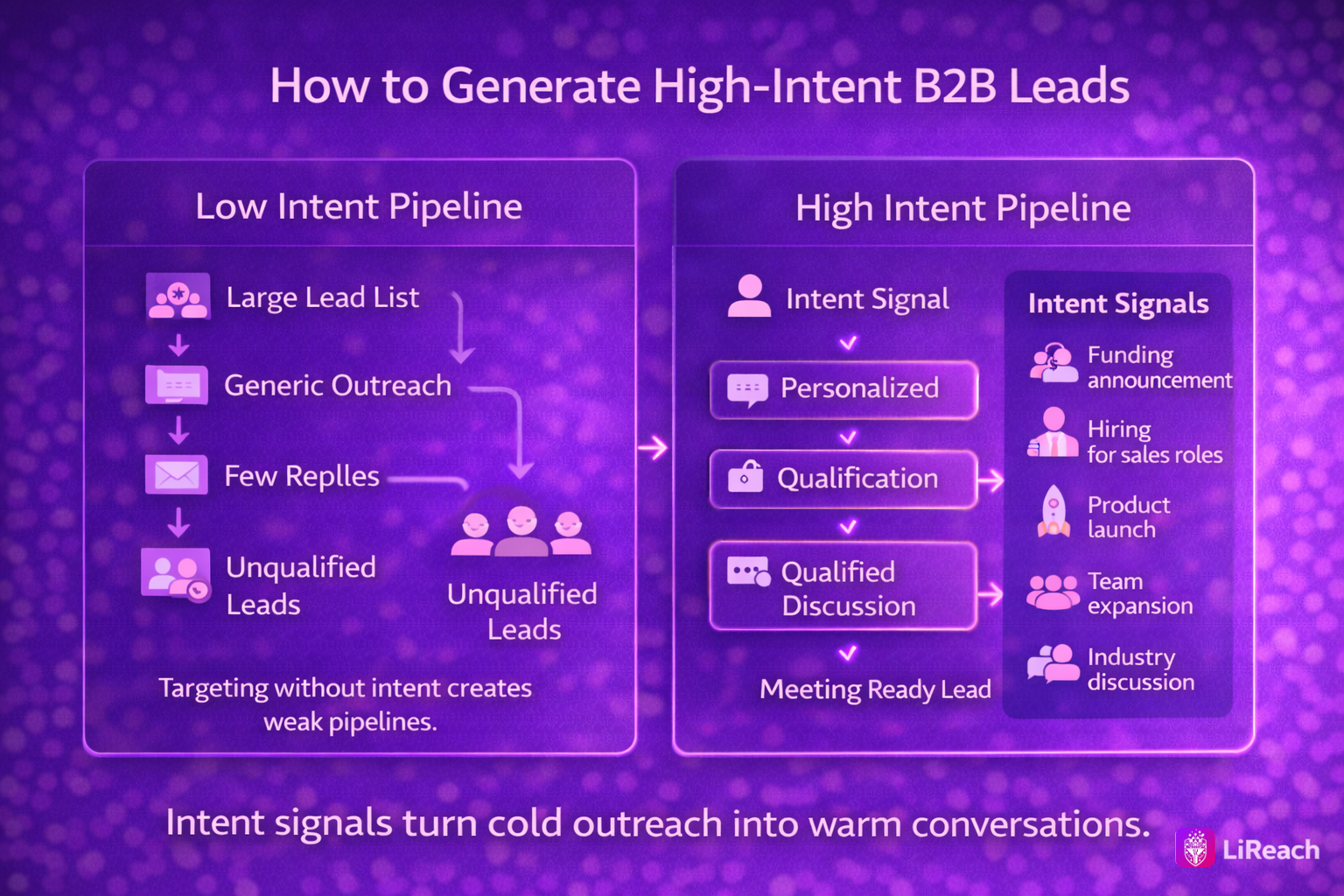
These prospects usually show signals such as:
- Hiring for roles related to the problem
- Talking about the problem publicly
- Recently raising funding
- Launching new products
- Looking for solutions in their industry
Intent signals reveal timing.
And timing is one of the most important factors in B2B sales.
A perfect prospect with no urgency will rarely convert.
But a prospect actively facing the problem can quickly become a meeting ready lead.
Why Most B2B Leads Have Low Intent
1. Targeting Based Only on Demographics
Most lead generation strategies rely on basic filters like:
- Industry
- Company size
- Job title
These filters identify potential buyers but not active buyers.
Intent signals are what separate the two.
2. Outreach Without Timing Signals
If outreach happens at the wrong time, even a perfect prospect will ignore it.
Timing determines whether the conversation starts.
Without intent signals, outreach becomes guesswork.
3. Messaging That Doesn't Trigger Conversations
Generic outreach messages like:
""We help companies generate more leads.""
fail to attract high-intent prospects.
Because high-intent prospects respond to relevance, not generic pitches.
The Framework to Generate High-Intent Leads
Successful outbound teams focus on three stages:
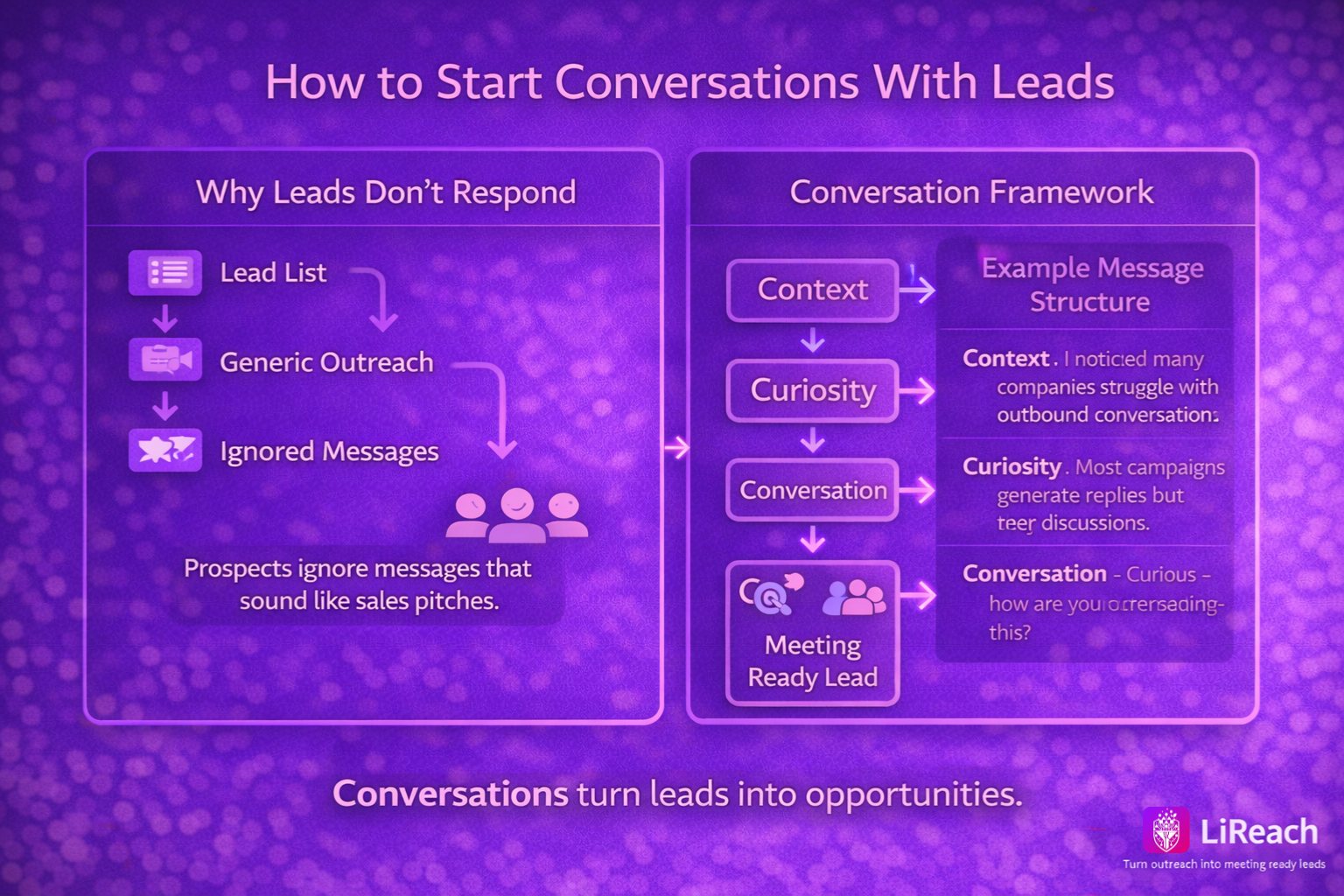
Signal → Personalized Outreach → Conversation → Meeting
Step 1: Identify Intent Signals
Look for triggers that indicate a company might need your solution.
Examples include:
- Funding announcements
- Hiring for sales or marketing roles
- Rapid team expansion
- Product launches
- Industry discussions on LinkedIn
These signals indicate potential demand.
Step 2: Send Context-Driven Outreach
Once an intent signal appears, the outreach message should reference it.
Example:
""Saw that your team is expanding your outbound sales function. Many growing SaaS companies struggle to turn outbound leads into real conversations during this stage.""
This message immediately shows relevance.
Step 3: Start Conversations, Not Pitches
Instead of asking for meetings immediately, start discussions.
Example:
""Curious — how are you currently turning outbound leads into meetings?""
This question invites dialogue and reveals whether the prospect has real intent.
Example Outreach Message
Hi Alex — noticed your company recently started hiring for outbound sales roles.
Many SaaS teams at this stage struggle to convert outbound leads into real conversations.
Curious — how are you currently managing that process?
This message works because it references a signal and invites conversation.
When the prospect responds, the conversation can quickly turn into a meeting ready lead.
Why Intent-Based Outbound Works
Intent-based outbound focuses on prospects who are already close to needing your solution.
This means:
- Higher reply rates
- More relevant conversations
- Shorter sales cycles
- Higher meeting conversion
Instead of convincing prospects they have a problem, you speak to people already experiencing it.
How LiReach Helps Generate High-Intent Leads
LiReach focuses on one core principle:
Outbound should generate conversations that lead to meetings.
The platform helps teams:
- Identify high-intent prospects
- Run personalized outbound outreach
- Track prospect conversations
- Manage follow-ups
- Convert discussions into meetings
The result is a pipeline filled with meeting ready leads instead of random contacts.
Conclusion
Generating more leads will not fix your outbound pipeline.
Generating better leads will.
High-intent B2B leads appear when outreach is driven by timing signals and relevant conversations.
When you combine intent signals with personalized outreach, prospects respond more often and conversations happen faster.
And those conversations are what create meeting ready leads.
Join 2,000+ Sales Leaders
Get advanced LinkedIn strategies, automation tips, and templates delivered to your inbox weekly. No spam, just value.