Cold email is one of the most powerful tools in B2B sales.
But for many teams, it feels frustrating.
You send hundreds of emails.
You expect conversations.
Instead, the inbox stays quiet.
Low response rates are one of the most common problems in outbound sales.
At LiReach, we’ve analyzed thousands of outreach campaigns across agencies, SaaS companies, and service businesses.
The surprising insight?
Cold email works extremely well — when it is done correctly.
The difference between a 1% response rate and a 20% response rate usually comes down to a few key principles.
Understanding these principles is how teams generate meeting ready leads consistently.
Why Most Cold Emails Get Ignored
Before improving response rates, it is important to understand why emails fail.
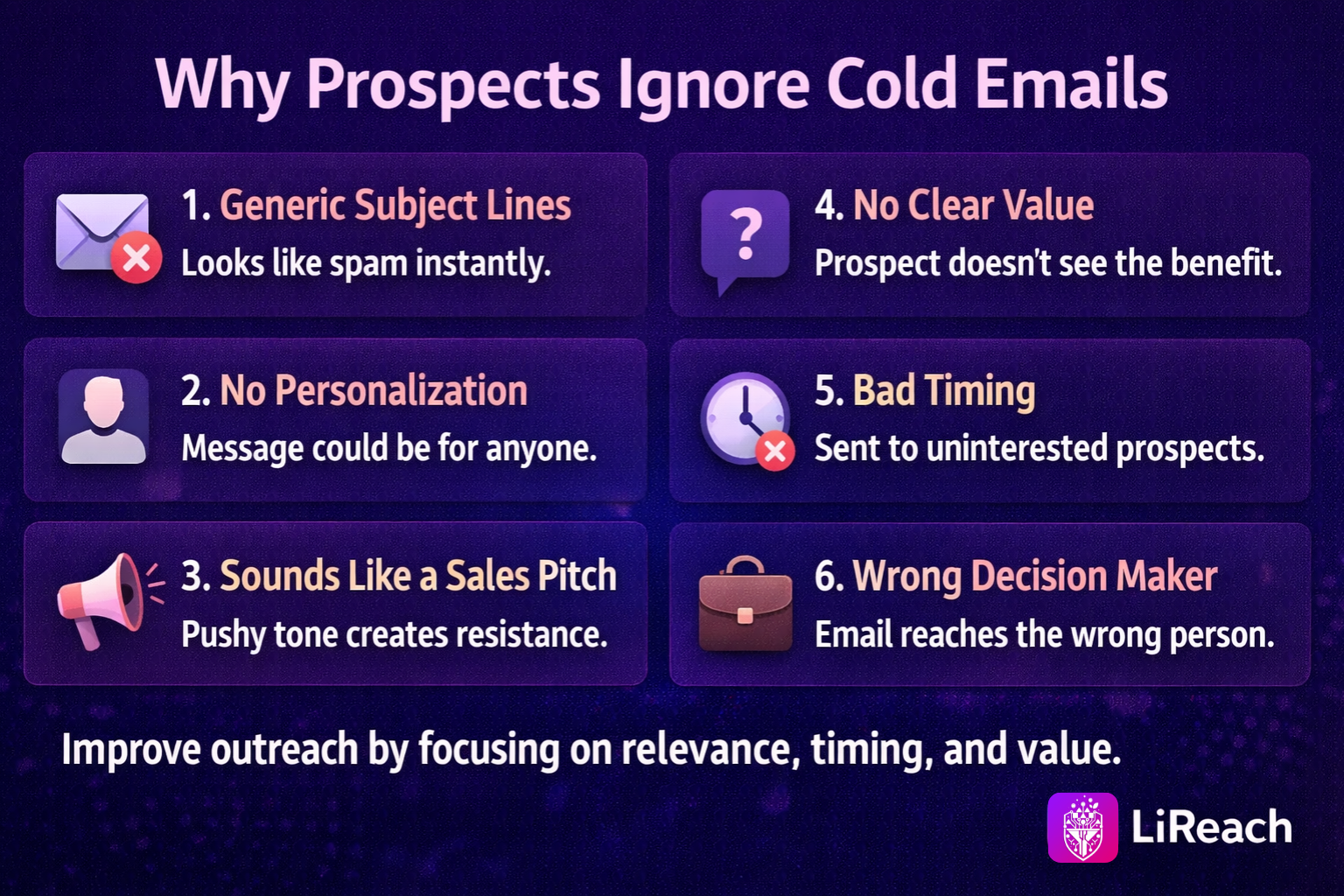
Most outreach emails fall into one of these traps:
- They look like mass templates
- They focus too much on the sender
- They target the wrong prospects
- They push for a meeting too early
Buyers today receive dozens of sales emails every week.
Generic messages are instantly ignored.
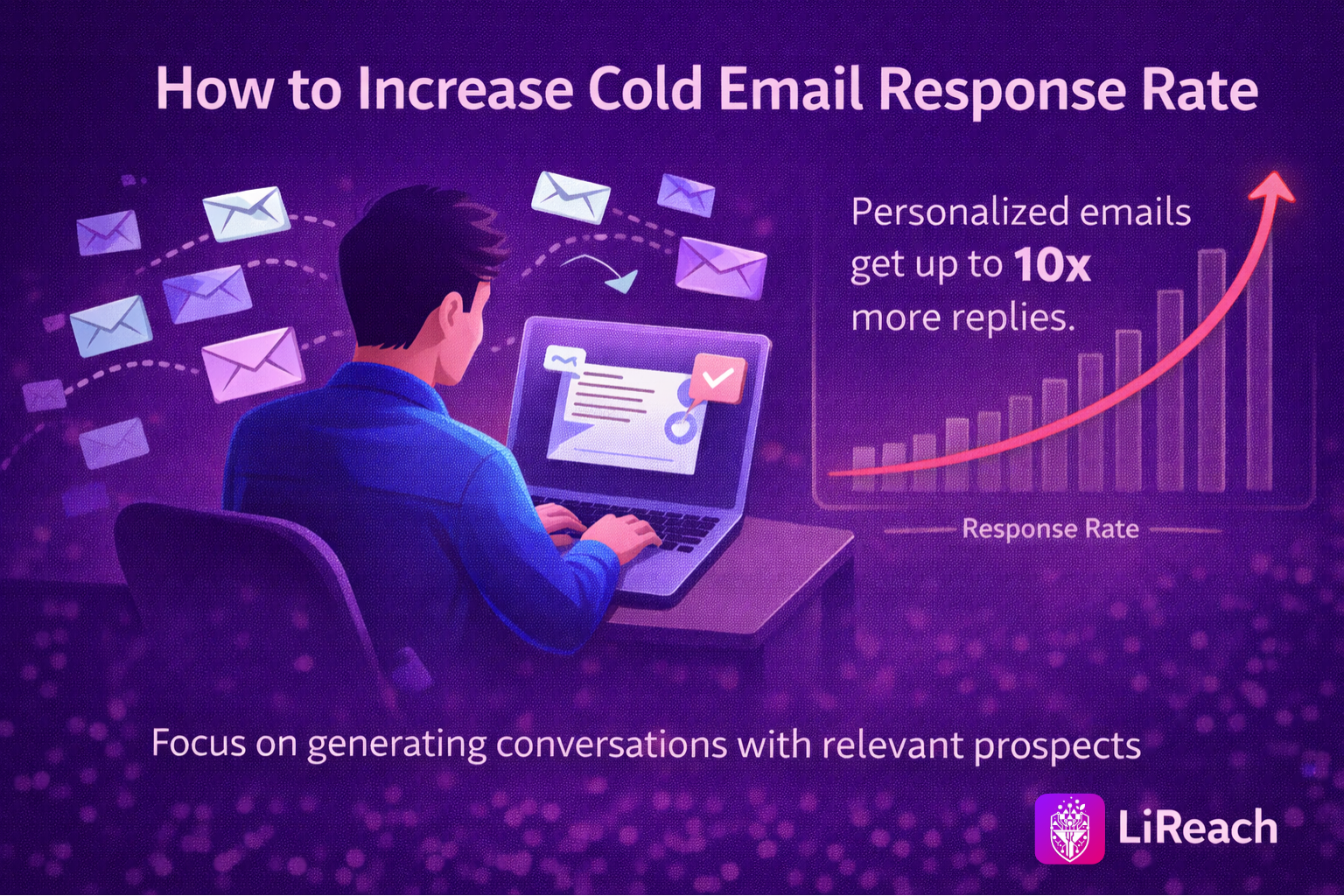
To increase replies, outreach must feel relevant and personal.
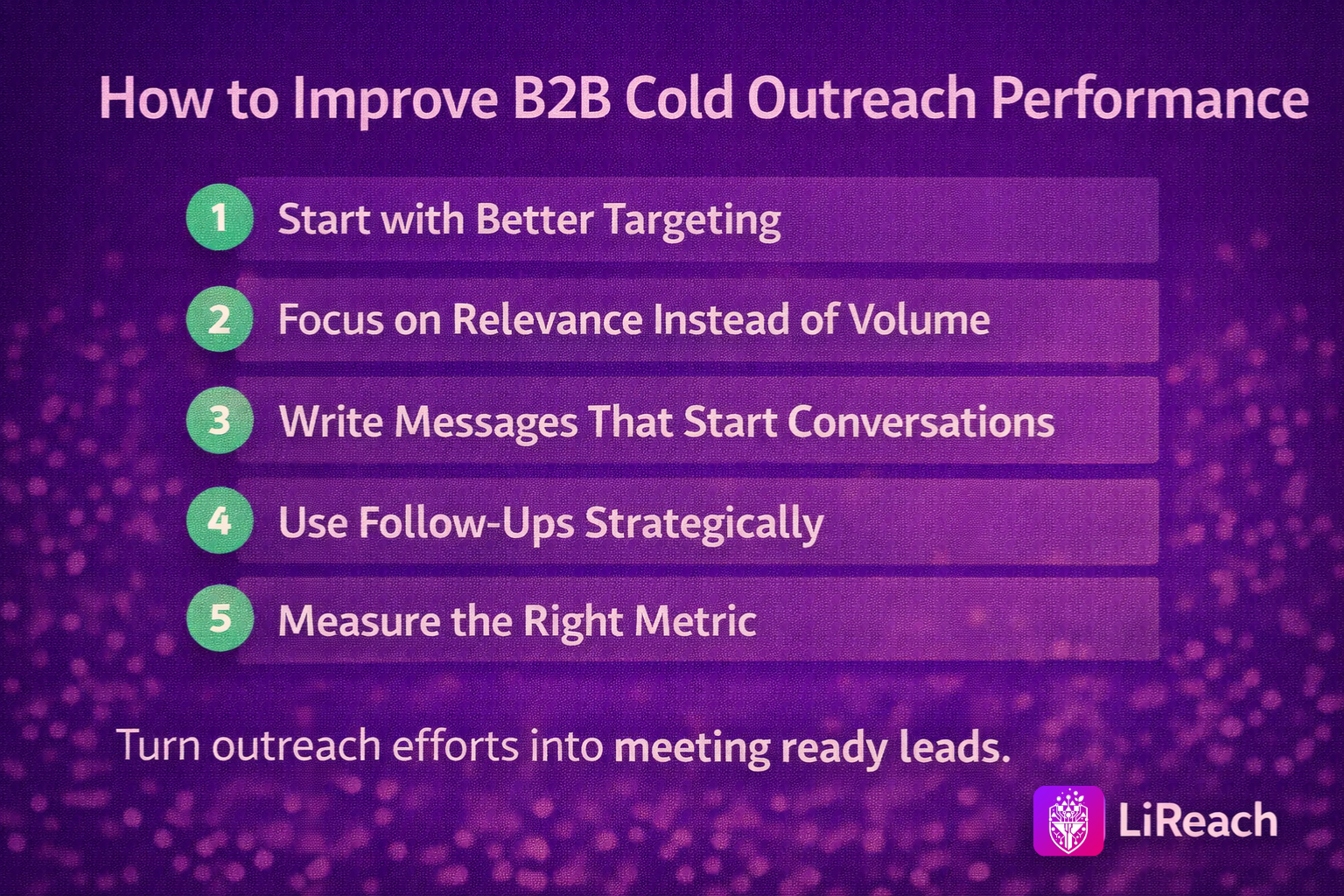
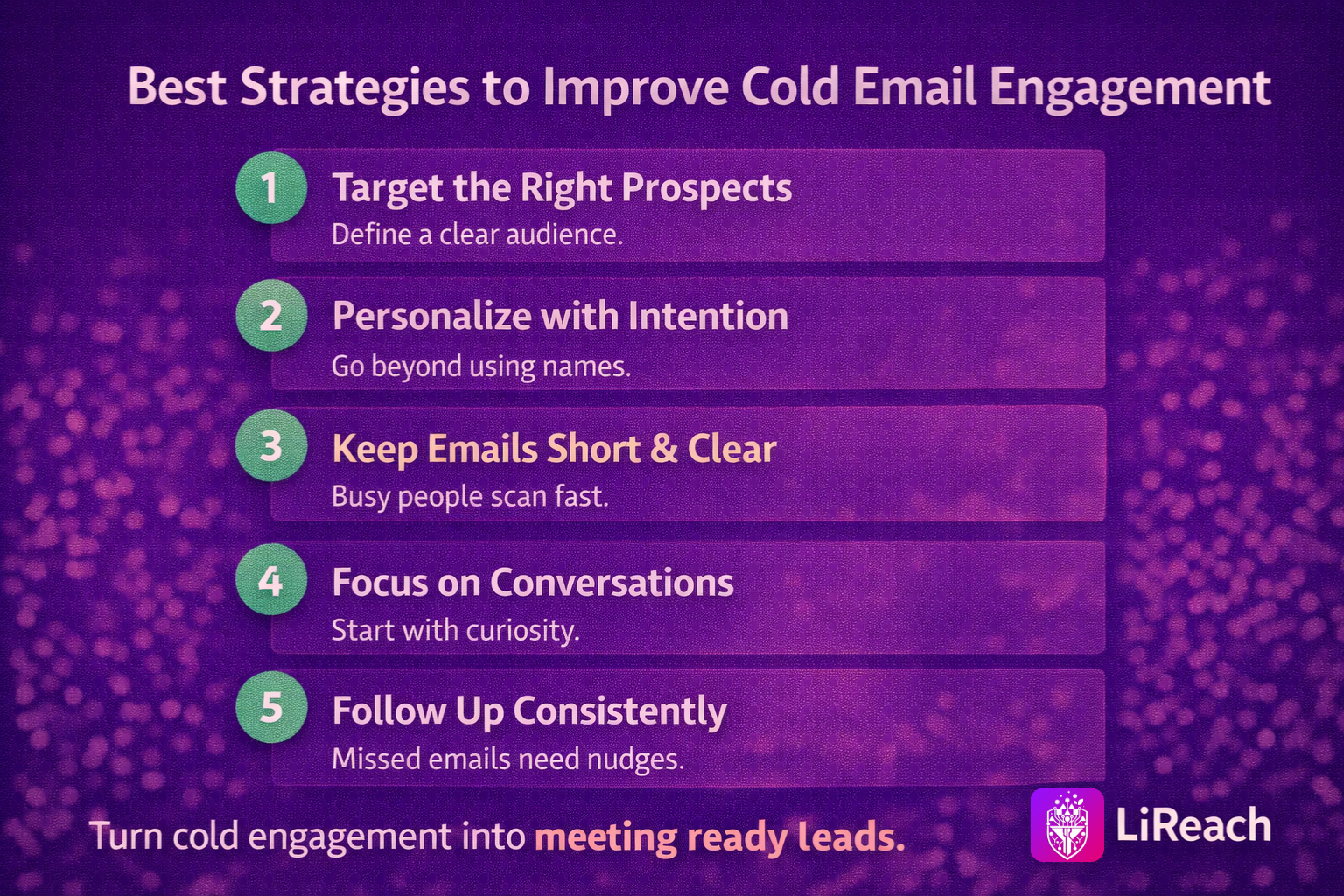
Step 1: Target the Right Prospects
One of the biggest drivers of response rates is targeting.
If the prospect does not match your ideal customer profile, even a great message will fail.
Effective outreach begins with identifying companies that genuinely benefit from your solution.
When the targeting is correct, the conversation becomes easier.
Step 2: Write Emails That Start Conversations
Most cold emails fail because they immediately try to sell.
For example:
""We help companies scale their marketing using AI automation.""
This message talks about the sender, not the buyer.
High-performing emails focus on the prospect’s world.
They reference real challenges, industry trends, or growth opportunities.
This makes the message feel relevant instead of promotional.
Step 3: Keep the Email Short
Long emails rarely perform well in cold outreach.
Buyers scan messages quickly.
The best-performing emails are usually between 50 and 100 words.
They are clear, direct, and easy to respond to.
Step 4: Remove Pressure from the First Message
Many cold emails immediately push for a meeting.
This creates friction.
A better approach is to start with curiosity.
For example, asking a simple question related to the prospect’s business challenge.
This increases the chances of starting a conversation.
Step 5: Follow Up Consistently
Many deals are created through follow-up messages.
Busy buyers often miss the first email.
A well-written follow-up can significantly increase response rates.
Consistent outreach ensures that conversations continue.
The Real Goal of Cold Email
The goal of cold email is not simply getting replies.
The real goal is generating meeting ready leads.
These are prospects who:
- Match your ideal customer profile
- Show interest in solving a problem
- Are willing to have a discovery conversation
When outreach focuses on starting meaningful conversations, these leads appear naturally.
How LiReach Helps Improve Cold Email Response
LiReach helps B2B teams transform cold outreach into real conversations.
The platform helps companies:
- Identify high-fit prospects
- Create personalized outreach sequences
- Manage prospect engagement
- Convert responses into meeting ready leads
Instead of sending thousands of generic emails, teams can focus on starting relevant conversations with the right buyers.
The Secret Behind High Response Rates
Cold email is not about sending more messages.
It is about sending better messages.
The outreach that receives replies always feels human, relevant, and thoughtful.
Because every deal begins the same way.
With a simple conversation.
Join 2,000+ Sales Leaders
Get advanced LinkedIn strategies, automation tips, and templates delivered to your inbox weekly. No spam, just value.