For many B2B sales teams, lead generation is not difficult — it is time-consuming.
Salespeople spend hours researching companies, identifying contacts, and sending outreach messages.
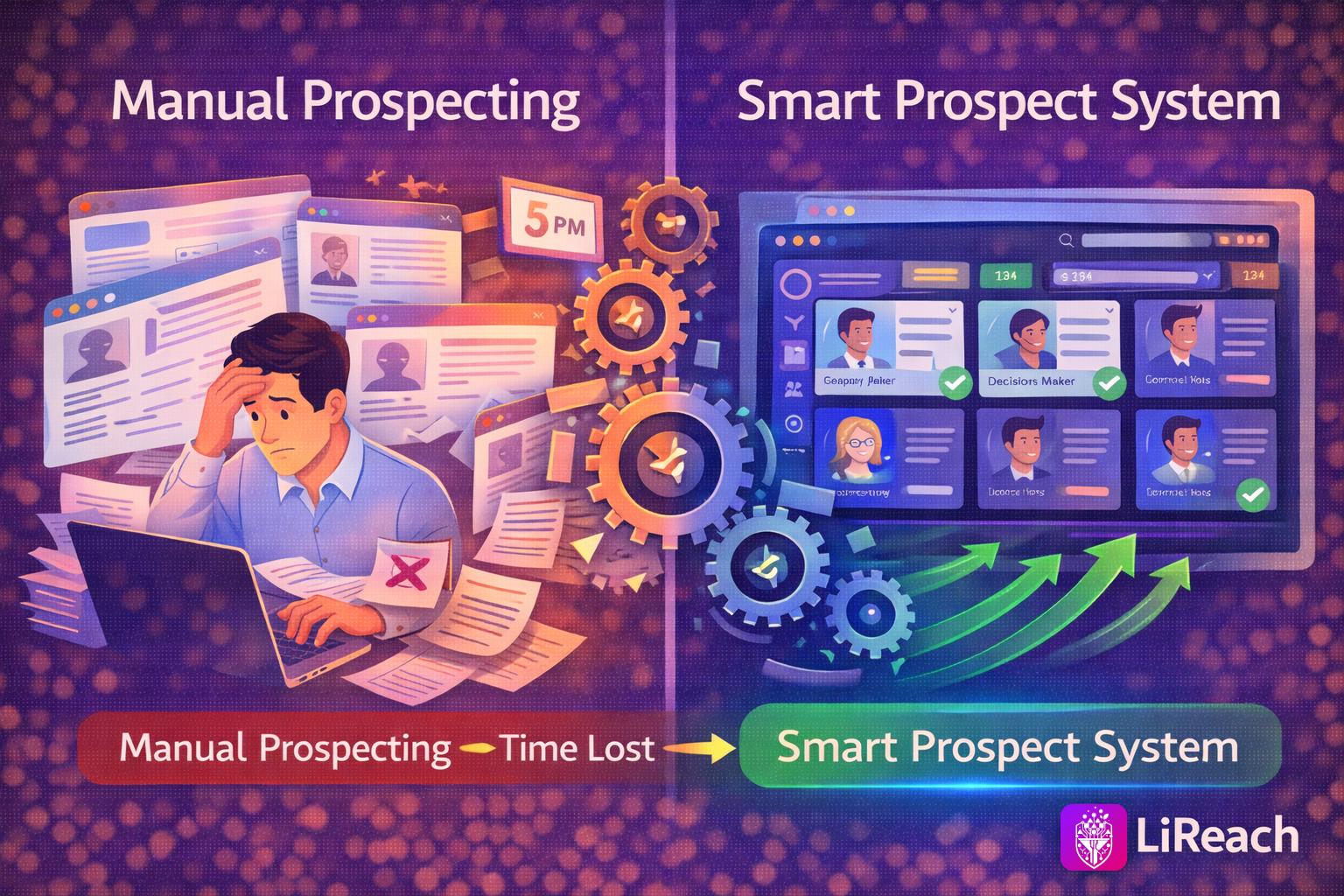
These tasks are necessary, but when handled manually they consume most of the sales team's time.
The result is a frustrating reality.
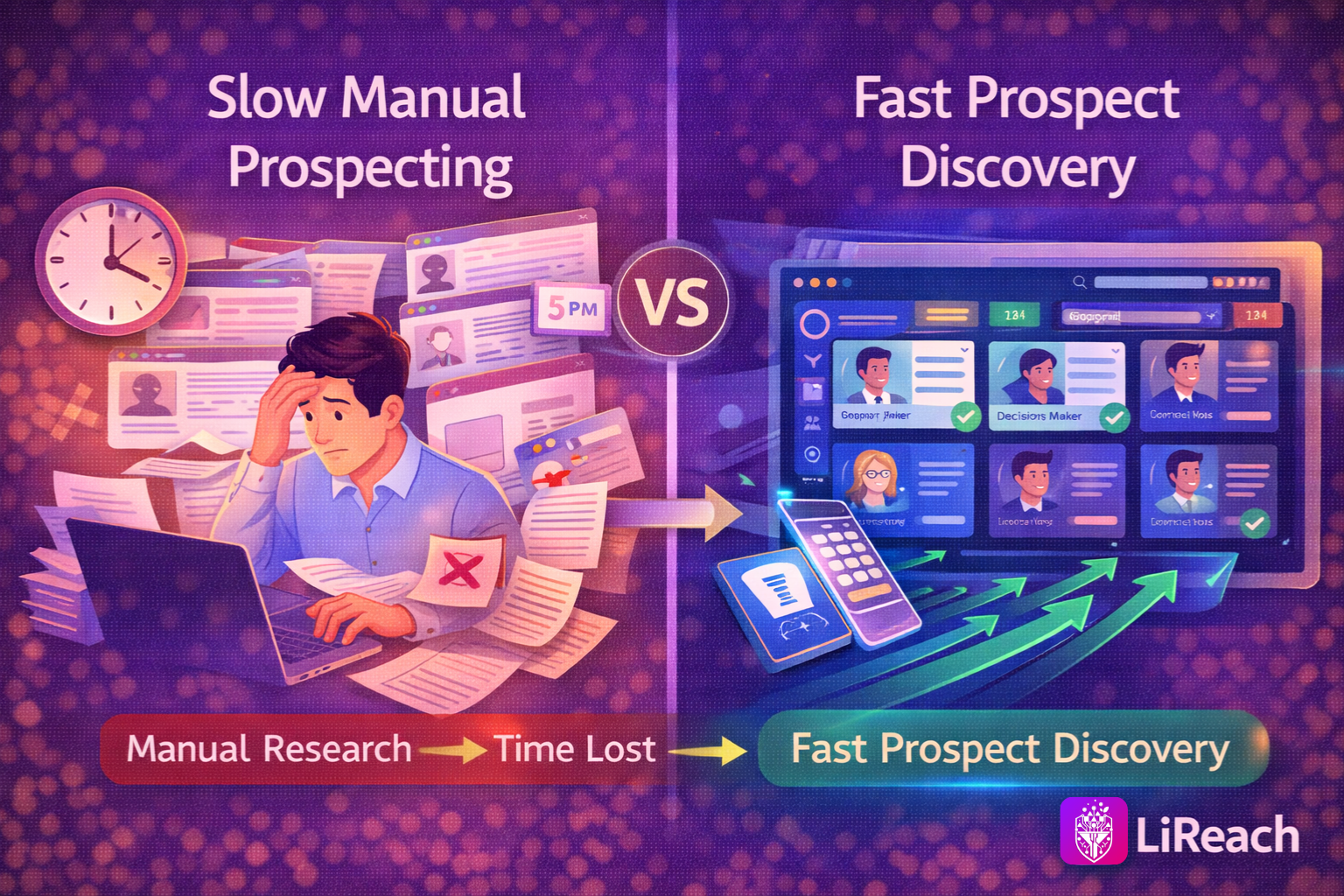
Sales teams spend more time searching for prospects than talking to them.
The companies that grow faster approach this problem differently.
They design lead generation systems that reduce manual work and prioritize conversations.
Because conversations are what eventually turn into meeting ready leads.
Why B2B Lead Generation Takes So Much Time
Most B2B lead generation workflows involve several manual steps.
- researching companies
- finding decision makers
- writing outreach messages
- managing follow-ups
Each step might only take a few minutes.
But when repeated hundreds of times, the time investment becomes enormous.
This is why many sales teams struggle to maintain consistent pipelines.
The Real Goal of Lead Generation
The goal of lead generation is not building large contact lists.
The goal is creating opportunities to start conversations with potential buyers.
When sales teams focus only on collecting leads, they waste time chasing contacts that will never respond.
Instead, efficient lead generation focuses on identifying relevant prospects and initiating meaningful conversations.
Step 1: Focus on the Right Companies
One of the fastest ways to save time in lead generation is narrowing the target market.
Instead of contacting thousands of random companies, successful sales teams focus on a clearly defined Ideal Customer Profile.
This profile may include:
- industry
- company size
- growth stage
- technology usage
When targeting becomes precise, prospecting becomes dramatically faster.
Step 2: Identify Decision Makers Early
Another common time drain in lead generation is contacting the wrong people.
Messages sent to employees without decision authority rarely lead to meaningful conversations.
Efficient prospecting focuses on reaching decision makers directly.
This may include:
- founders
- CEOs
- heads of sales
- marketing leaders
Reaching the right person reduces wasted outreach and increases response rates.
Step 3: Structure Your Outreach Process
Many sales teams lose time because their outreach process is inconsistent.
Some prospects receive follow-ups while others are forgotten.
A structured outreach process ensures every prospect receives the same communication flow.
This improves both efficiency and response rates.
Step 4: Use Systems Instead of Manual Work
The most effective outbound teams rely on systems rather than manual prospecting.
These systems help identify relevant companies, surface decision makers, and organize outreach workflows.
Instead of repeating the same research tasks every day, sales teams can focus on conversations.
The LiReach Approach
At LiReach, we believe outbound sales should prioritize conversations rather than manual research.
LiReach helps sales teams:
- identify relevant companies quickly
- reach decision makers inside those companies
- automate outreach workflows
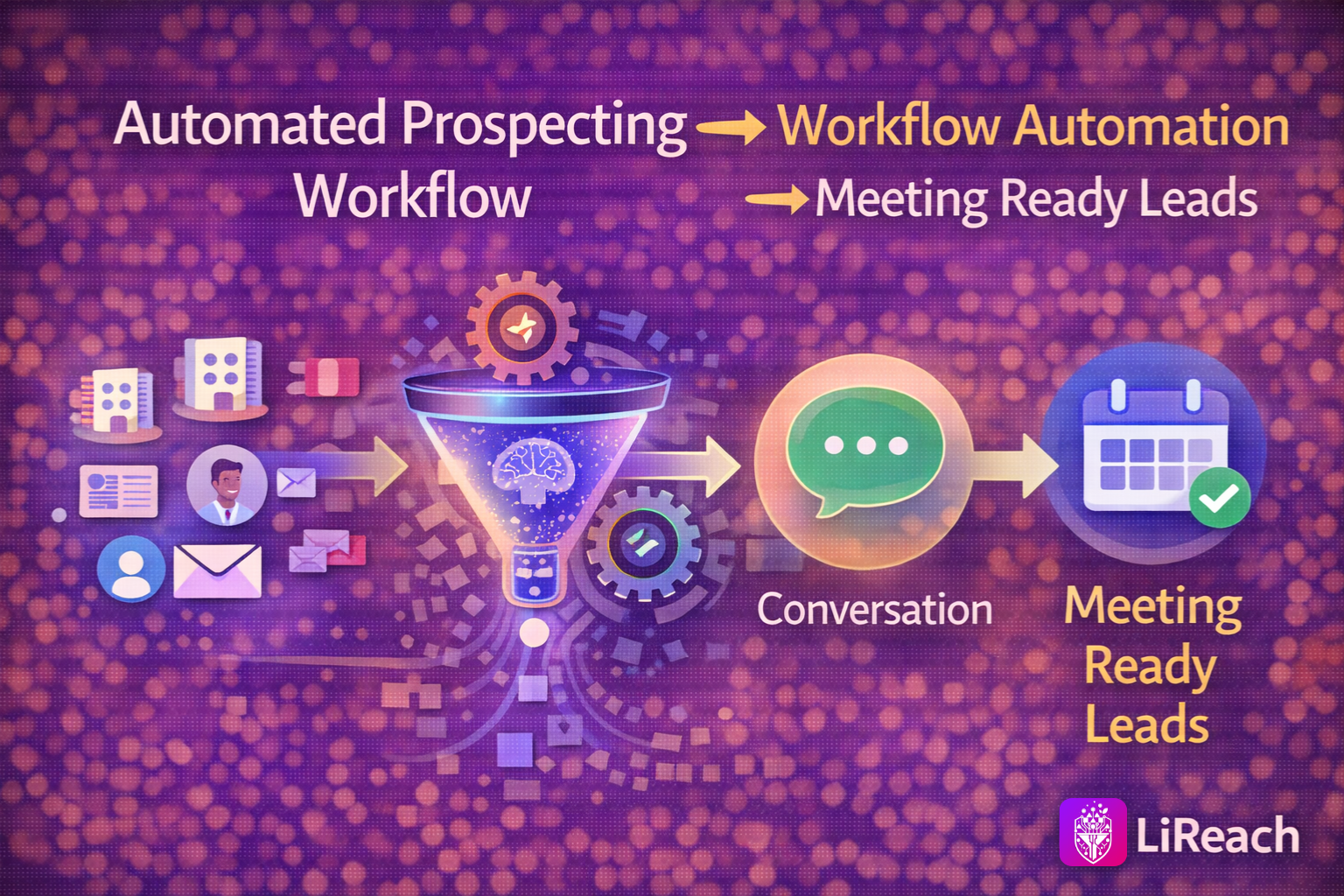
- generate meeting ready leads through real conversations
This approach allows teams to reduce prospecting time while maintaining consistent outbound activity.
The Hidden Advantage of Time Efficiency
Saving time in lead generation does more than improve productivity.
It increases the number of conversations sales teams can start.
More conversations create more opportunities.
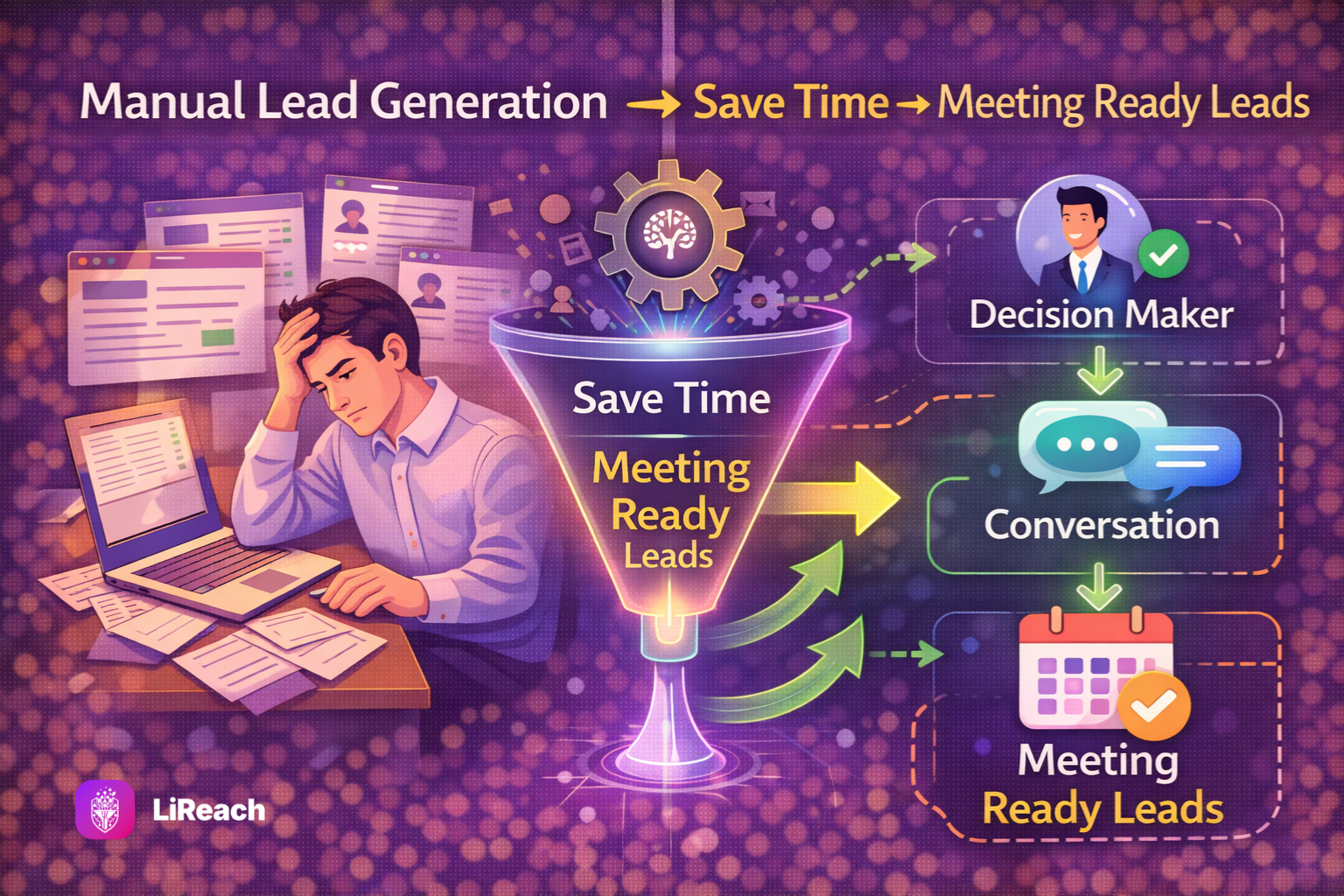
And more opportunities ultimately produce more meeting ready leads.
Final Thoughts
B2B lead generation should not feel like endless research and list building.
The most successful sales teams design systems that reduce manual work and prioritize conversations.
When lead generation becomes efficient, sales teams gain the one resource that matters most.
Time.
And that time can be used to build relationships with potential buyers.
Because relationships are what ultimately drive revenue.
Join 2,000+ Sales Leaders
Get advanced LinkedIn strategies, automation tips, and templates delivered to your inbox weekly. No spam, just value.