Most sales outreach campaigns fail for a simple reason.
The follow-up strategy is weak or inconsistent.
A founder sends a few messages.
A prospect doesn’t reply.
The conversation ends before it even begins.
But experienced sales teams know something different.
Most deals start with follow-ups.
Decision makers are busy.
Even if your message is relevant, it might arrive at the wrong time.
This is why a strong follow-up strategy is essential for outbound sales.
Why Follow-Ups Are Critical in Sales Outreach
Many outreach campaigns rely too heavily on the first message.
But inbox behavior shows something important.
- buyers often read emails but forget to reply
- messages get buried under other priorities
- timing plays a huge role in responses
Follow-ups keep the conversation alive.
They also demonstrate persistence and professionalism.
In fact, many successful sales conversations begin after the second or third follow-up.
The Ideal Follow-Up Framework
At LiReach we recommend a structured outreach sequence that balances persistence with relevance.
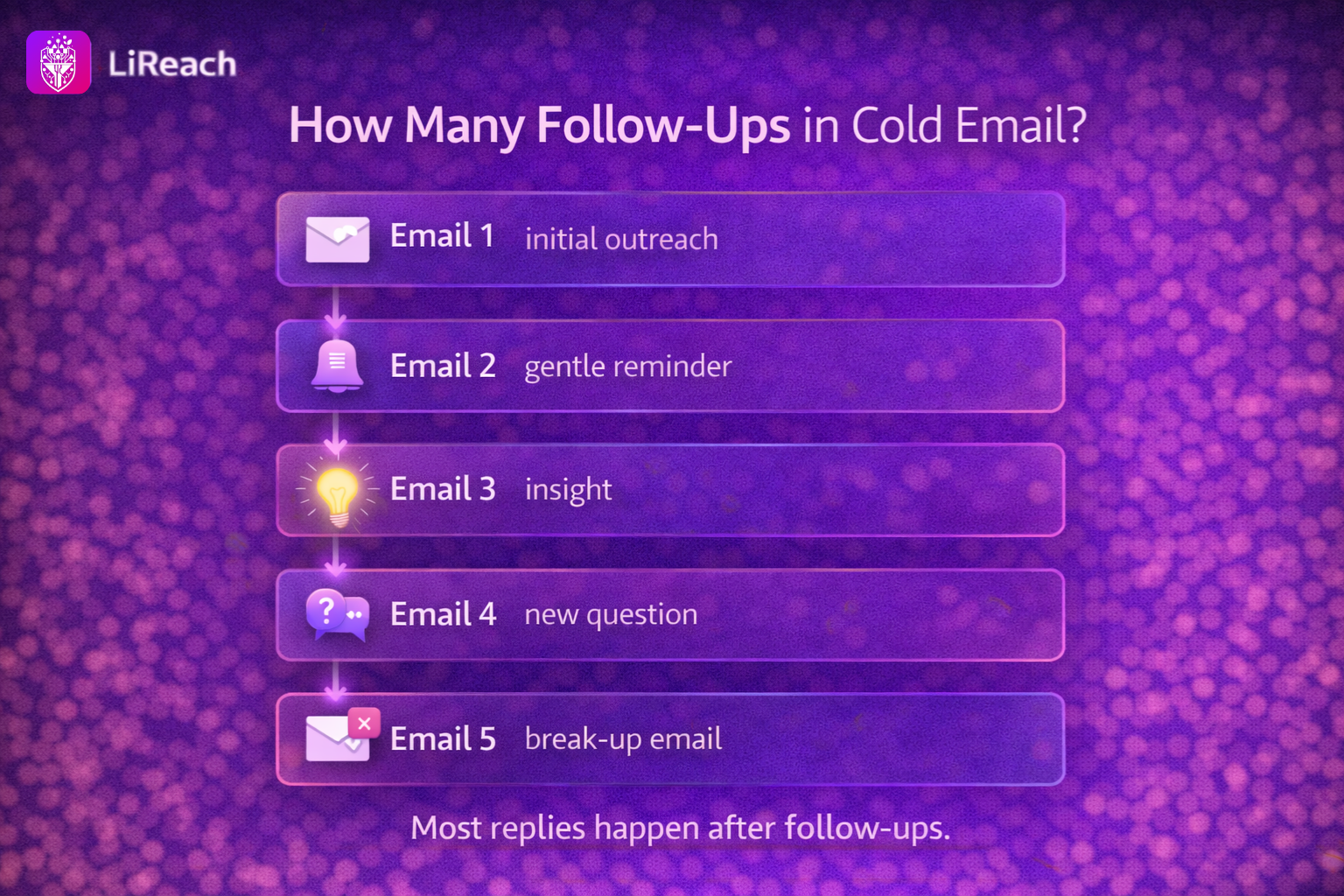
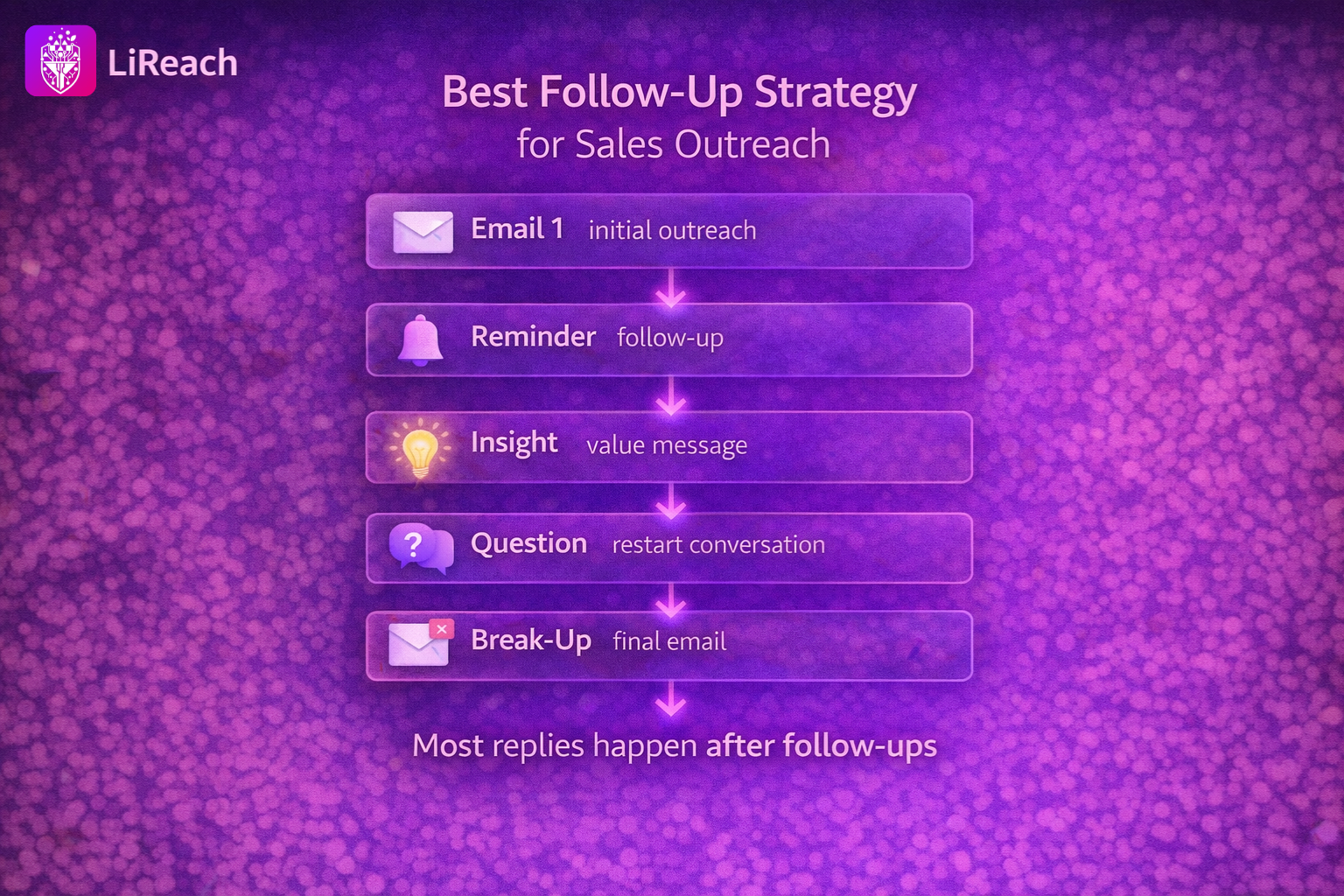
A strong follow-up strategy typically includes five stages.
1. Initial Outreach
The first message should focus on relevance and curiosity.
Example:
“Noticed your team recently expanded your SDR team — curious if outbound pipeline generation is becoming a bigger priority.”
The goal is to start a conversation, not sell immediately.
2. Friendly Reminder
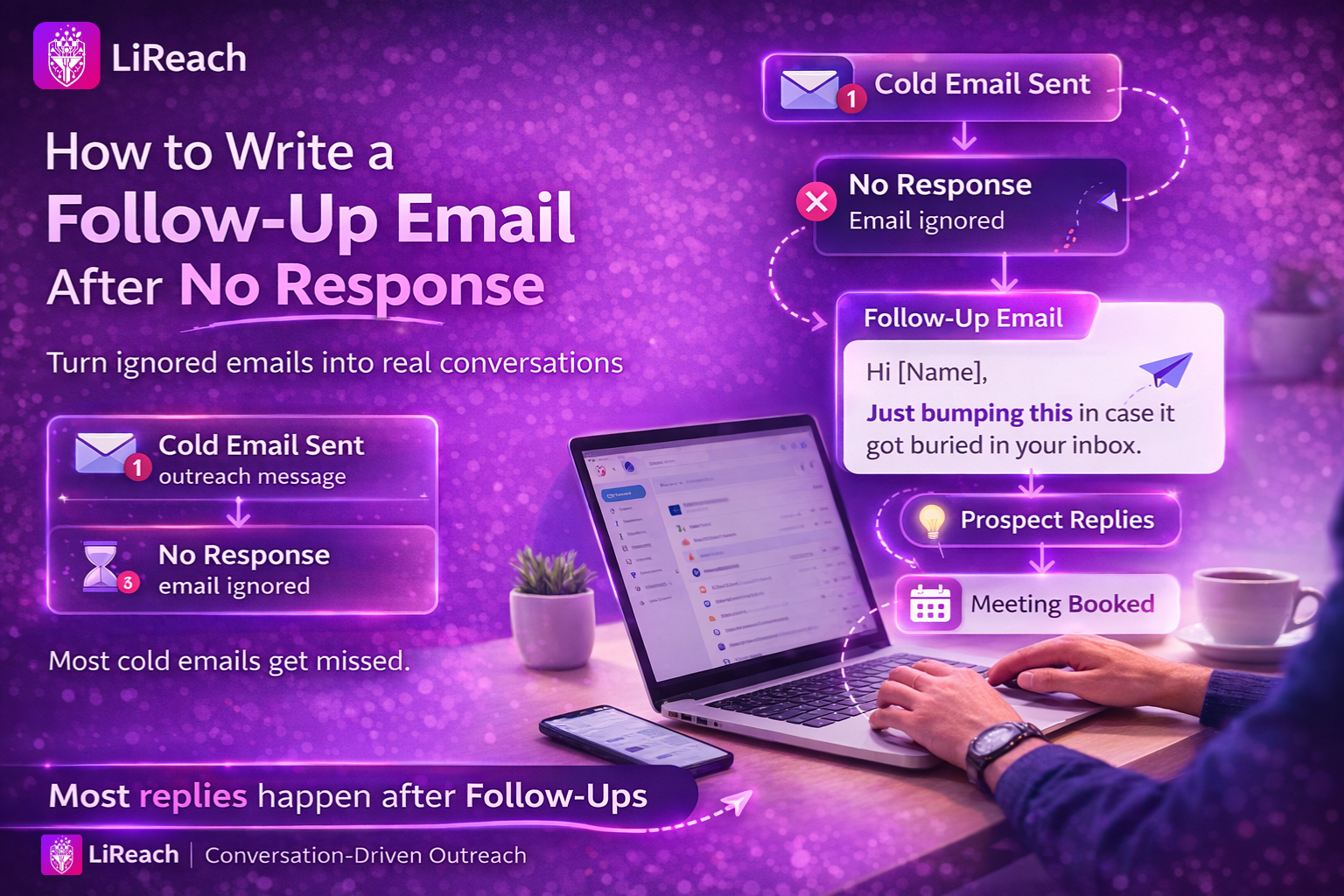
If the prospect doesn’t reply, send a short follow-up after a few days.
Example:
“Just bumping this in case it got buried in your inbox.”
This simple reminder often triggers replies.
3. Add New Insight
Your next follow-up should introduce something valuable.
Example:
“Many founders we speak with struggle to convert outreach conversations into booked meetings.”
Adding insight keeps the conversation interesting.
4. Ask a Question
Questions naturally restart conversations.
Example:
“Curious — are most of your deals currently coming from inbound leads or outbound outreach?”
Questions invite engagement.
5. Break-Up Email
The final email acknowledges that the prospect may not be interested.
Example:
“Not sure if this is a priority right now, but happy to reconnect in the future if outbound growth becomes relevant.”
Interestingly, break-up emails often generate responses.
Common Follow-Up Mistakes
1. Sending Too Few Follow-Ups
Many sales teams stop after one or two messages.
This dramatically reduces response opportunities.
2. Repeating the Same Message
Each follow-up should add something new.
Repeating the same email feels spammy.
3. Being Too Aggressive
Follow-ups should feel conversational and helpful.
Pushy sales messaging often pushes prospects away.
How LiReach Automates Smart Follow-Ups
LiReach helps B2B teams manage outreach conversations and follow-ups more effectively.
The platform helps teams:
- identify high-fit prospects
- generate personalized outreach messages
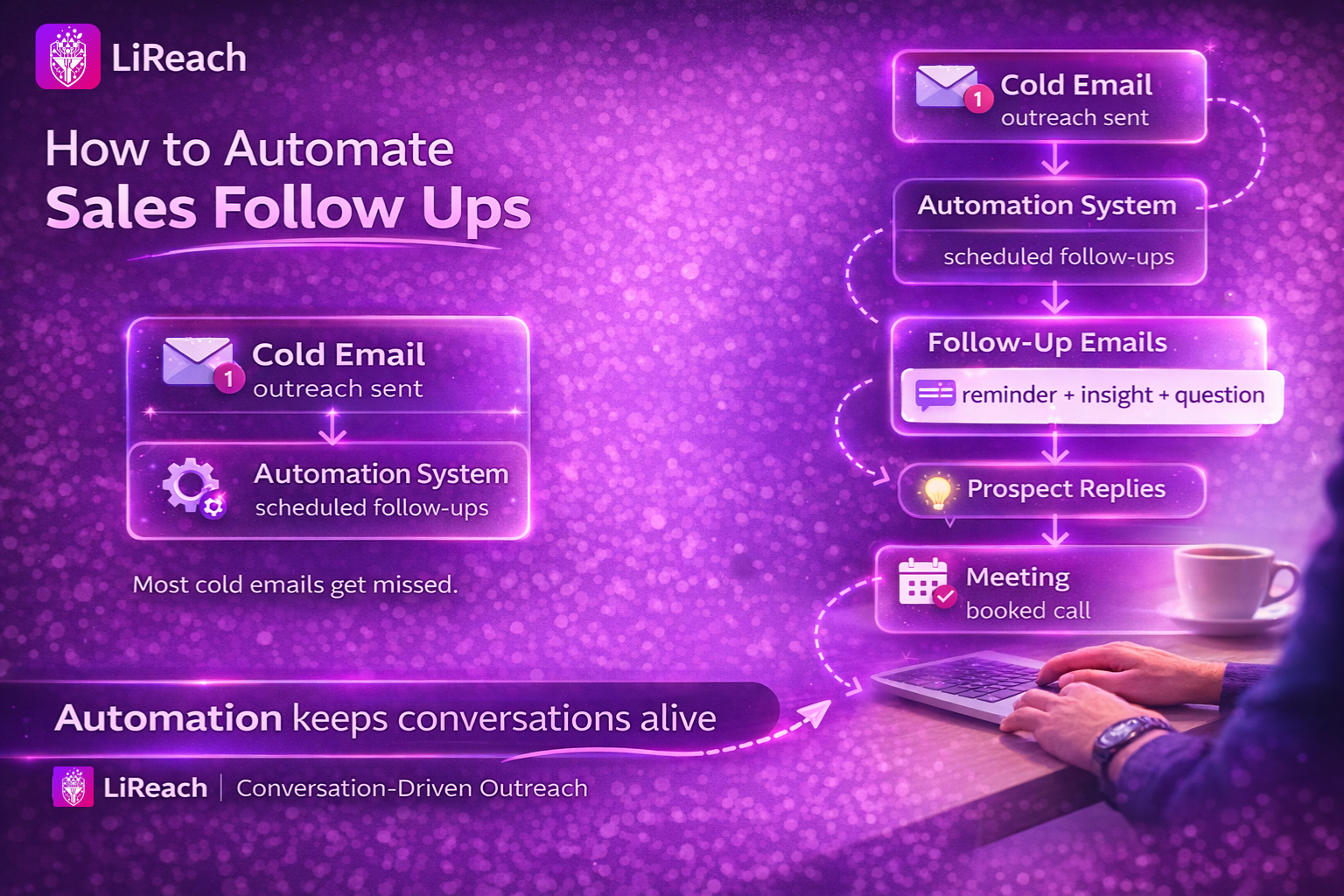
- automatically schedule follow-ups
- track conversation progress
Instead of manually managing sequences, teams can run structured campaigns that feel natural and human.
This significantly increases both reply rates and meeting bookings.
Final Thoughts
Successful outreach rarely happens with a single message.
It happens through consistent, thoughtful follow-up.
When outreach combines relevance, insight, and persistence, conversations begin.
And those conversations eventually turn into meetings.
Join 2,000+ Sales Leaders
Get advanced LinkedIn strategies, automation tips, and templates delivered to your inbox weekly. No spam, just value.