Follow-ups are one of the most important parts of outbound sales.
But they are also one of the most difficult things to manage consistently.
A founder sends a cold email.
A prospect doesn't respond.
The next follow-up is forgotten.
Or it is sent weeks later when the conversation is already cold.
This is where many outreach campaigns fail.
The problem is not the first email.
The problem is poor follow-up management.
Automation can solve this problem — if it is done correctly.
Why Follow-Ups Are Critical in Sales Outreach
Most replies do not happen after the first message.
Busy decision makers often see emails but forget to respond.
Other times the message simply arrives at the wrong moment.
Follow-ups bring the conversation back to the prospect’s attention.
Research across outbound campaigns consistently shows that a large portion of responses occur after follow-ups.
Without a structured follow-up system, many potential conversations disappear.
The Problem With Manual Follow-Ups
Managing follow-ups manually becomes difficult as outreach scales.
Sales teams often face problems like:
- forgetting to follow up with prospects
- sending inconsistent messages
- losing track of conversations
- wasting time writing repetitive emails
As the number of prospects increases, the complexity grows quickly.
This is why automation is essential for modern outbound sales.
What Sales Follow-Up Automation Should Actually Do
Automation should not mean sending robotic messages.
The goal is to automate the process while keeping communication natural.
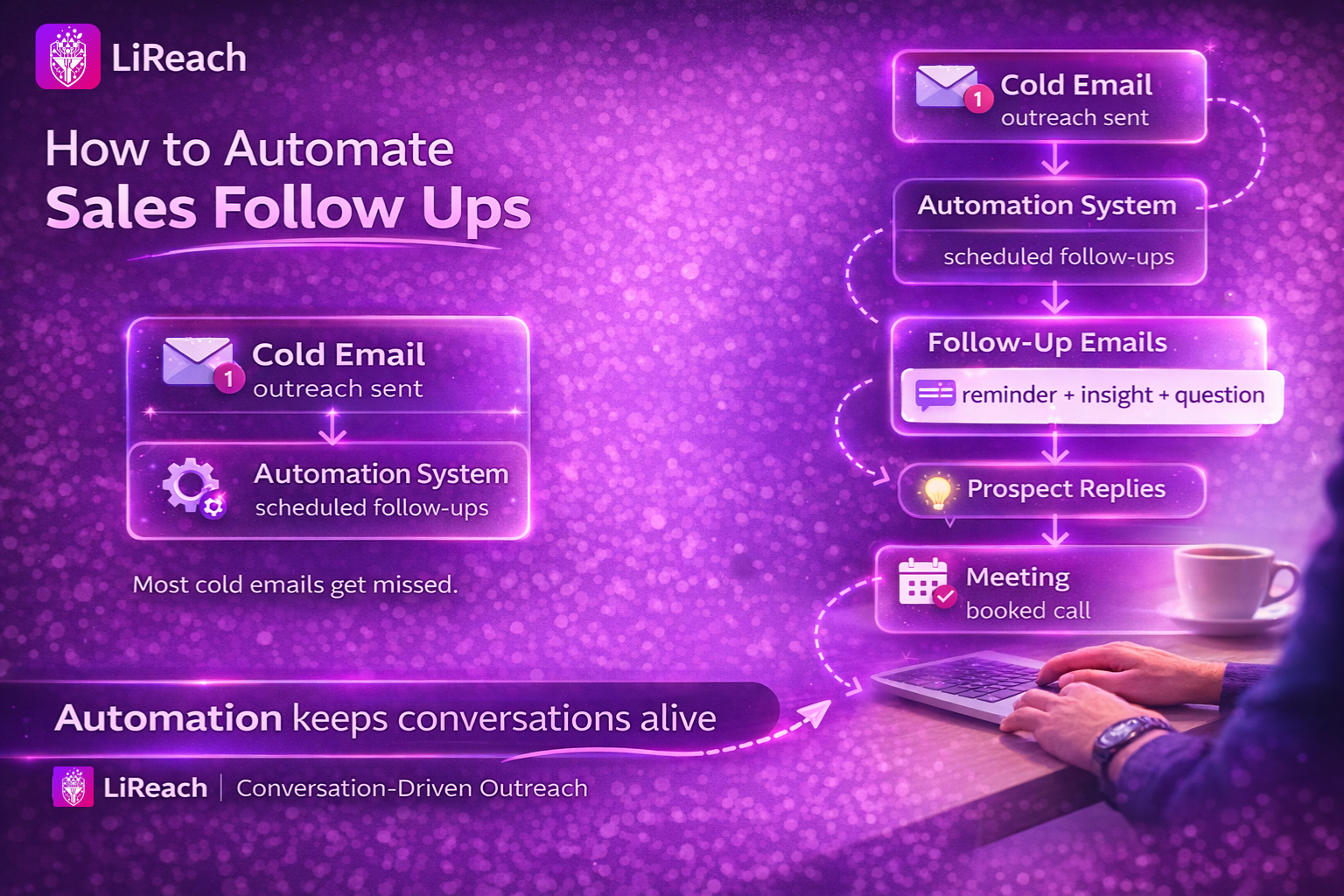
A good automated follow-up system should:
- schedule follow-up emails automatically
- stop sequences when a prospect replies
- send messages at appropriate intervals
- personalize outreach based on prospect signals
This creates a consistent outreach system without losing personalization.
A Simple Automated Follow-Up Sequence
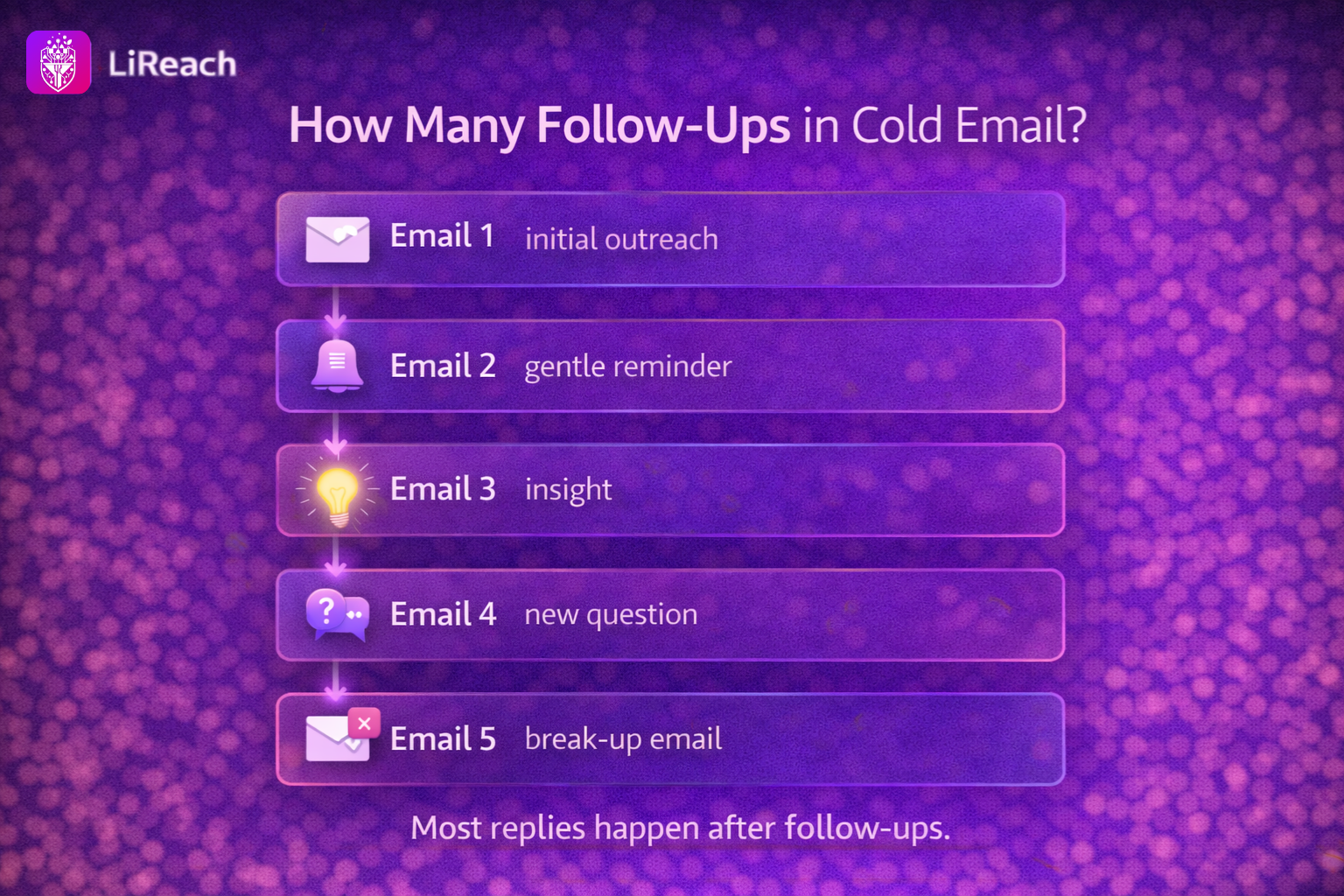
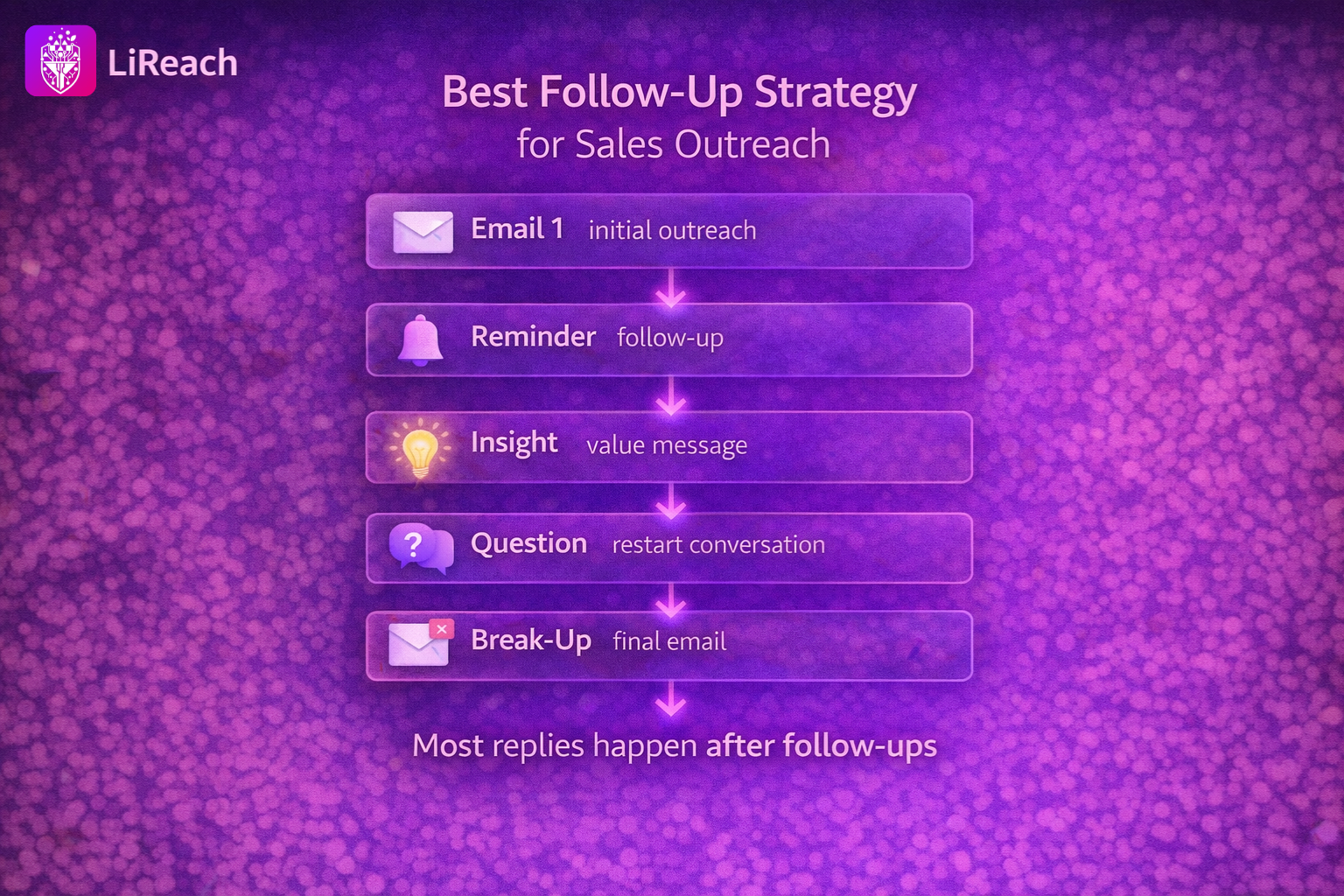
At LiReach we recommend a structured follow-up sequence designed to maintain conversation momentum.
Email 1 – Initial Outreach
Start the conversation with a relevant observation.
Example:
“Noticed your team recently expanded your SDR team — curious if outbound pipeline generation is becoming a bigger priority.”
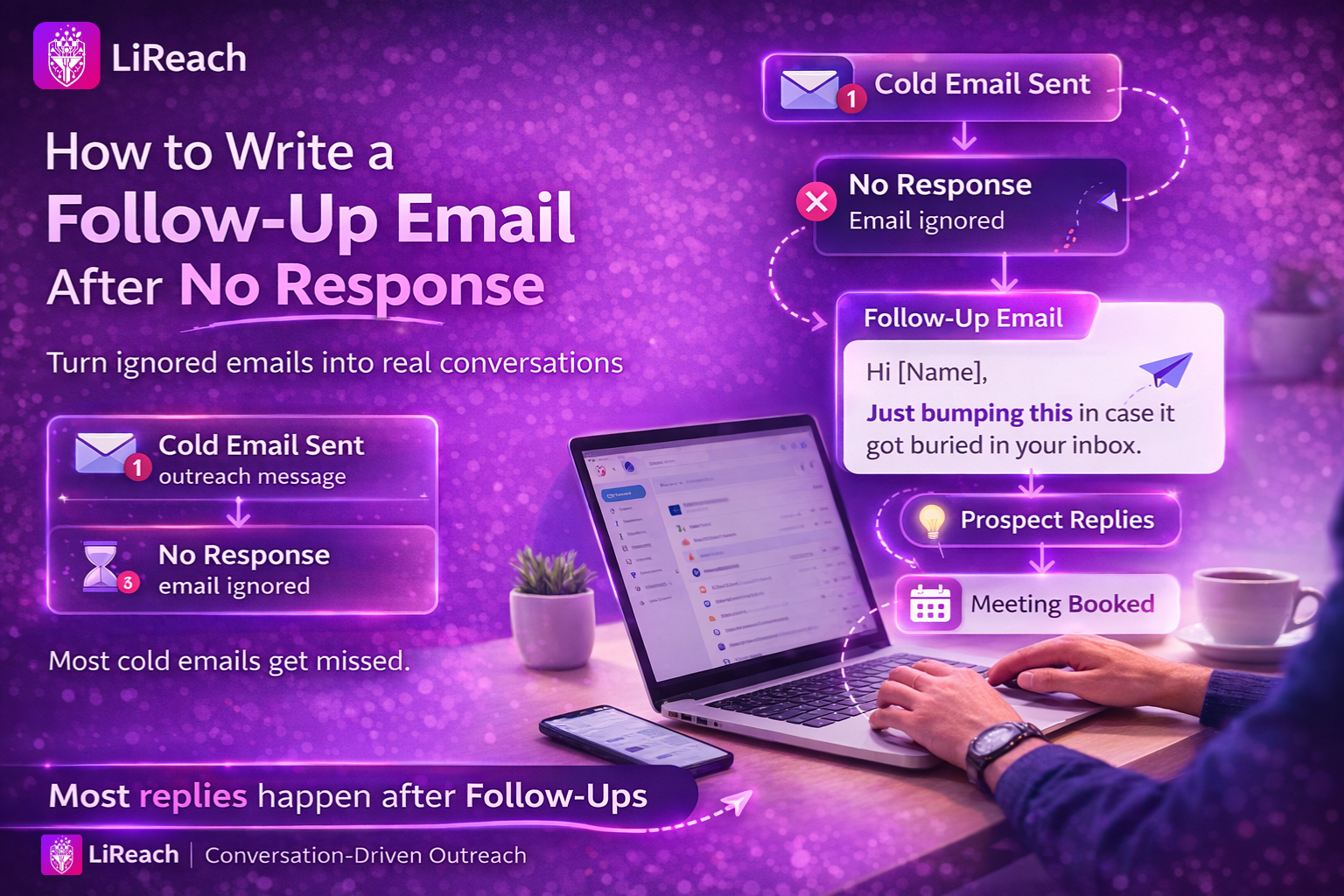
Email 2 – Reminder
If there is no response, send a short reminder.
Example:
“Just bumping this in case it got buried in your inbox.”
Email 3 – Insight
Add a short observation based on industry experience.
Example:
“Many founders we speak with struggle to convert outreach conversations into meetings.”
Email 4 – Question
Questions restart conversations.
Example:
“Curious — are most of your deals currently coming from inbound leads or outbound outreach?”
Email 5 – Break-Up Email
The final email acknowledges that the timing may not be right.
Example:
“Not sure if this is a priority right now, but happy to reconnect later if outbound growth becomes relevant.”
How LiReach Automates Sales Follow Ups
LiReach was built to help B2B companies run structured outreach systems.
Instead of manually managing emails and reminders, the platform automates the process.
LiReach helps teams:
- identify the right decision makers
- generate personalized outreach messages
- automatically schedule follow-ups
- track prospect engagement
This ensures that every prospect receives consistent outreach without overwhelming sales teams.
More importantly, the system focuses on starting conversations rather than blasting mass messages.
Final Thoughts
Follow-ups are where most sales conversations begin.
Without automation, managing them becomes difficult as outreach grows.
But automation must be designed carefully.
The goal is not to send more messages.
The goal is to create consistent conversations that lead to meetings.
When automation supports relevance and timing, outreach becomes far more effective.
Join 2,000+ Sales Leaders
Get advanced LinkedIn strategies, automation tips, and templates delivered to your inbox weekly. No spam, just value.