One of the most common challenges in outbound sales is silence.
You send a cold email.
You spend time researching the prospect.
You write a thoughtful message.
And then…
Nothing happens.
No reply.
No conversation.
No meeting.
Many founders assume the prospect simply isn’t interested.
But the reality is very different.
Decision makers are busy, inboxes are crowded, and emails often get missed.
That’s why follow-up emails are one of the most powerful tools in outbound sales.
Why Follow-Up Emails Matter
Most outreach replies don’t happen after the first email.
They happen after follow-ups.
This doesn’t mean your first email was bad.
It simply means timing matters.
Your email might have arrived during a meeting, during travel, or in the middle of a busy day.
A follow-up brings the conversation back to the prospect’s attention.
Done correctly, follow-ups feel helpful rather than pushy.
The Biggest Follow-Up Mistakes
1. Being Too Aggressive
Many follow-ups sound like this:
“Just checking again. Did you see my previous email?”
Messages like this add no value and feel annoying.
2. Repeating the Same Message
Sending the exact same email again rarely works.
Every follow-up should introduce something new.
3. Sending Too Many Emails Too Quickly
Follow-ups should be spaced properly.
Sending multiple emails in a short time can damage credibility.
The Conversation-Driven Follow-Up Framework
At LiReach we approach follow-ups differently.
Instead of pushing sales messages repeatedly, follow-ups are designed to keep the conversation moving.
A strong follow-up email typically follows three principles:
- be short
- add value
- restart the conversation
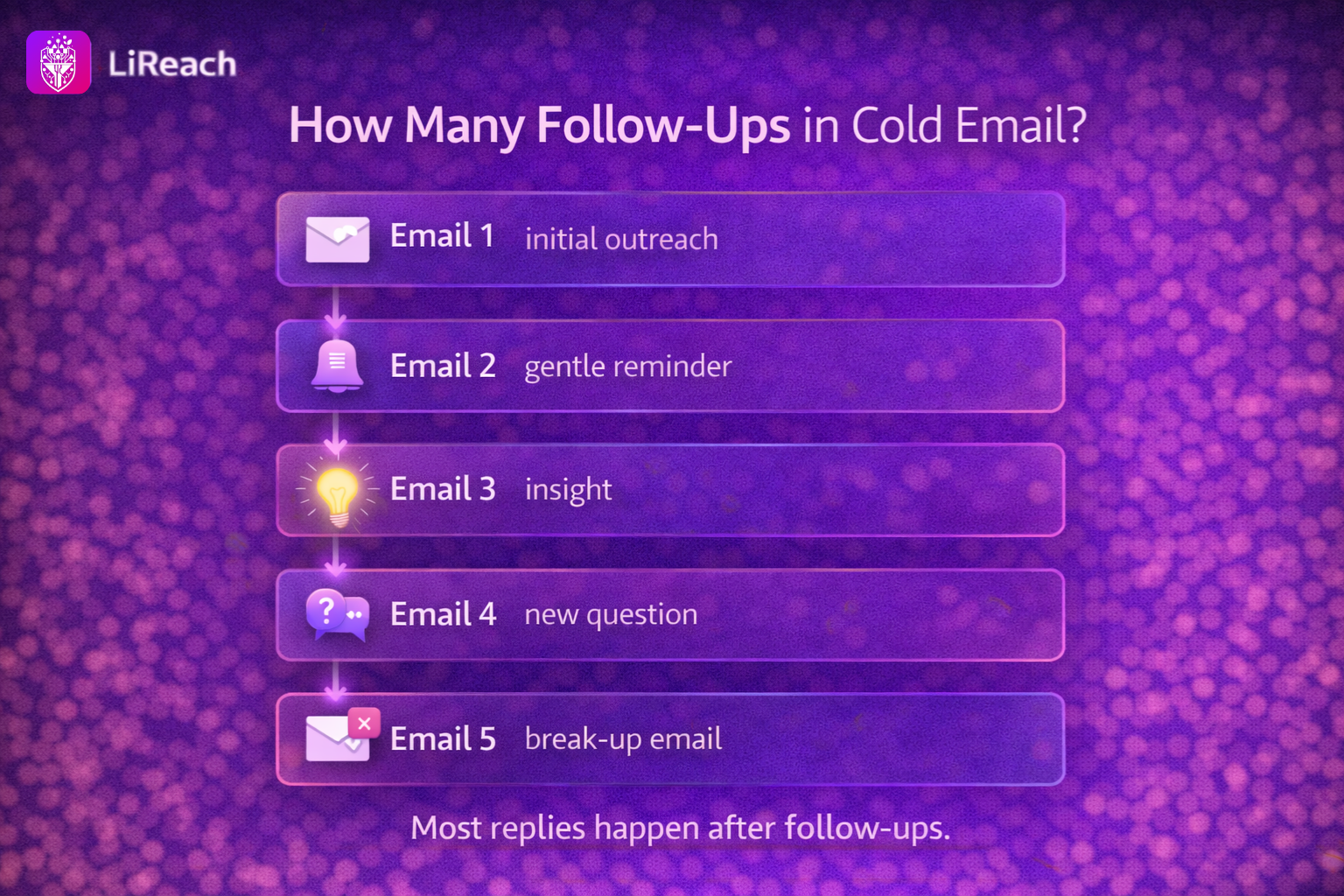
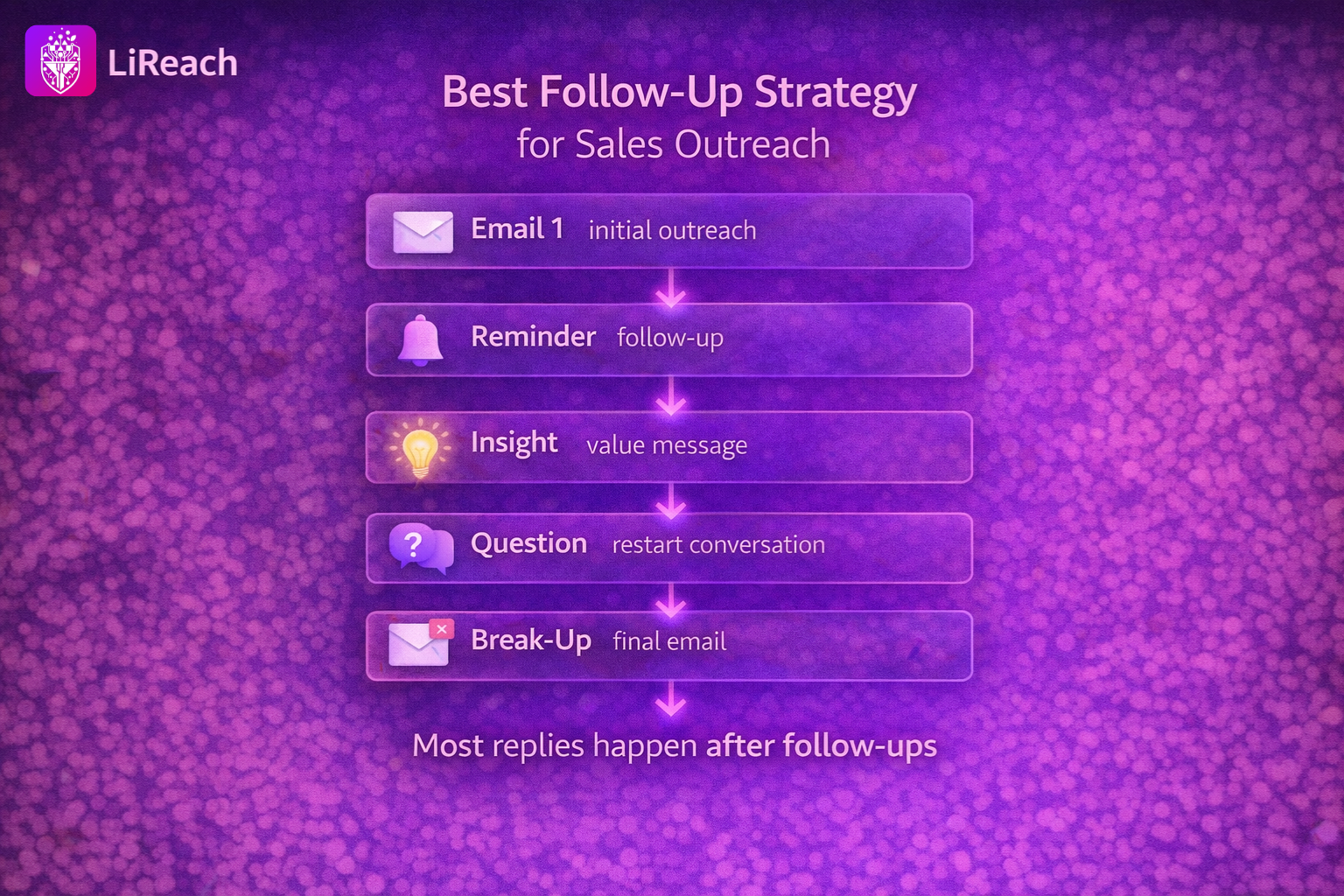
Follow-Up Type 1: Friendly Reminder
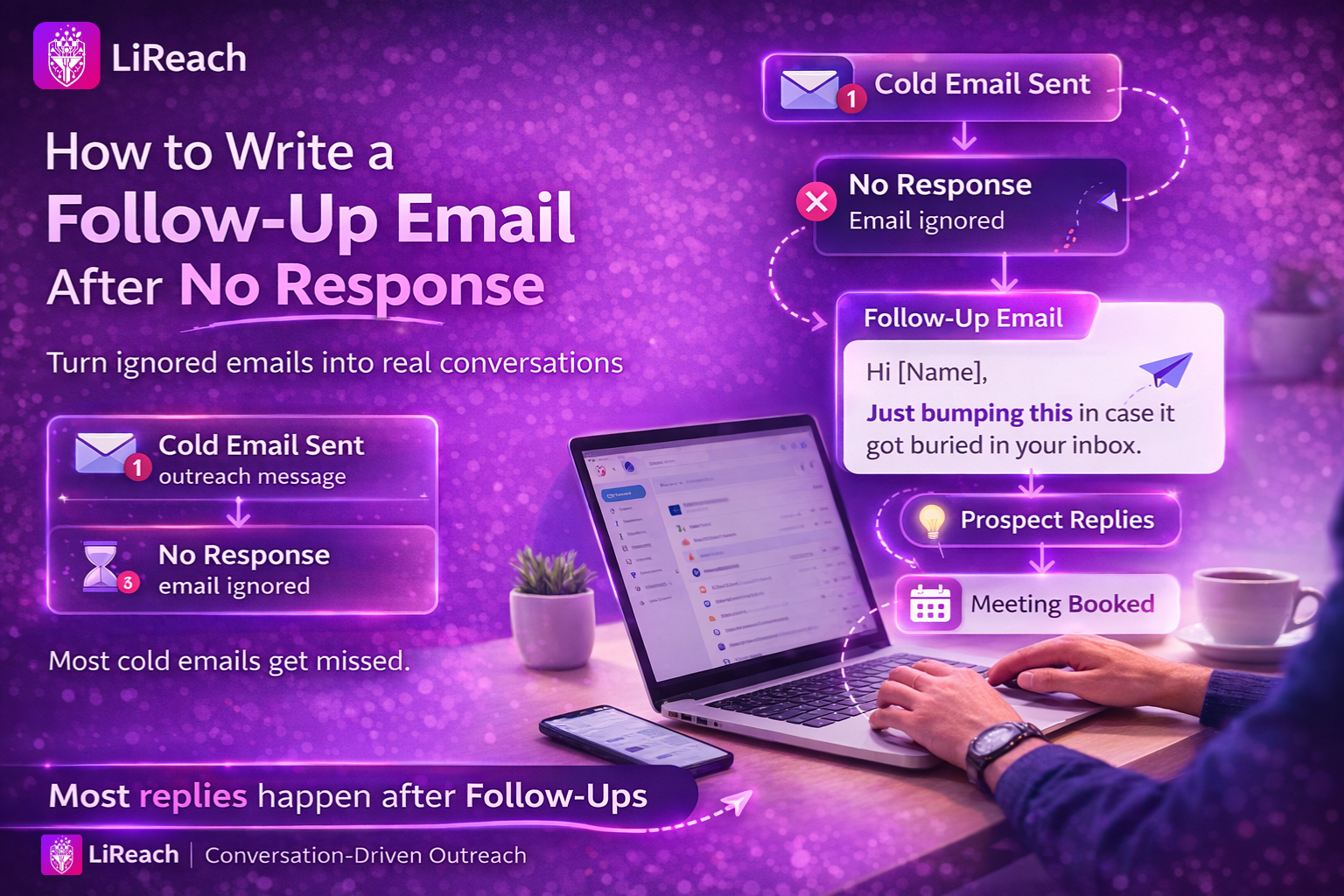
The simplest follow-up reminds the prospect about your previous email.
Example:
“Just bumping this in case it got buried in your inbox.”
Short reminders often trigger responses from prospects who missed the first email.
Follow-Up Type 2: Add Insight
Another effective approach is sharing a short observation.
Example:
“Many founders we speak with struggle to convert cold outreach into booked meetings.”
This type of follow-up adds context to the conversation.
Follow-Up Type 3: Ask a Question
Questions naturally encourage engagement.
Example:
“Curious — are most of your deals currently coming from inbound leads or outbound outreach?”
Questions make the conversation interactive.
Follow-Up Type 4: Break-Up Email
The final follow-up acknowledges that the prospect may not be interested.
Example:
“Not sure if this is a priority right now, but happy to reconnect in the future if outbound growth becomes relevant.”
Interestingly, break-up emails often generate replies.
How LiReach Helps Manage Follow-Ups
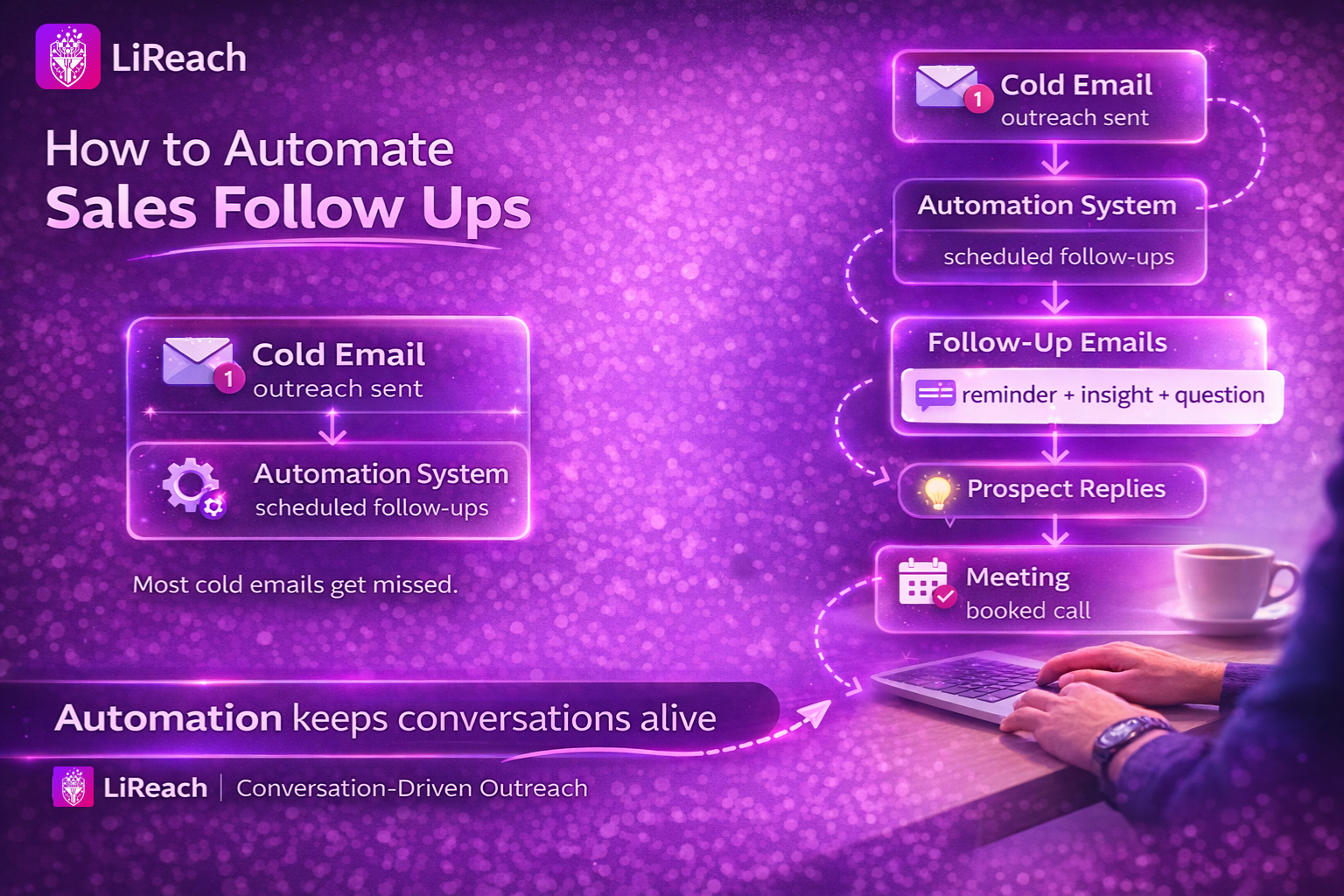
Managing follow-ups manually becomes difficult as outreach scales.
LiReach helps teams automate this process while keeping outreach personal.
The platform helps teams:
- generate personalized outreach messages
- schedule automated follow-up sequences
- detect prospect signals
- guide conversations toward meetings
Instead of sending generic reminders, follow-ups become part of a structured conversation system.
This leads to more replies and more booked meetings.
Final Thoughts
Silence after a cold email does not mean rejection.
It often means the prospect simply hasn’t responded yet.
Thoughtful follow-ups keep the conversation alive.
And when outreach focuses on relevance and curiosity, those conversations eventually turn into meetings.
Join 2,000+ Sales Leaders
Get advanced LinkedIn strategies, automation tips, and templates delivered to your inbox weekly. No spam, just value.