One of the biggest mistakes in outbound sales is giving up too early.
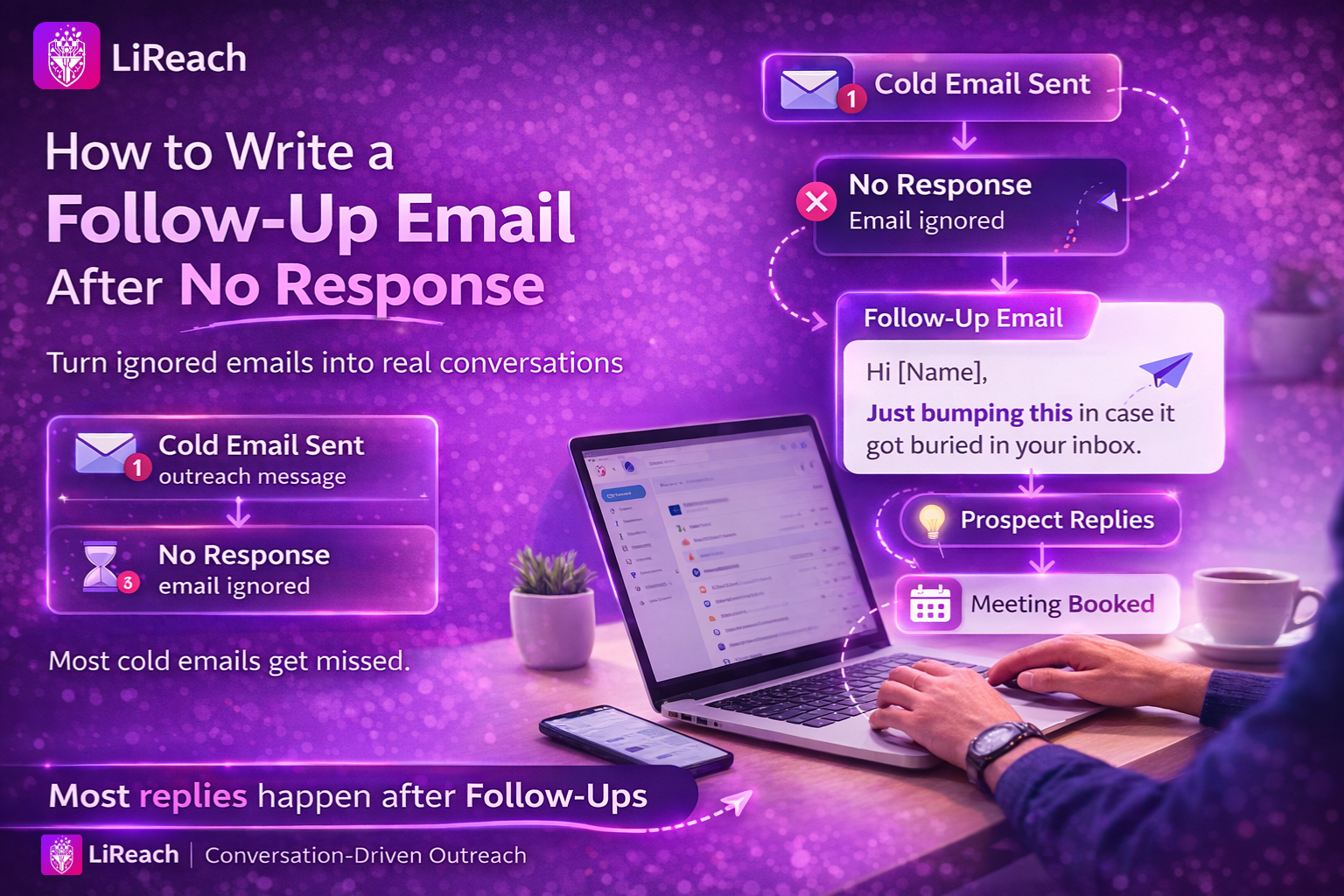
A founder sends a message to a prospect.
The prospect doesn't respond.
The outreach stops.
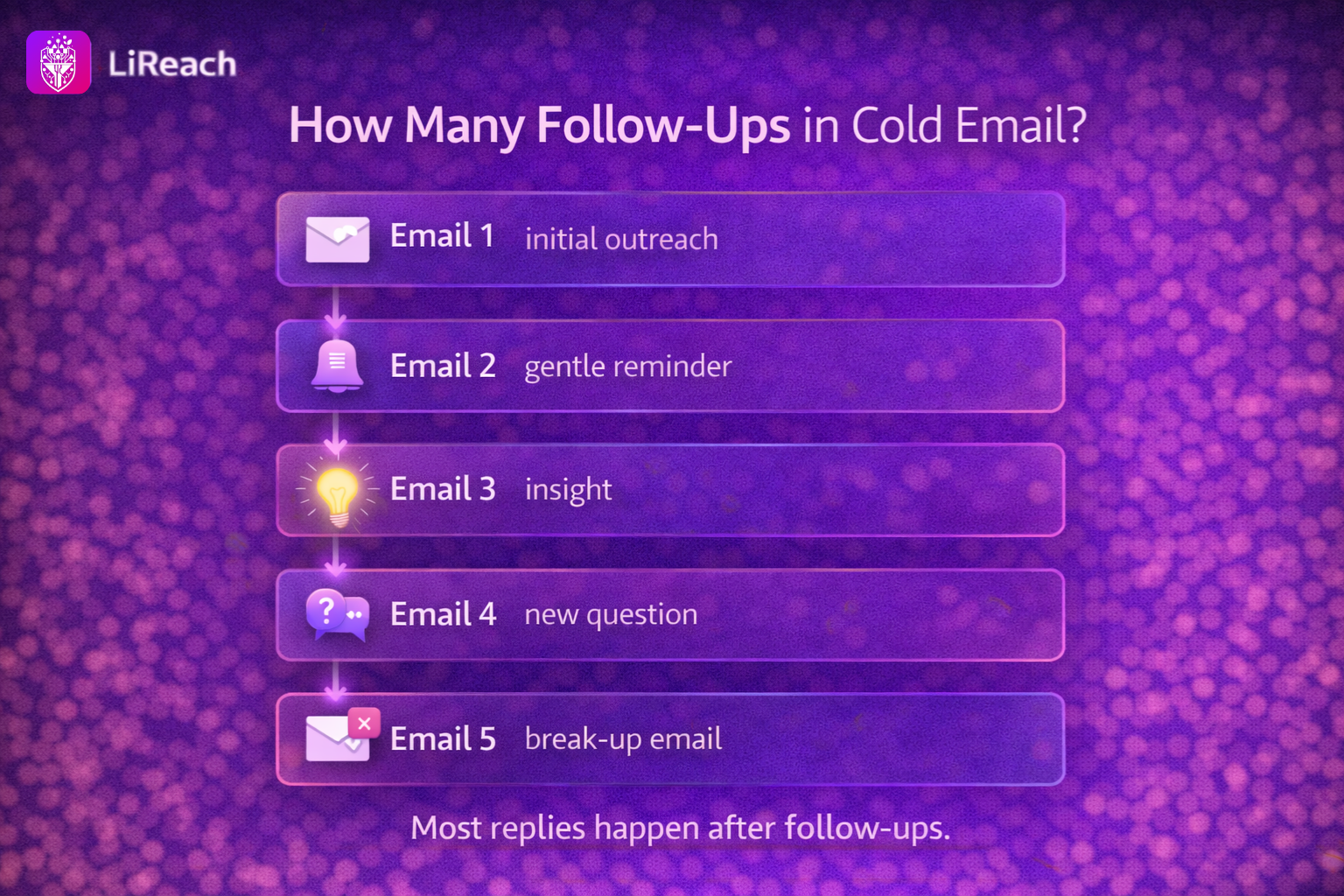
But in reality, most sales conversations begin with follow-ups.
Decision makers are busy, and emails often get buried in crowded inboxes.
A thoughtful follow-up message can bring the conversation back to life.
The key is to make follow-ups feel helpful, relevant, and natural.
Why Follow-Up Messages Matter
Follow-ups are not just reminders.
They are opportunities to restart conversations.
Many prospects may have seen your original message but simply didn’t respond yet.
A follow-up creates another chance to engage.
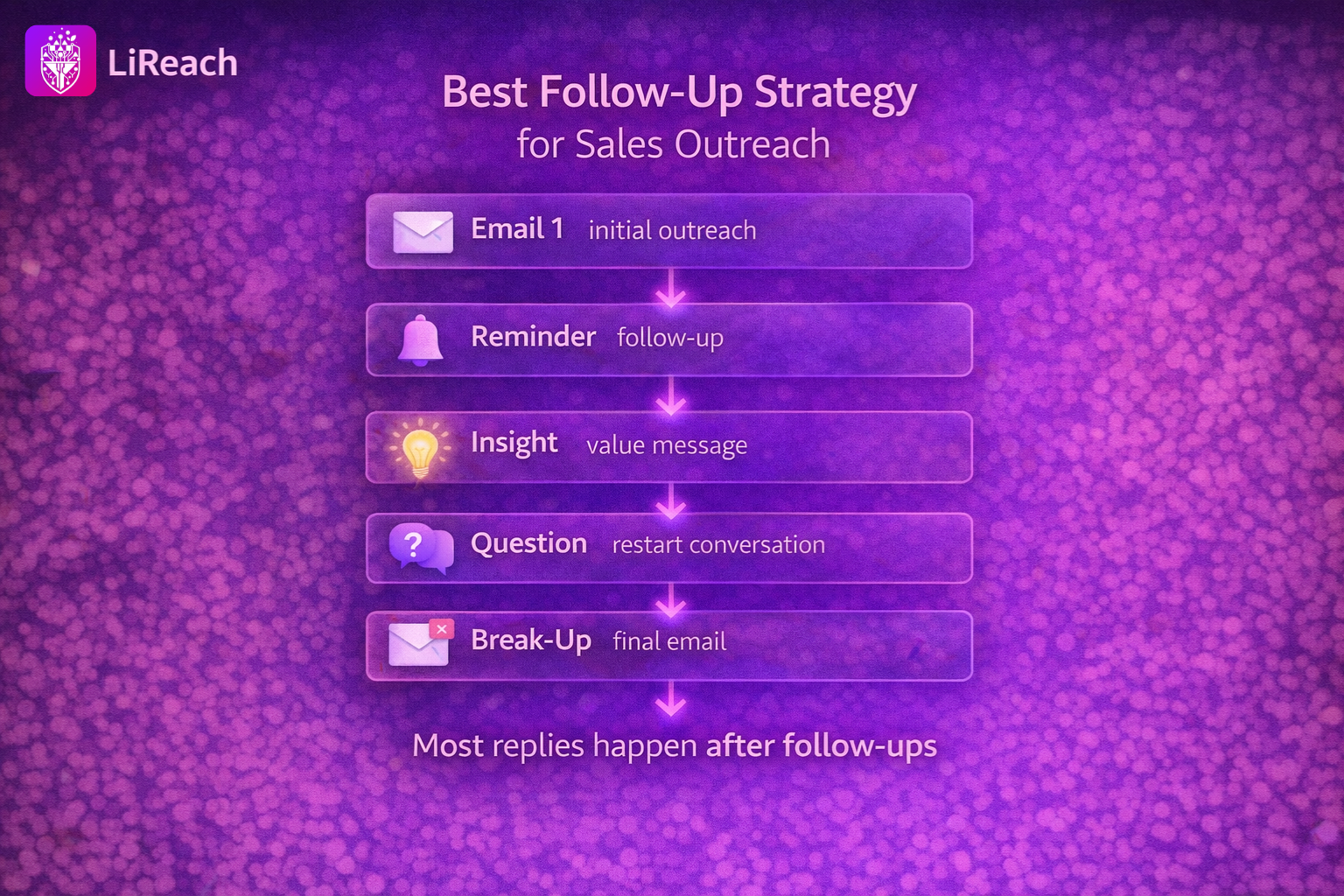
In many outbound campaigns, the majority of replies happen after follow-ups.
That is why consistent follow-up messaging is essential in B2B sales.
Types of Follow-Up Messages That Work
Different follow-up styles serve different purposes.
Here are several effective examples used in modern B2B outreach.
1. Simple Reminder Follow-Up
Sometimes the most effective follow-up is the simplest one.
Example message:
“Just bumping this in case it got buried in your inbox.”
This works because it is short and non-pushy.
2. Insight-Based Follow-Up
Sharing insight can restart conversations.
Example message:
“Many founders we speak with struggle to convert outreach conversations into meetings.”
Insight-based follow-ups add value rather than just repeating the original message.
3. Question-Based Follow-Up
Questions naturally encourage engagement.
Example message:
“Curious — are most of your deals currently coming from inbound leads or outbound outreach?”
This invites the prospect into a conversation.
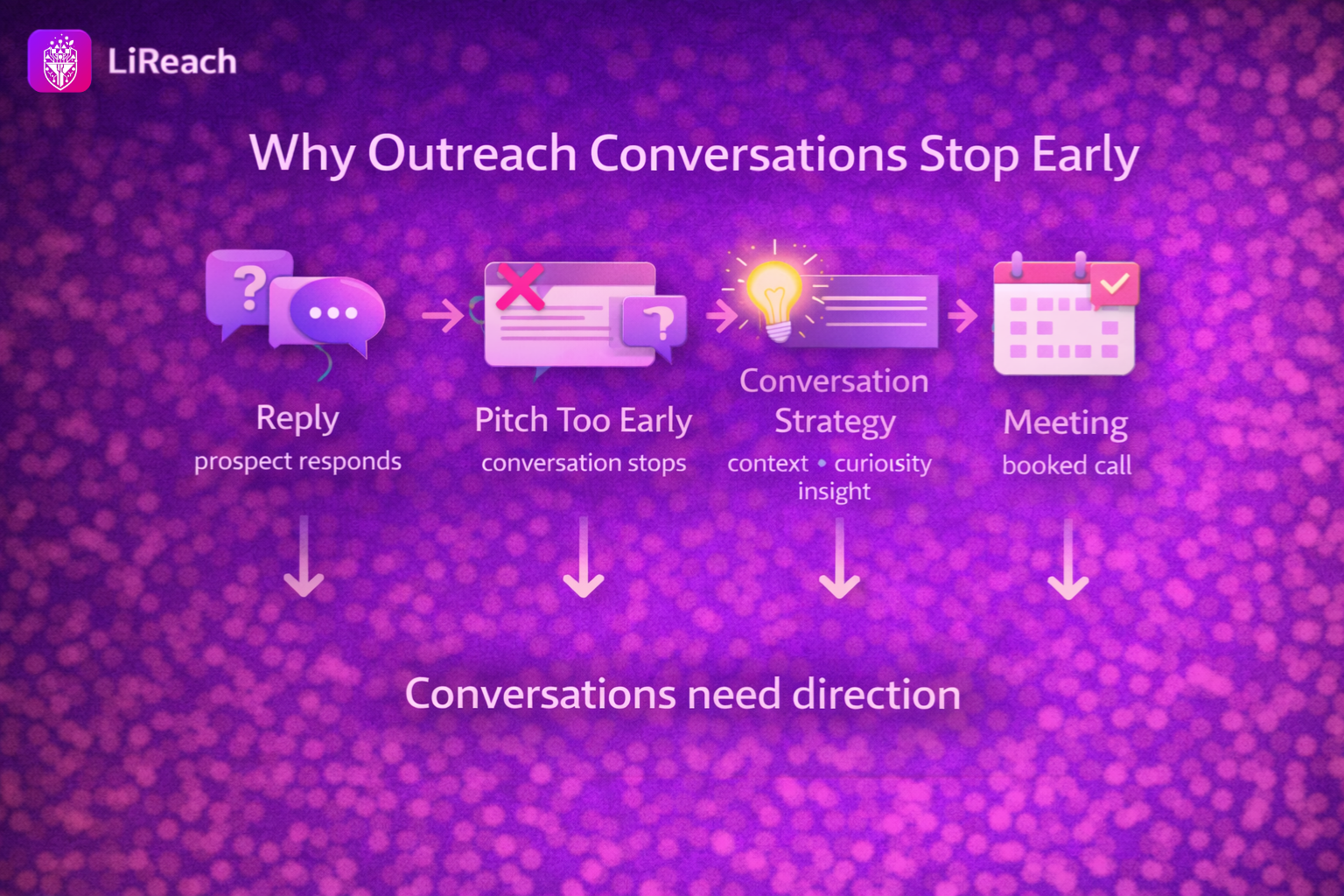
4. Context-Based Follow-Up
Referencing something specific about the prospect can make the follow-up feel more personal.
Example message:
“Noticed your team recently expanded your SDR team — curious if outbound pipeline generation is becoming a bigger focus.”
Context helps outreach feel relevant rather than automated.
5. Break-Up Follow-Up
The final follow-up acknowledges that the prospect may not be interested right now.
Example message:
“Not sure if this is a priority at the moment, but happy to reconnect later if outbound growth becomes relevant.”
Break-up messages often generate surprising responses.
Common Follow-Up Mistakes
Even though follow-ups are important, many outreach campaigns use them incorrectly.
Common mistakes include:
- sending too many follow-ups too quickly
- repeating the same message
- being overly aggressive about booking meetings
Good follow-ups feel conversational, not sales-heavy.
How LiReach Helps Manage Follow-Ups
Managing follow-ups manually becomes difficult as outreach grows.
LiReach helps B2B teams automate this process while keeping messages personalized.
The platform helps teams:
- identify the right decision makers
- generate personalized outreach messages
- automatically schedule follow-ups
- track conversation progress
This ensures that conversations continue without overwhelming sales teams.
Instead of blasting mass messages, outreach becomes structured and conversation-driven.
Final Thoughts
Follow-up messages are one of the most powerful tools in B2B sales.
They keep conversations alive and create additional opportunities to engage prospects.
When follow-ups focus on relevance and curiosity, prospects are far more likely to respond.
And those responses eventually turn into meetings.
Join 2,000+ Sales Leaders
Get advanced LinkedIn strategies, automation tips, and templates delivered to your inbox weekly. No spam, just value.