Many outbound campaigns fail not because the first message is bad.
They fail because the follow-ups do not generate replies.
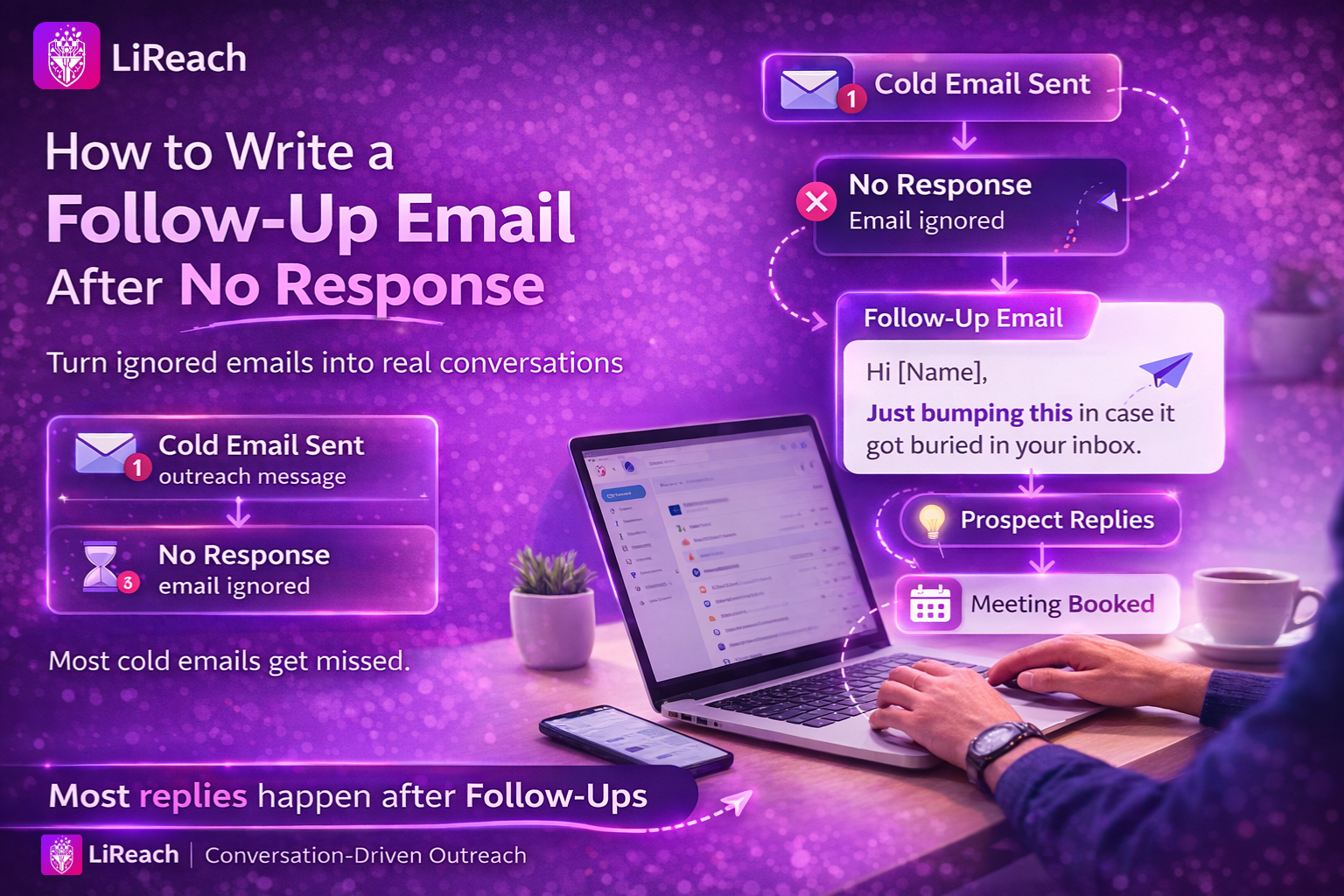
A founder sends the initial outreach message.
There is no response.
A follow-up is sent.
Still no reply.
Eventually the conversation stops before it even begins.
Improving follow-up response rates is one of the most important parts of successful outbound sales.
Why Follow-Up Response Rates Matter
Most prospects do not respond to the first message.
Decision makers are busy and inboxes are crowded.
Follow-ups create additional opportunities for engagement.
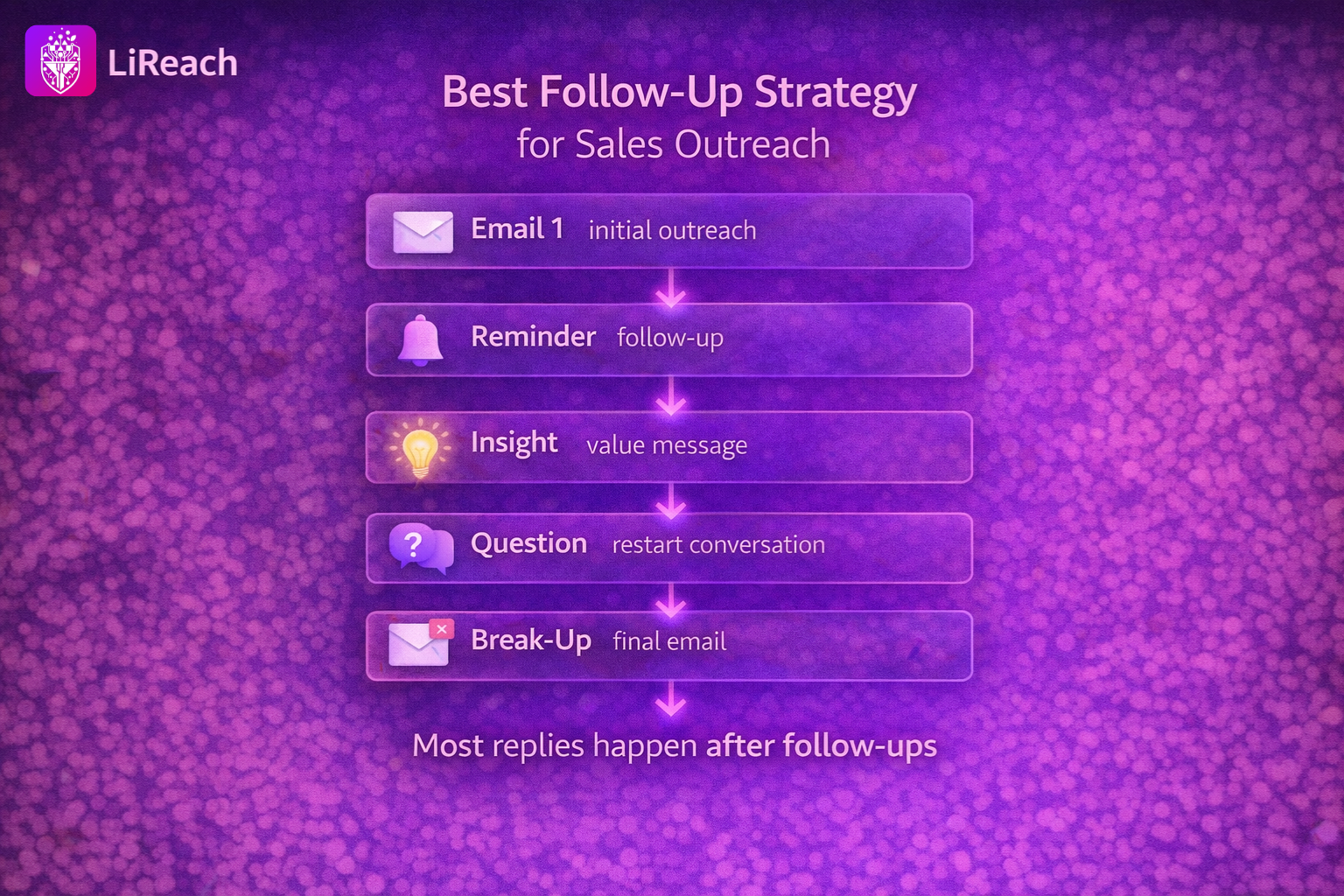
In many B2B outreach campaigns, the majority of replies happen after follow-ups.
That is why improving follow-up response rates can dramatically increase meeting opportunities.
Common Reasons Follow-Ups Get Ignored
Before improving response rates, it helps to understand why follow-ups often fail.
- messages feel generic
- no new value is added
- follow-ups are sent too frequently
- the message asks for a meeting too early
Prospects respond when outreach feels relevant and conversational.
Strategies to Improve Follow-Up Response Rates
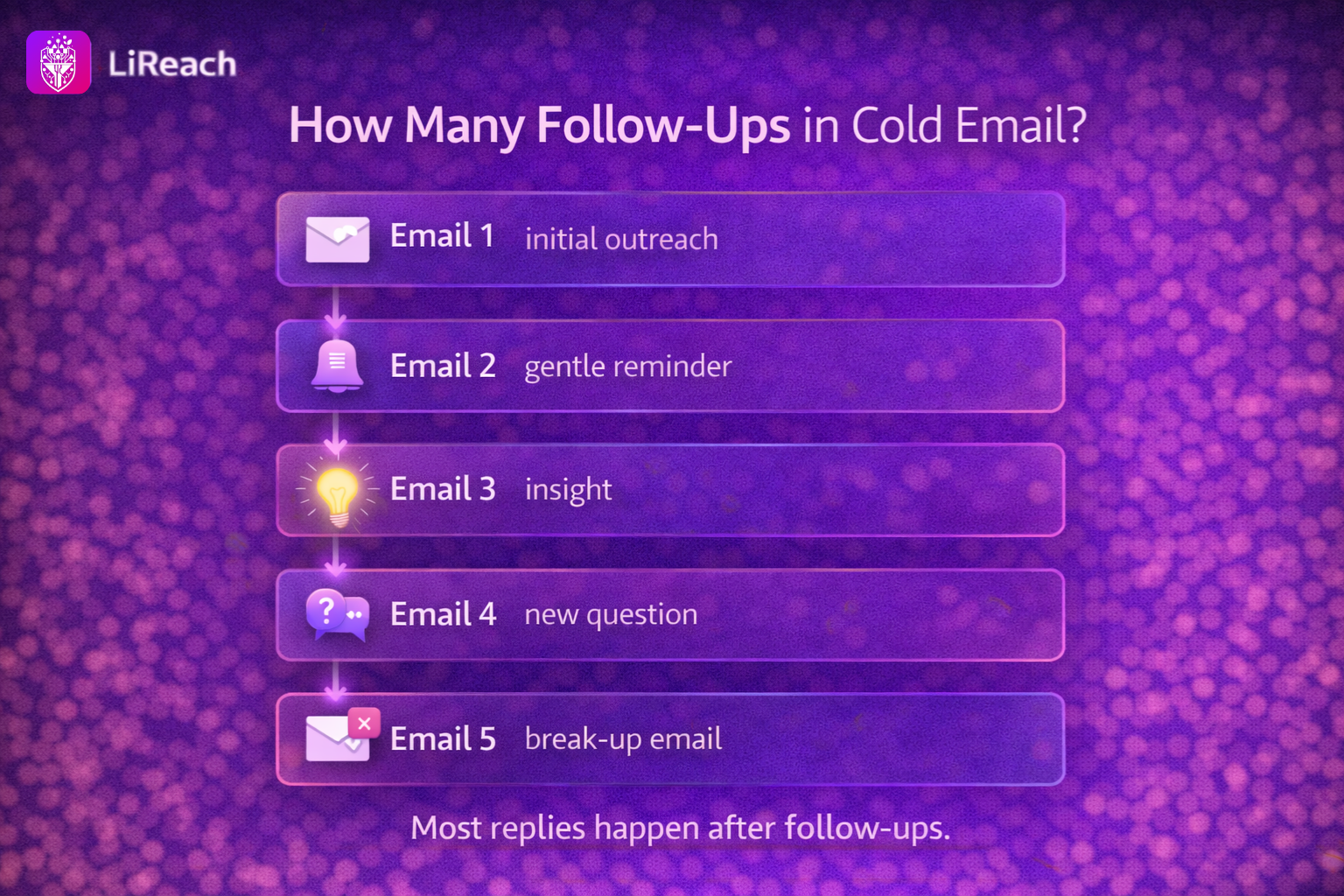
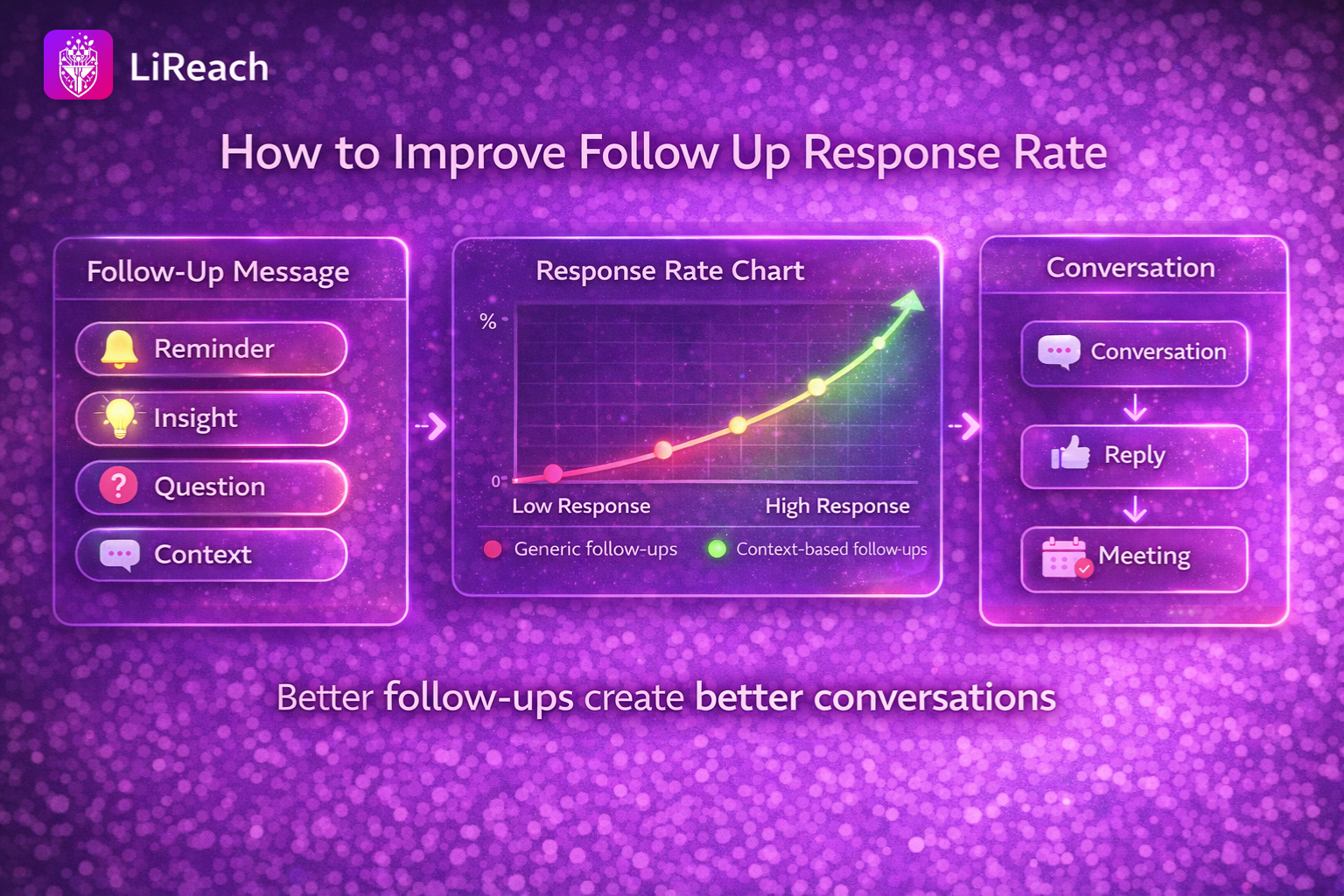
1. Keep Follow-Ups Short
Long follow-up emails rarely get read.
Short messages are more likely to receive attention.
Example:
“Just bumping this in case it got buried in your inbox.”
2. Add Insight
Each follow-up should add something new to the conversation.
Example:
“Many founders we speak with struggle to convert outreach conversations into meetings.”
3. Ask Simple Questions
Questions encourage engagement.
Example:
“Curious — are most of your deals currently coming from inbound leads or outbound outreach?”
4. Use Context
Referencing something specific about the prospect makes the message feel personal.
Example:
“Noticed your team recently expanded your SDR team — curious if outbound pipeline generation is becoming a bigger focus.”
5. Use a Break-Up Message
A final follow-up acknowledging that timing may not be right often generates replies.
Example:
“Not sure if this is a priority right now, but happy to reconnect later if outbound growth becomes relevant.”
How LiReach Improves Follow-Up Performance
Managing follow-ups manually becomes difficult as outreach grows.
LiReach helps B2B teams run structured outreach systems designed to improve engagement.
The platform helps teams:
- generate personalized outreach messages
- schedule automated follow-ups
- identify prospect signals
- track conversation progress
Instead of sending generic reminders, follow-ups become relevant and conversation-driven.
This dramatically improves response rates and meeting opportunities.
Final Thoughts
Follow-ups are not just reminders.
They are opportunities to restart conversations.
When follow-ups add insight, context, and curiosity, prospects are far more likely to respond.
And those conversations eventually turn into meetings.
Join 2,000+ Sales Leaders
Get advanced LinkedIn strategies, automation tips, and templates delivered to your inbox weekly. No spam, just value.