One of the biggest problems in outbound sales is not the first message.
It’s what happens after that message.
A founder sends outreach to a prospect.
The prospect doesn’t respond immediately.
Then the follow-up never happens.
Or it happens weeks later when the conversation is already cold.
This is how many potential deals disappear.
The solution is simple:
automate the follow-up process.
Automation ensures that conversations continue even when sales teams are busy.
Why Follow-Up Scheduling Matters
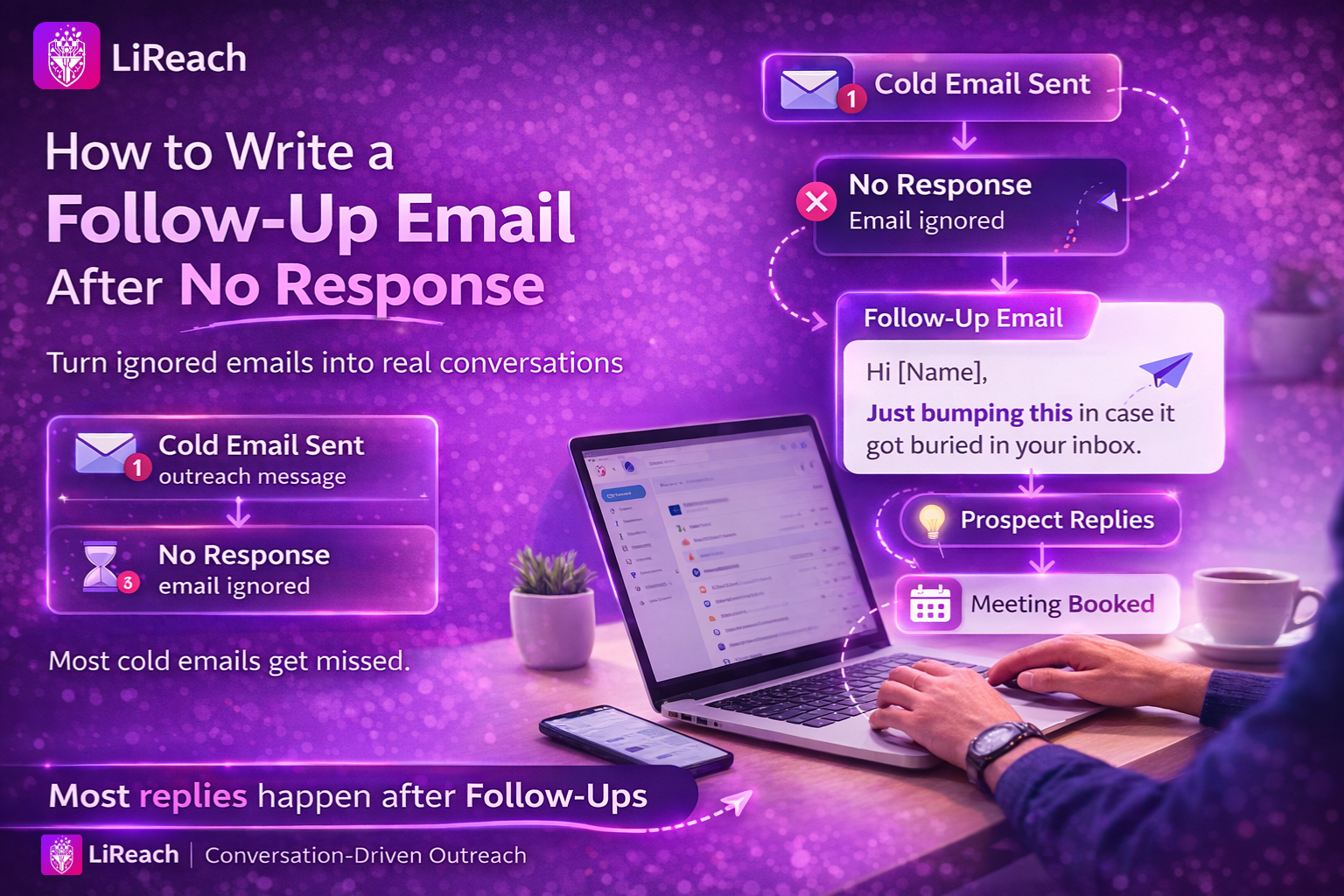
Most B2B replies happen after follow-ups.
Decision makers are busy and emails often get buried.
Your first message may arrive during:
- a meeting
- a busy workday
- travel or deadlines
A follow-up brings your message back into the prospect’s attention.
Without structured follow-up scheduling, many conversations never start.
The Problem With Manual Follow-Ups
Manual follow-ups become difficult as outreach grows.
Sales teams often face problems like:
- forgetting to follow up
- sending inconsistent reminders
- losing track of conversations
- wasting time writing repetitive messages
This is why modern outbound systems rely on automation.
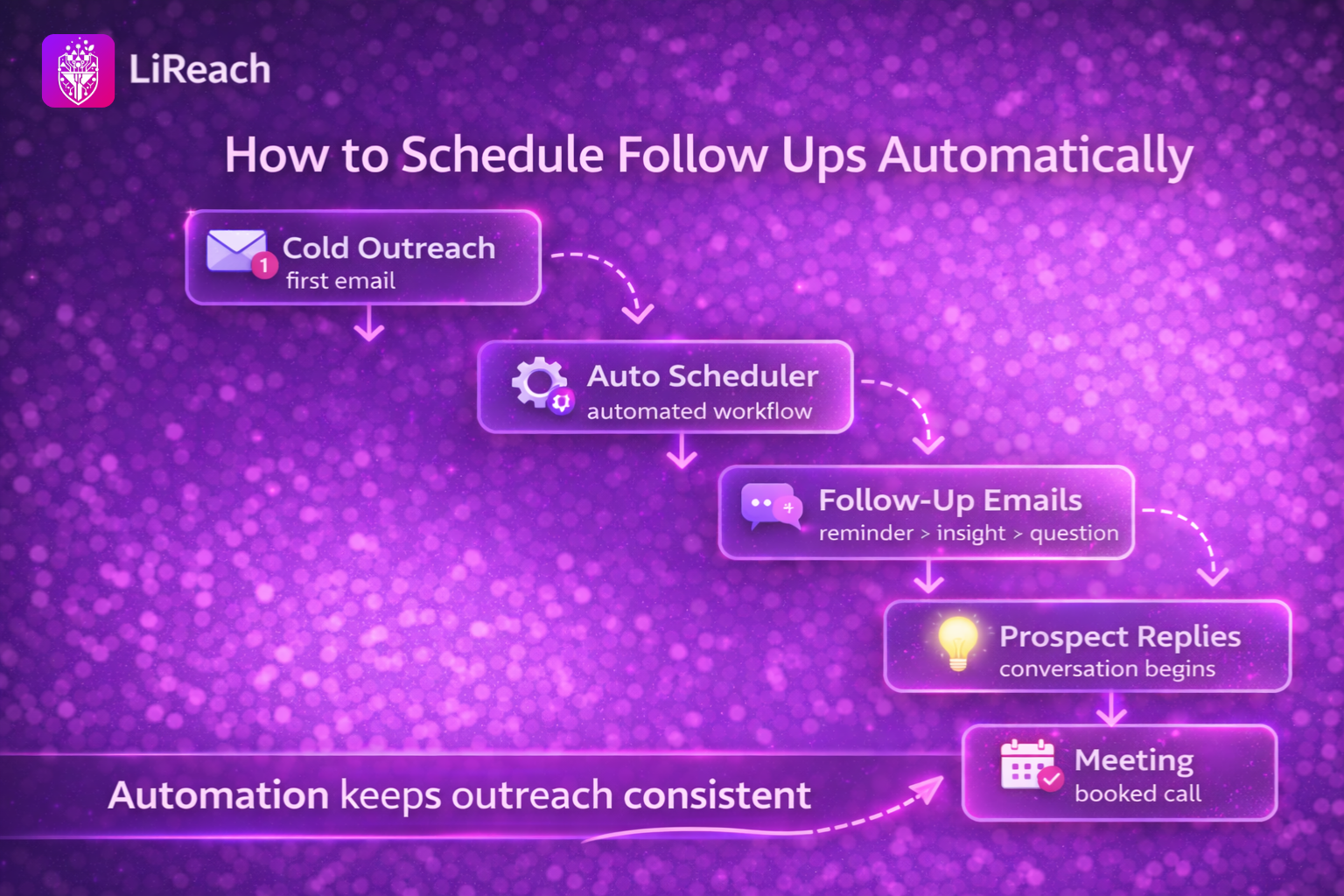
Automation creates consistency while freeing up time for meaningful conversations.
What Automated Follow-Up Scheduling Should Do
Automation should not turn outreach into robotic messaging.
Instead, it should automate the process while keeping communication human.
A good automated follow-up system should:
- schedule follow-ups automatically after the first email
- space messages at the right intervals
- stop follow-ups when a prospect replies
- personalize messages using prospect context
This keeps outreach organized without losing personalization.
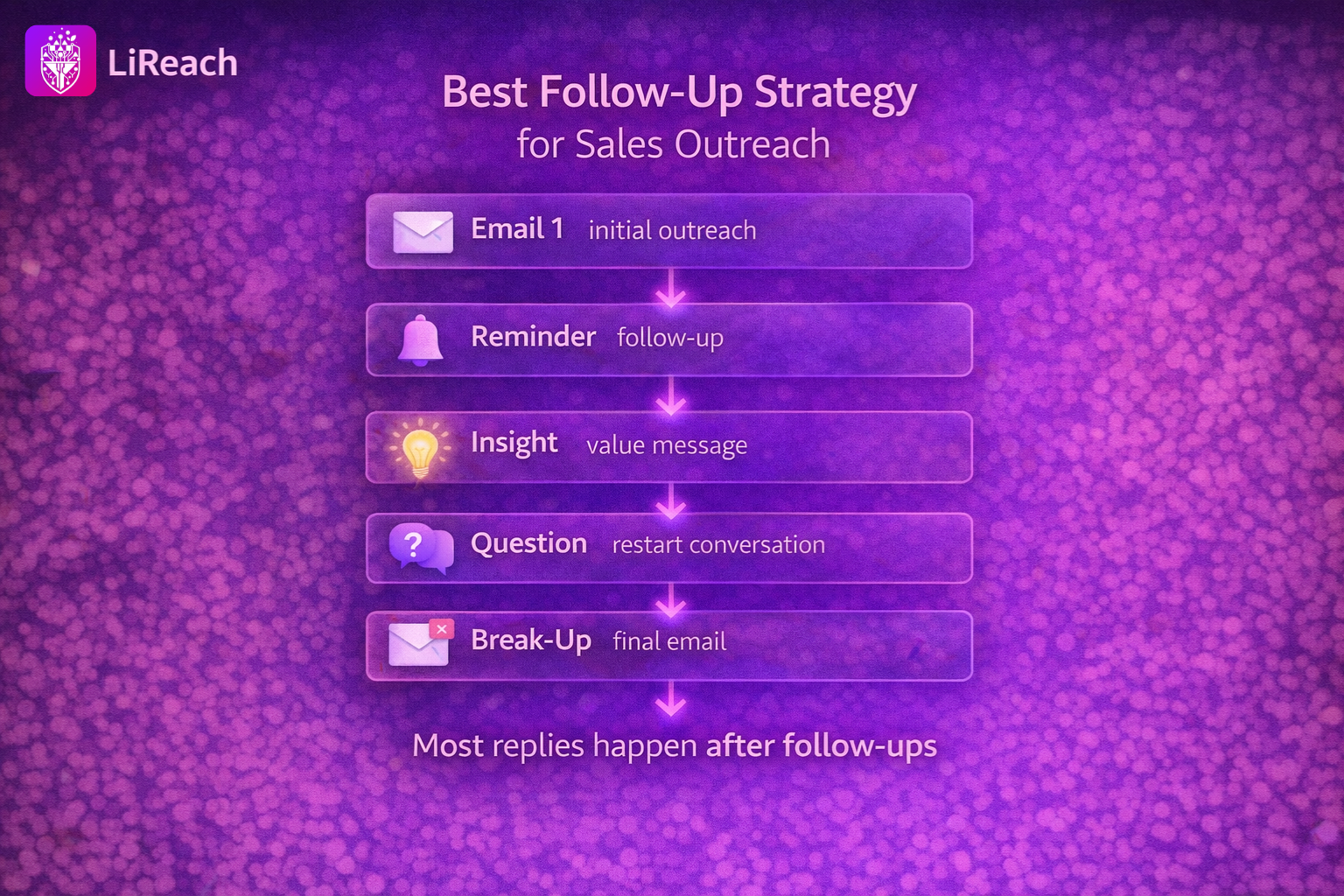
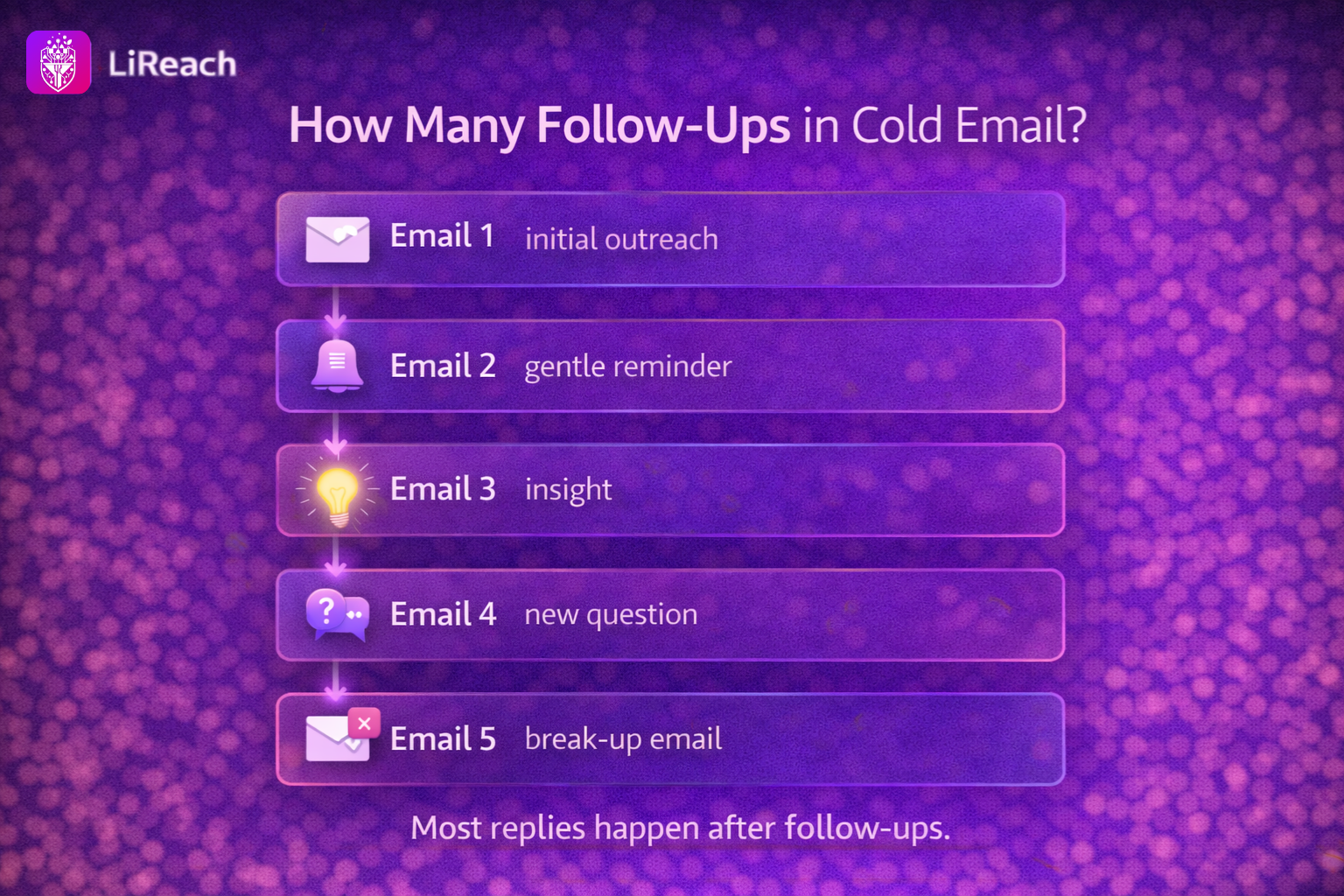
A Simple Automated Follow-Up Sequence
Most successful outbound campaigns use a structured follow-up sequence.
Email 1 – Initial Outreach
Start the conversation with a relevant observation.
Example:
“Noticed your team recently expanded your SDR team — curious if outbound pipeline generation is becoming a bigger priority.”
Email 2 – Reminder
Scheduled automatically a few days later.
Example:
“Just bumping this in case it got buried in your inbox.”
Email 3 – Insight
Share a short observation related to the prospect’s situation.
Example:
“Many founders we speak with struggle to convert outreach conversations into booked meetings.”
Email 4 – Question
Ask a simple question to restart the conversation.
Example:
“Curious — are most of your deals currently coming from inbound leads or outbound outreach?”
Email 5 – Break-Up Email
A final follow-up acknowledging that timing may not be right.
Example:
“Not sure if this is a priority right now, but happy to reconnect later if outbound growth becomes relevant.”
How LiReach Schedules Follow Ups Automatically
LiReach helps B2B teams run structured outreach systems without manually managing every message.
The platform helps teams:
- identify high-fit decision makers
- generate personalized outreach messages
- schedule automated follow-up sequences
- track conversation progress
When a prospect replies, the follow-up sequence automatically stops.
This ensures that outreach remains natural and conversation-driven.
Final Thoughts
Follow-ups are where many sales conversations actually begin.
But without automation, it becomes difficult to manage them consistently.
Automating follow-up scheduling ensures that no conversation gets lost.
And when conversations continue, meetings naturally follow.
Join 2,000+ Sales Leaders
Get advanced LinkedIn strategies, automation tips, and templates delivered to your inbox weekly. No spam, just value.