Many founders believe that if a prospect doesn’t reply to the first message, they simply aren’t interested.
But in most cases, that assumption is wrong.
Decision makers are busy.
Emails arrive during meetings, travel, or packed workdays.
Even relevant outreach can easily be missed.
This is why follow-ups play such an important role in B2B sales.
They keep conversations alive and dramatically increase the chances of engagement.
The Reality of B2B Buyer Behavior
Most B2B buyers do not respond immediately to cold outreach.
This does not mean the message was irrelevant.
Often it simply means:
- the prospect was busy
- the email arrived at the wrong time
- the message was seen but forgotten
Follow-ups bring the conversation back into the prospect’s attention.
This second or third touchpoint often becomes the moment when a reply happens.
Why Many Sales Teams Fail at Follow-Ups
Even though follow-ups are important, many companies manage them poorly.
Common problems include:
- sending only one outreach message
- forgetting to follow up consistently
- sending repetitive emails with no new value
- being overly aggressive with meeting requests
Without a structured follow-up system, conversations fade away before they can develop into opportunities.
The Role of Follow-Ups in Conversation-Driven Sales
At LiReach we believe that outbound sales should focus on conversations rather than mass messaging.
Follow-ups help maintain these conversations.
Instead of pushing for a meeting immediately, a strong follow-up strategy gradually builds engagement.
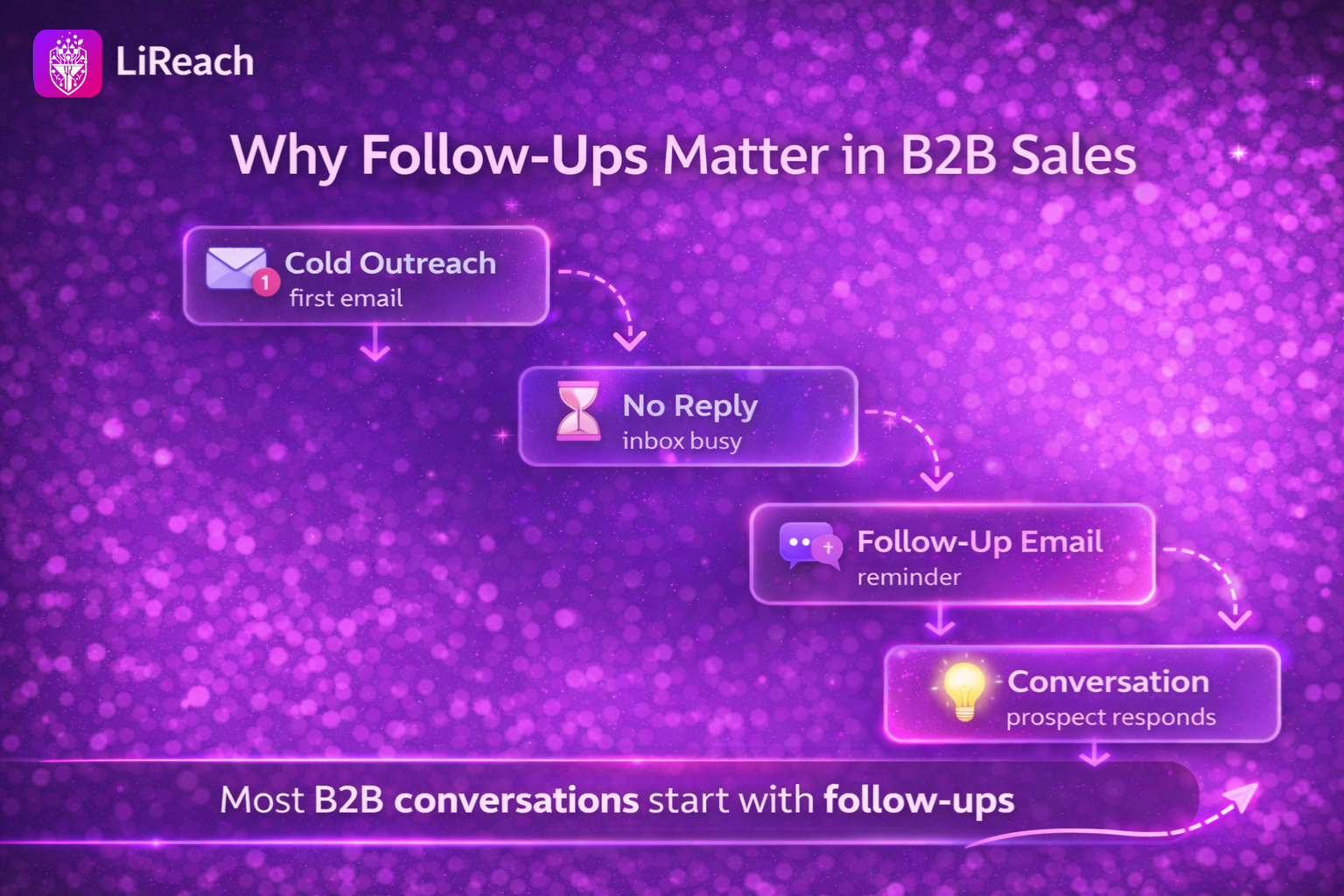
A typical outreach conversation might follow this path:
- initial outreach introduces a relevant topic
- follow-up reminds the prospect about the message
- additional follow-up adds insight or context
- conversation begins
- meeting becomes the natural next step
When follow-ups are done correctly, meetings happen organically.
Types of Follow-Ups That Work in B2B Sales
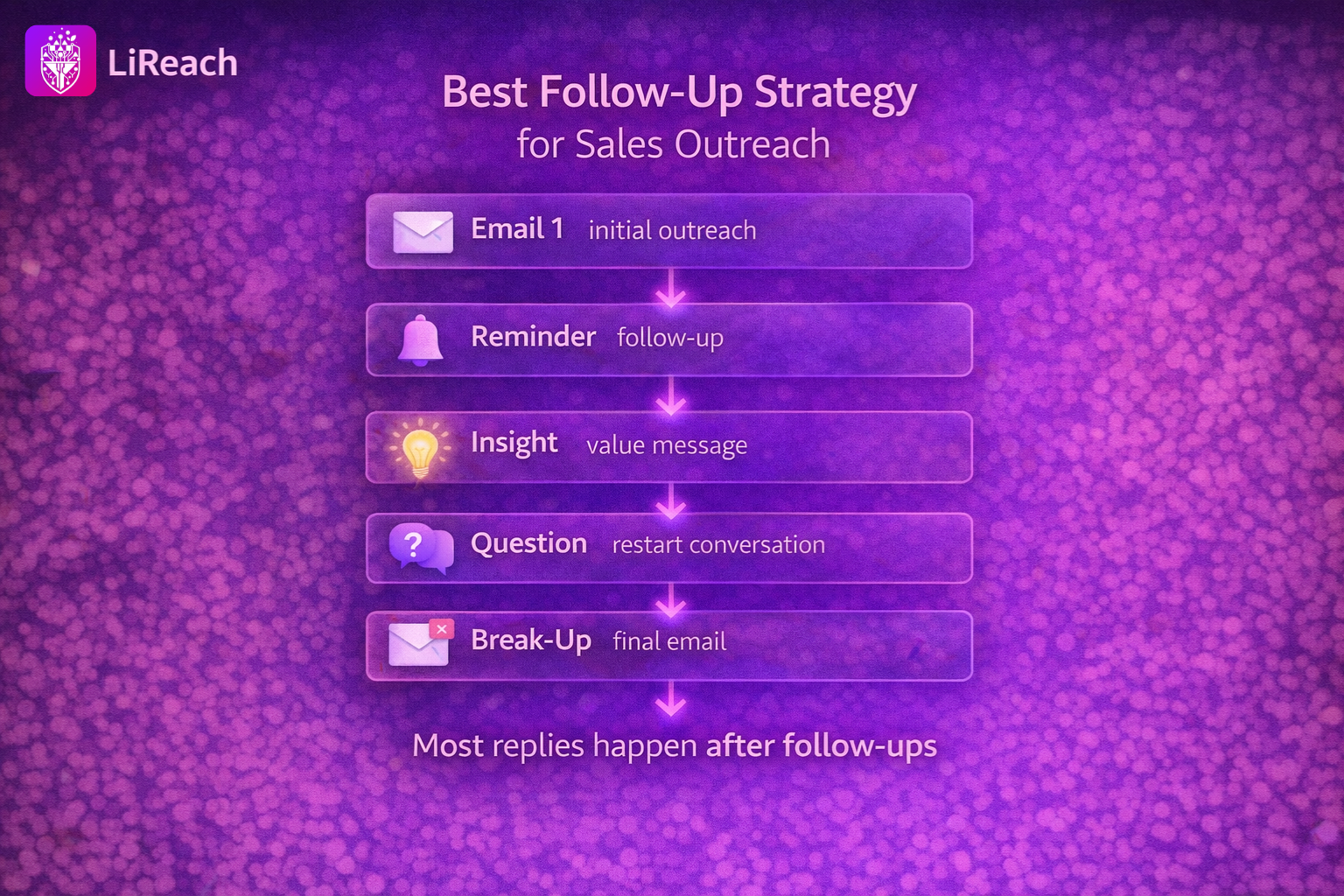
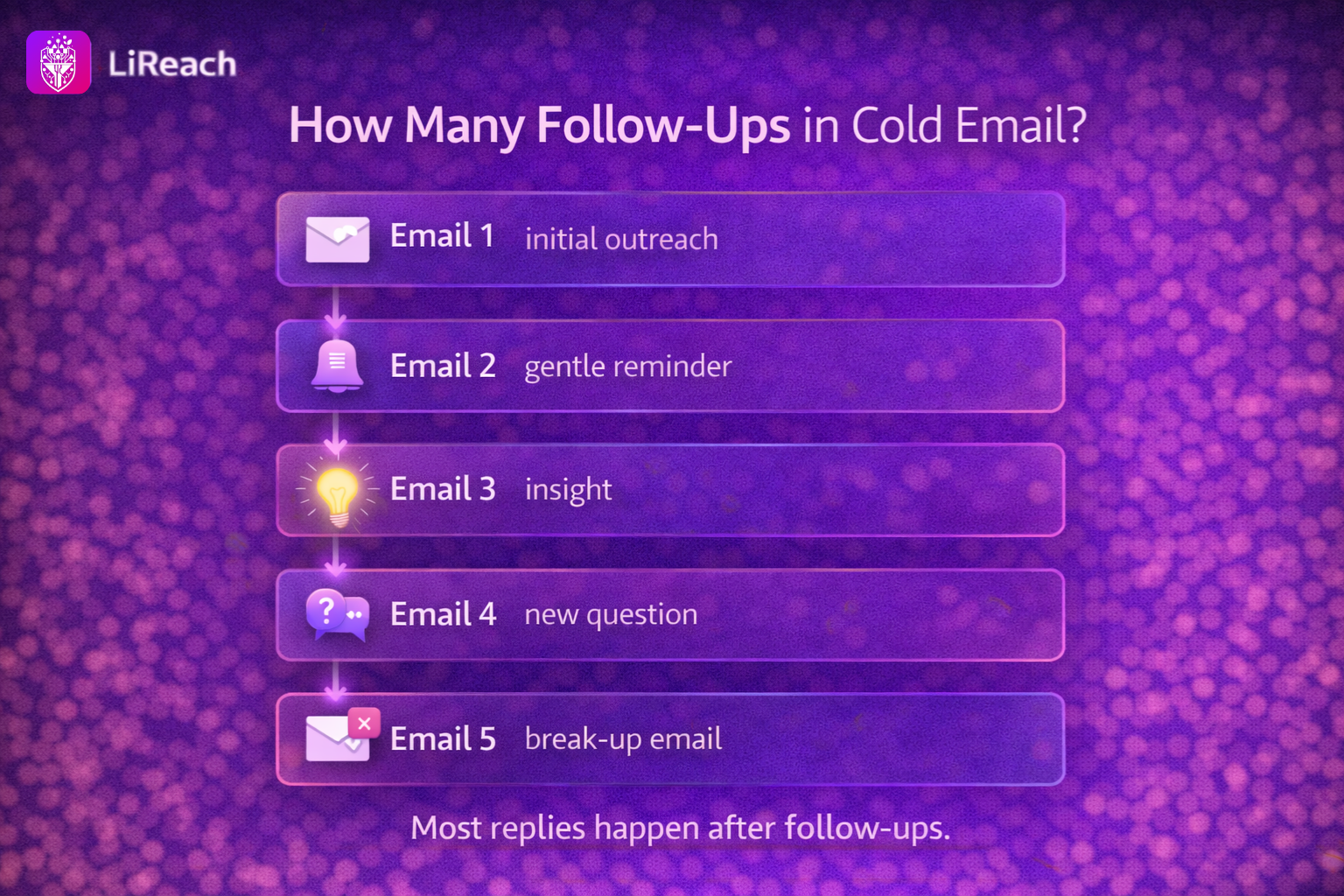
1. Reminder Follow-Ups
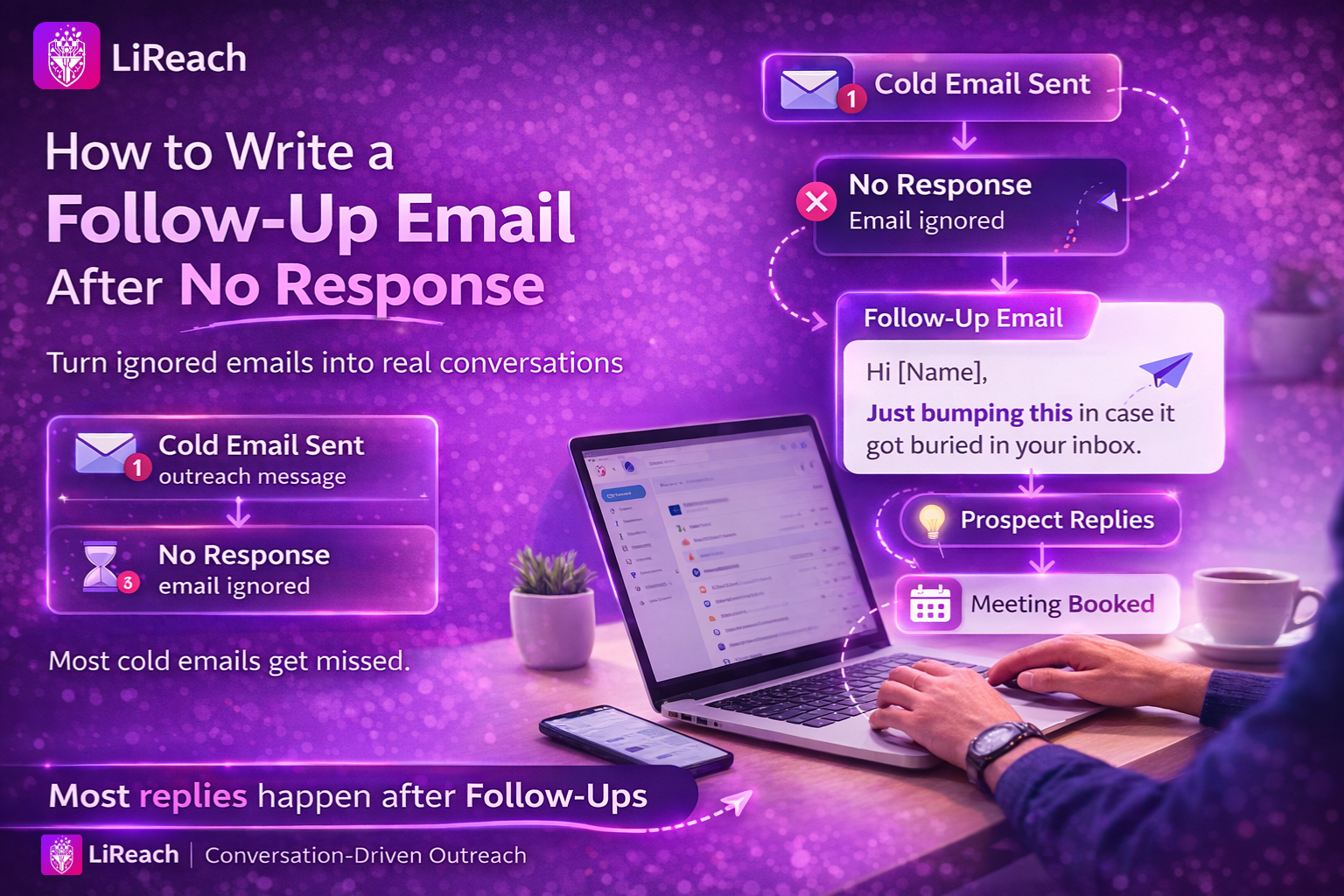
Simple reminders often generate responses from prospects who missed the first email.
Example:
“Just bumping this in case it got buried in your inbox.”
2. Insight-Based Follow-Ups
Sharing insights keeps the conversation interesting.
Example:
“Many founders we speak with struggle to convert outreach conversations into booked meetings.”
3. Question-Based Follow-Ups
Questions naturally encourage engagement.
Example:
“Curious — are most of your deals currently coming from inbound leads or outbound outreach?”
4. Break-Up Emails
Break-up emails acknowledge that the prospect may not be interested right now.
Example:
“Not sure if this is a priority at the moment, but happy to reconnect later if outbound growth becomes relevant.”
Interestingly, these emails often trigger replies.
How LiReach Helps Manage Follow-Ups
As outreach grows, manually managing follow-ups becomes difficult.
LiReach helps B2B teams automate this process while keeping messages personal.
The platform helps teams:
- identify high-fit decision makers
- generate personalized outreach messages
- automatically schedule follow-up sequences
- track engagement and responses
This ensures that conversations continue without overwhelming sales teams.
More importantly, the system focuses on meaningful engagement rather than mass messaging.
Final Thoughts
Follow-ups are not just reminders.
They are an essential part of building relationships in B2B sales.
When outreach combines relevance, persistence, and insight, conversations begin.
And those conversations eventually turn into meetings.
Join 2,000+ Sales Leaders
Get advanced LinkedIn strategies, automation tips, and templates delivered to your inbox weekly. No spam, just value.